Chilled BK Udon with Oroshi Daikon
Summer in Japan means cold noodle dishes, but what when zaru udon feels too plain, hiyashi ramen or cold tantanmen too heavy, and hiyashi chuka doesn’t hit the spot? Meet BK udon! Cold noodles that let you pile on endless toppings for the perfect customizable bowl.
- 4 tbsp dashi stock
- 3 tbsp Japanese soy sauce (koikuchi shoyu)
- 1 tbsp mirin
- 1 tsp light brown sugar
- 3 ice cubes (to cool and dilute the sauce OR 90ml hot water for the hot version)
- 2 portions udon noodles
- ice cubes ( (optional) to chill noodles quickly)
- pasteurized egg yolk (optional)
- finely chopped green onions
- tempura flakes (tenkasu)
- grated ginger root (or ginger paste)
- grated daikon radish (daikon oroshi)
- bonito flakes (katsuobushi) (omit for plant-based version)
- Pour 4 tbsp dashi stock, 3 tbsp Japanese soy sauce (koikuchi shoyu), 1 tbsp mirin and 1 tsp light brown sugar into a saucepan and boil for 1 minute to burn off the alcohol in the mirin.
- If serving cold, add 3 ice cubes to the sauce to quickly cool it and balance the flavor. If serving hot, dilute with hot water instead (or add water before turning off the heat).
- Cook 2 portions udon noodles according to the instructions on the packaging. Once cooked, pour through a colander and rinse with fresh water to remove the starch. (Use cold water for cold udon and add a few ice cubes to make them extra cold. For the hot version, rinse with freshly boiled water.)
- Divide the noodles and sauce into serving bowls.
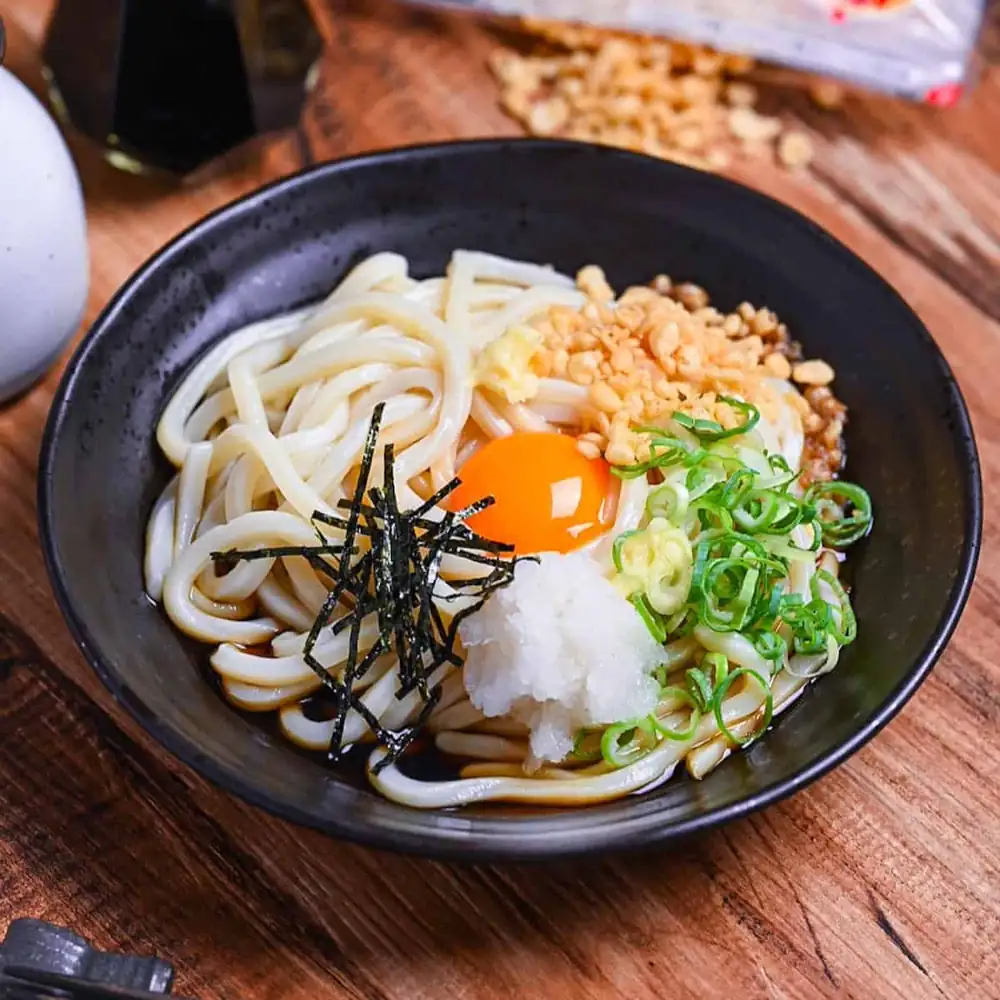
- Top each portion with your choice of toppings. I used pasteurized egg yolks, finely chopped green onions, tempura flakes (tenkasu), grated ginger root and grated daikon radish (daikon oroshi). (See in post for more ideas.)
- Enjoy!
Oroshi BK Udon
- What is it? The customizable summer udon noodle bowl that beats the heat.
- Flavor profile: Refreshing, Savory, Balanced.
- Why you’ll love this recipe: From toppings to temperature, you control every element, creating your perfect bowl without being locked into someone else’s flavor vision.
- Must-haves: Dashi stock (can be instant dashi granules or dashi packet), Udon noodles, Japanese style soy sauce.
- Skill Level: Easy
- Suitable for Meal Prep? Partially, sauce only.
Summarize & Save this content on:
In Japan, this dish is traditionally called bukkake udon (ぶっかけうどん), which means “udon with sauce poured over.” However, in English-speaking countries the word can be misleading, so I’ll refer to it as BK udon (a shortened name that Marugame Udon already use) throughout this post. BK udon is defined by its method: chewy udon noodles topped with a small pour of rich, soy sauce-based broth.
This can be served cold or hot in Japan. Unlike kake udon, which sits in a full bowl of light soup, BK Udon uses just enough liquid to coat the noodles.
It also differs from zaru udon, where noodles are dipped into sauce. Common toppings include grated daikon, green onions, and crunchy tempura flakes, all mixed together before eating.
- Udon Noodles: You can use fresh, dried, or frozen, but frozen udon noodles are my sweet spot. They’re quick, chewy, and taste amazing. Look for them in the freezer aisle of your local Asian supermarket. If you’re up for a weekend project, try my homemade udon noodles recipe!
- Grated Daikon (Daikon Oroshi): This isn’t mandatory, but adding grated daikon transforms the bowl into true Oroshi BK Udon. Its refreshing bite lightens the sauce and keeps each slurp bright and clean.
- Chopped Green Onions & Tempura Flakes: For me, these are non-negotiable toppings. The green onions add a fresh, sharp contrast, while the crunchy tenkasu gives every bite a fun!
This type of udon is celebrated for its simplicity, but the choice of toppings can vary from restaurant to restaurant. Here are a few suggestions to spice up your dish:
- Mentaiko (spicy cod roe)
- Boiled whitebait (tiny fish)
- Citrus: Lemon, Lime, Sudachi, Kabosu (for a tangy kick)
- Cucumber (for a refreshing crunch)
- Shiso leaves (adds a unique flavor)
- Okra (for texture and a slight gooeyness)
- Natto (fermented soybeans)
- Sesame seeds (for a nutty touch)
- Katsuobushi (bonito flakes for a smoky umami flavor)
- Boiled egg or Onsen tamago for those who prefer cooked eggs.
Have trouble finding Japanese ingredients? Check out my ultimate guide to Japanese ingredient substitutes! Before you start: Prepare all your toppings you’re going to use.
If serving cold, turn off the heat and add some ice cubes to cool the sauce quickly. If you’re serving hot udon, add water and reheat right before serving. i.
Cook the udon according to the instructions on the packaging. Once cooked, pour through a colander to drain and rinse with fresh water to remove any excess starch.
ii. Use cold water for the cold version and chill them in the colander with a few ice cubes. If serving hot, rinse with hot water.
i. Divide the udon into serving bowls and add the sauce. ii.
Add your choice of toppings and mix well before eating. iii.
Mix well and enjoy!
- Always boil the sauce for at least 1 minute to burn off the alcohol in mirin.
- If serving cold, rinse the noodles under cold running water until they’re no longer starchy, then add ice cubes to make them extra chewy and refreshing.
- Don’t skip diluting the sauce (with ice or hot water depending on the version).
With these simple tips in mind, you’re set for success every time you make BK Udon. Fridge: Store sauce in an airtight container, up to 3 days. Storing cooked udon noodles is not recommended.
Freezer: Not recommended. Meal Prep: Make the sauce in larger batches and store in the fridge for up to 3 days.
Cook noodles fresh each time. How is BK Udon different from other cold udon dishes? The difference is in the balance of broth and how you eat it.
BK Udon uses a concentrated broth with only a small amount poured over the noodles, then mixed. In contrast, zaru udon is dipped into sauce, kake udon uses a lighter broth with more volume, and kijoyu udon relies mainly on soy sauce instead of broth.
Can BK Udon be vegetarian or vegan-friendly? Traditionally, the broth uses bonito flakes, but you can make it fully plant-based by using vegan dashi with kombu and dried shiitake mushroom. The toppings are flexible too so you can only focus on plant-based ones like grated daikon and green onions.
Can I make BK Udon ahead of time for meal prep? The sauce can be made 2-3 days in advance, but the noodles are best cooked fresh for the right chewy texture. You can save time by pre-chopping toppings like green onions and storing them in the fridge.
- Easy Beef Udon Noodles Soup
- Kitsune Udon Noodle Soup
- Easy Japanese Curry Udon
- Quick Chicken Yaki Udon
New to Japanese cooking? Start with these easy udon noodle recipes that break down every step for perfect results. The ingredient brands and tools I trust are in my Japanese pantry guide and my cooking tools guide.
Can’t find certain Japanese ingredients? See my substitution guide here.