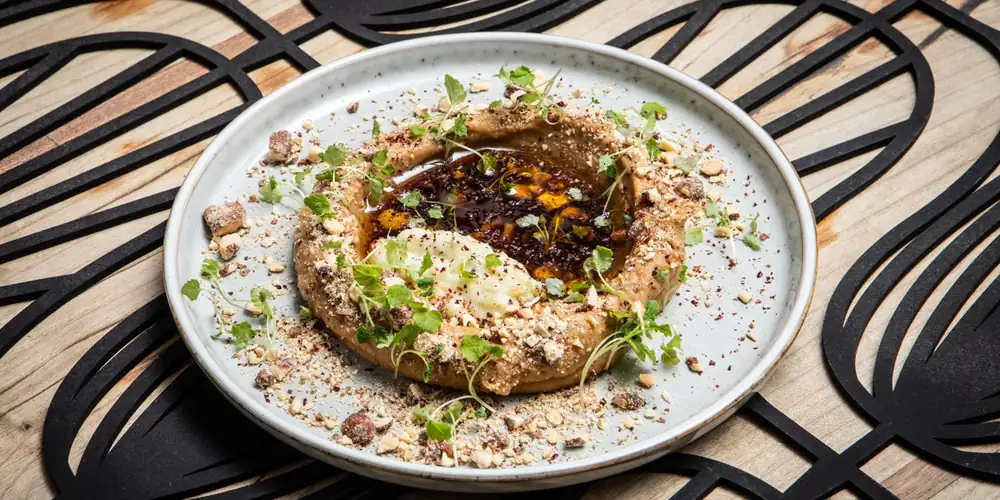
Parsnip mutabal, preserved lime and smoked almonds
Parsnips are roasted and blended with baharat, miso and tahini to make a mutabal and is served with a preserved lime purée, sumac-infused oil and a smoked almond crumb.
- 10 limes, sliced 0.5cm thick
- flaky sea salt, to preserve
- 4 sprigs of thyme, large
- rapeseed oil, to cover
- 125ml of extra virgin olive oil
- 1 tbsp of sumac
- 330g of parsnip, peeled and diced into 5cm chunks, peelings and trim reserved
- rapeseed oil, for roasting
- 2 tsp baharat powder
- 2 garlic cloves, or 1 if large
- 65ml of lemon juice
- 15g of white miso
- 30g of tahini
- lemon balm cress, to serve
- sumac, to serve
- 100g of smoked almonds
- 1 tbsp of nutritional yeast
- You will need to preserve the limes at least 1 week before serving. In a sterilised airtight container, layer up the lime slices, sprinkling generously with the salt and thyme in between each layer, until all the ingredients have been used up
- Allow this to stand for 30 minutes then cover with rapeseed oil and baking paper, ensuring the limes are below the surface of the oil. Leave in a cool, dark place for at least 1 week before using – the acid will soften the limes, producing a tangy yet bright flavour
- After 1 week, remove the limes and place in a blender, discarding the thyme. Blend the limes into a smooth paste, adding a little of the oil to make the purée smoother, if needed. Set aside in the fridge until needed
- For the sumac oil, place the extra virgin olive oil and sumac in a Thermomix and hold it at 60°C for 1 hour. Allow to cool, then store in the fridge until needed. If you don’t have a Thermomix, you can cook on a very low heat on the stove for 1 hour, but use a temperature probe to keep the temperature under 60°C
- For the mutabal, preheat the oven to 180°C. Toss the parsnips in a little rapeseed oil and roast in the oven for 40-45 minutes until soft and caramelised, adding the baharat for the last few minutes
- Meanwhile, to create a parsnip stock, quickly bring the parsnip peelings and trim to the boil in some water, then allow to cool
- For the smoked almond crumb, coarsely blitz the smoked almonds with the nutritional yeast until roughly chopped. Season to taste and set aside
- Transfer the roasted parsnips to a blender with the garlic, lemon juice, miso and a little of the parsnip stock. Blend until smooth and spoonable, adding more stock as needed
- Transfer to a bowl and fold through the tahini. Adjust the seasoning with salt and set aside in the fridge until needed
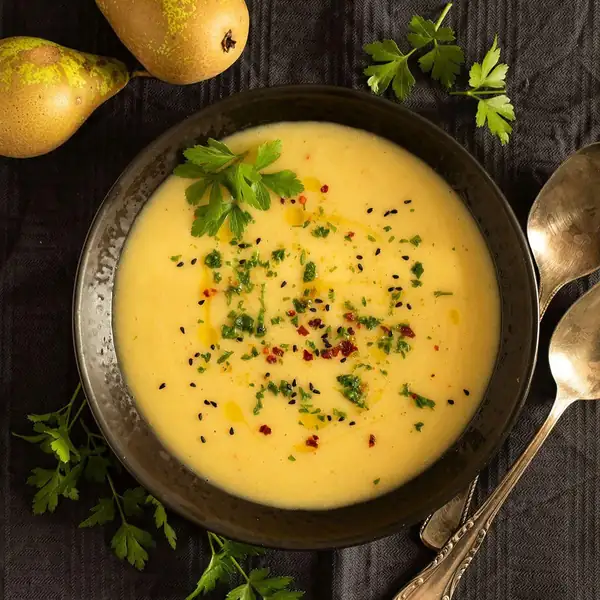
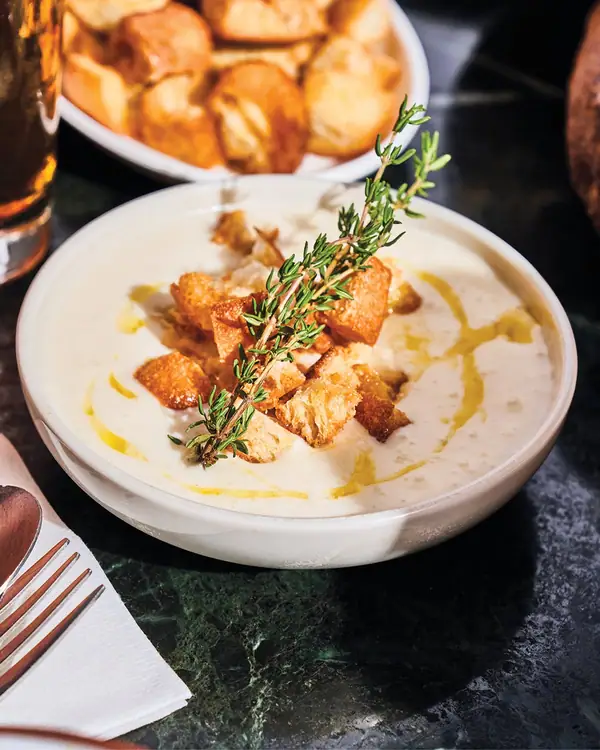
- To serve, spoon the parsnip mutabal onto plates, creating a well in the centre of each with the back of a spoon. Place a spoonful of the preserved lime paste into each well and fill with some sumac oil. Garnish the edge with some smoked almond crumb, micro lemon balm and a sprinkle of sumac
In a sterilised airtight container, layer up the lime slices, sprinkling generously with the salt and thyme in between each layer, until all the components have been used up Allow this to stand for 30 minutes then cover with rapeseed oil and baking paper, ensuring the limes are below the surface of the oil. Leave in a cool, dark place for at least 1 week before using – the acid will soften the limes, producing a tangy yet bright flavour After 1 week, remove the limes and place in a blender, discarding the thyme.
Blend the limes into a smooth paste, adding a little of the oil to make the purée smoother, if needed. Set aside in the fridge until needed For the sumac oil, place the extra virgin olive oil and sumac in a Thermomix and hold it at 60°C for 1 hour.
Allow to cool, then store in the fridge until needed. If you don’t have a Thermomix, you can cook on a very low heat on the stove for 1 hour, but use a temperature probe to keep the temperature under 60°C For the mutabal, preheat the oven to 180°C.
Toss the parsnips in a little rapeseed oil and roast in the oven for 40-45 minutes until soft and caramelised, adding the baharat for the last few minutes Meanwhile, to create a parsnip stock, quickly bring the parsnip peelings and trim to the boil in some water, then allow to cool For the smoked almond crumb, coarsely blitz the smoked almonds with the nutritional yeast until roughly chopped. Season to taste and set aside Transfer the roasted parsnips to a blender with the garlic, lemon juice, miso and a little of the parsnip stock.
Blend until smooth and spoonable, adding more stock as needed Transfer to a bowl and fold through the tahini. Adjust the seasoning with salt and set aside in the fridge until needed To serve, spoon the parsnip mutabal onto plates, creating a well in the centre of each with the back of a spoon.
Place a spoonful of the preserved lime paste into each well and fill with some sumac oil. Garnish the edge with some smoked almond crumb, micro lemon balm and a sprinkle of sumac