Obwarzanek Krakowski (Kraków-Style bagel) With Salt Beef Brisket Recipe
Obwarzanek krakowski is a Kraków-style bagel which is shaped like a pretzel, boiled in water, then baked. Obwarzanek krakowski has a PGI (Protected Geographical Indication) status, meaning the obwarzanki are only allowed to be made and sold under that name in the Kraków area.
- 1.5kg beef brisket, tough fat trimmed, silver skin removed
- Polish Sarepska mustard, to serve
- lettuce, a few leaves, to serve
- dill pickle slices, to serve
- 120g of coarse sea salt
- 25g of brown sugar
- 30g of Prague powder #1
- 2 bay leaves
- 1 tbsp of black peppercorns
- 1 tbsp of coriander seeds
- 1 tsp mustard seeds
- 4 garlic cloves, crushed
- 2l boiling water
- 1 onion, halved
- 2 carrots, roughly chopped
- 2 celery sticks, roughly chopped
- 2 bay leaves
- 1 tsp black peppercorns
- 500g of strong bread flour
- 7g of instant yeast
- 10g of salt
- 15g of caster sugar
- 300ml of tepid water
- sesame seeds, for sprinkling
- flaky sea salt, for sprinkling
- Start the brining process for the salt beef at least 5 days before you want to make the dish (see step 2 for timings). Combine all the brine ingredients except the water in a large pan or heatproof container. Pour over the boiling water and stir until the salt, sugar and Prague powder have dissolved. Leave to cool completely (it must be room temperature or fridge cold before use)
- Measure how thick the brisket is at the thickest part. Submerge the brisket completely in the cold brine, then cover and refrigerate for 5-7 days (you do not need to flip the brisket during brining, but just ensure it is fully submerged). Indicators for when the brisket is ready include the meat feeling firmer throughout than when it went into the brine, and if you cut a small slice from the thickest part of the brisket, the colour change should extend all the way through with no raw-looking centre. For pieces of brisket around 5cm thick, brining should take around 5-7 days. Thicker pieces will take 7-10 days (or more)
- Once you are happy the beef has sufficiently brined, remove it from the brine and rinse it thoroughly under cold water (discard the brine)
- Place the brisket in a large deep pan along with all the cooking liquor ingredients. Cover with fresh water, slowly bring to a simmer then cook for 3-4 hours until fork-tender – check the water and heat levels regularly, topping up with water and/or adjusting the heat as needed to ensure the meat is covered and the water is simmering
- To make the obwarzanek dough, combine the flour, salt, yeast and sugar in a stand mixer fitted with a dough hook attachment. Add the water and mix until it forms a dough, then knead for 8-10 minutes until smooth and elastic
- Cover and leave to rise until doubled in size, about 1-1½ hours depending on the temperature of your kitchen
- Once the dough has risen, preheat the oven to 190°C and line 2 baking sheets with baking paper
- Divide the dough into 50g pieces. Roll each piece into a rope approximately 20cm long. To form into traditional obwarzanek rings, plait together 2 ropes, twist together and join the ends. Repeat with the remaining ropes
- Place the shaped obwarzanki onto the baking sheets, cover and prove for 40 minutes at room temperature
- Bring a large deep pan of water to a simmer and poach each obwarzanek for 30 seconds on each side. Drain the obwarzanki, then transfer to the baking sheets. Sprinkle with sesame seeds and flaky sea salt
- Bake for 15-18 minutes until deeply golden and crisp, then remove to a wire rack to cool slightly
- Once the beef is ready, allow the beef to cool slightly in the cooking liquid, then remove and slice thinly across the grain – you want 120-150g per person. Slice the obwarzanki in half
- To serve, spread Polish Sarepska mustard generously on both cut sides of the rolls. Layer up some lettuce leaves, the warm sliced salt beef and dill pickle slices. Place the top halves on top and serve immediately
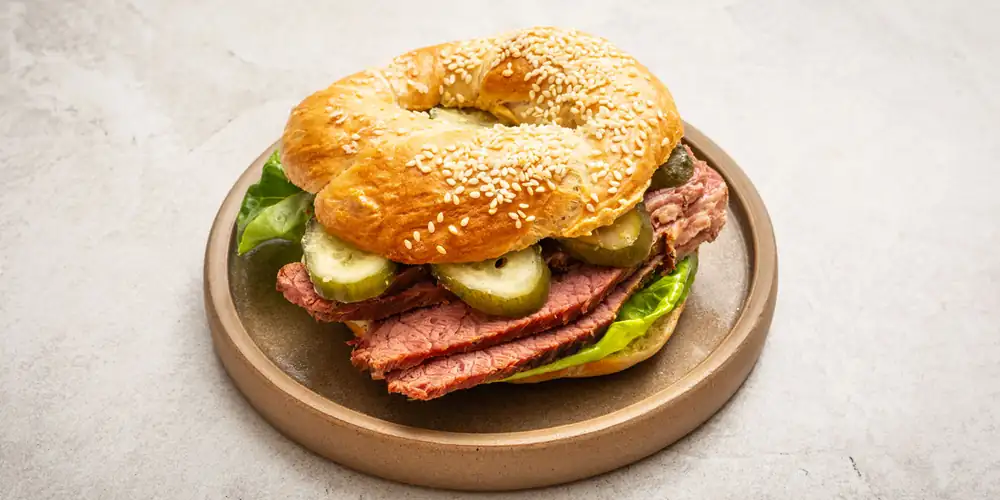
In this recipe, chef Kuba Winkowski slices open the obwarzanki and fills them with tender salt beef brisket, Polish Sarepska mustard, lettuce and pickles. Note: Always follow recipes carefully when using curing salts as they contain sodium nitrites, nitrates or potassium nitrites. A good rule of thumb is to check that the total percentage of salt and curing salt to water used in a brine is between 3%-10%.
For more information on using curing salts in brines, check out our guide here. If you’re unsure or in doubt, leave it to the professionals and buy salt beef from the shops!
Start the brining process for the salt beef at least 5 days before you want to make the dish (see step 2 for timings). Combine all the brine ingredients except the water in a large pan or heatproof container. Pour over the boiling water and stir until the salt, sugar and Prague powder have dissolved.
Leave to cool completely (it must be room temperature or fridge cold before use) Measure how thick the brisket is at the thickest part. Submerge the brisket completely in the cold brine, then cover and refrigerate for 5-7 days (you do not need to flip the brisket during brining, but just ensure it is fully submerged).
Indicators for when the brisket is ready include the meat feeling firmer throughout than when it went into the brine, and if you cut a small slice from the thickest part of the brisket, the colour change should extend all the way through with no raw-looking centre. For pieces of brisket around 5cm thick, brining should take around 5-7 days.
Thicker pieces will take 7-10 days (or more) Once you are happy the beef has sufficiently brined, remove it from the brine and rinse it thoroughly under cold water (discard the brine) Place the brisket in a large deep pan along with all the cooking liquor ingredients.
Cover with fresh water, slowly bring to a simmer then cook for 3-4 hours until fork-tender – check the water and heat levels regularly, topping up with water and/or adjusting the heat as needed to ensure the meat is covered and the water is simmering To make the obwarzanek dough, combine the flour, salt, yeast and sugar in a stand mixer fitted with a dough hook attachment.
Add the water and mix until it forms a dough, then knead for 8-10 minutes until smooth and elastic Cover and leave to rise until doubled in size, about 1-1½ hours depending on the temperature of your kitchen Once the dough has risen, preheat the oven to 190°C and line 2 baking sheets with baking paper
Divide the dough into 50g pieces. Roll each piece into a rope approximately 20cm long.
To form into traditional obwarzanek rings, plait together 2 ropes, twist together and join the ends. Repeat with the remaining ropes
Place the shaped obwarzanki onto the baking sheets, cover and prove for 40 minutes at room temperature Bring a large deep pan of water to a simmer and poach each obwarzanek for 30 seconds on each side. Drain the obwarzanki, then transfer to the baking sheets.
Sprinkle with sesame seeds and flaky sea salt Bake for 15-18 minutes until deeply golden and crisp, then remove to a wire rack to cool slightly
Once the beef is ready, allow the beef to cool slightly in the cooking liquid, then remove and slice thinly across the grain – you want 120-150g per person. Slice the obwarzanki in half
To serve, spread Polish Sarepska mustard generously on both cut sides of the rolls. Layer up some lettuce leaves, the warm sliced salt beef and dill pickle slices.
Place the top halves on top and serve immediately