Chickpea Flatbread from Provence (Socca)
This chickpea flatbread (known as “socca”) is a little culinary treasure hailing from the sun-kissed Ligurian Coast, stretching from Italy to France.
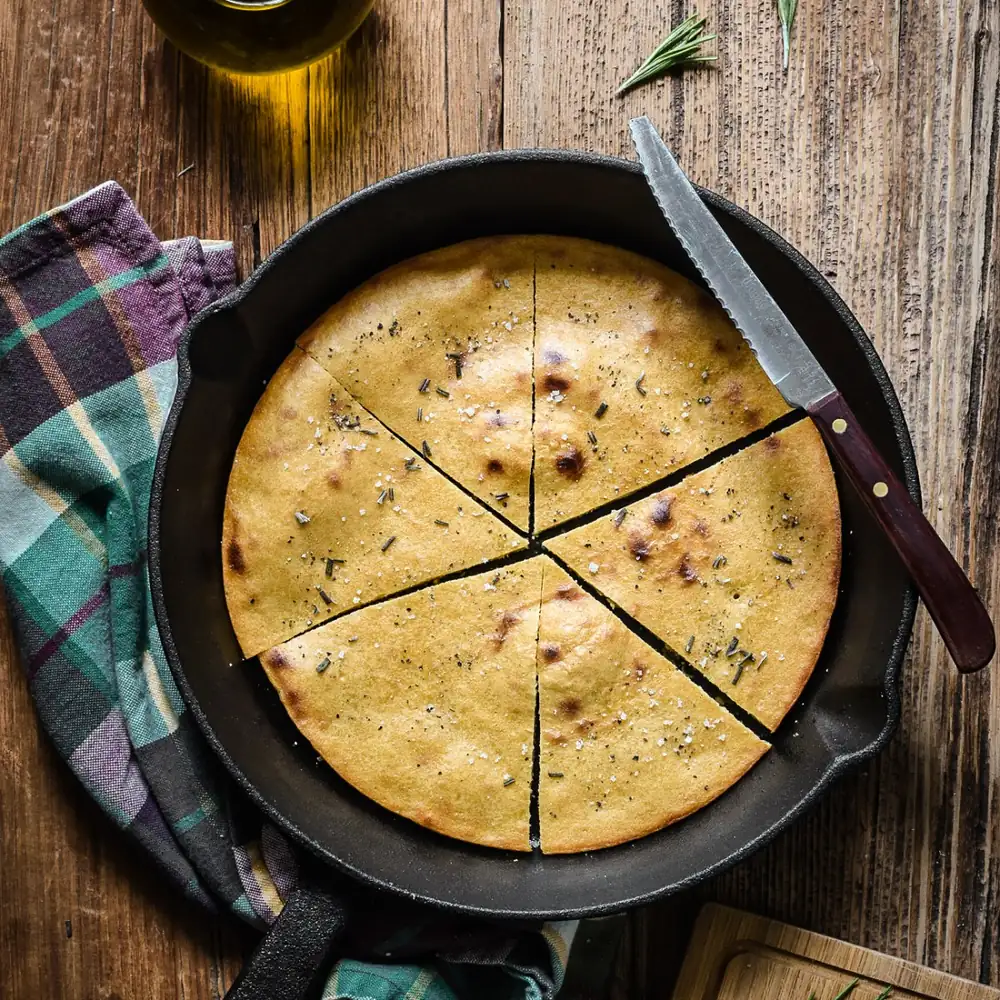
Naturally vegan and gluten-free, this delectable and rustic chick pea flatbread has seen a big revival in these past few years. But its recipe is truly as ancient as can be – and very, very easy.
In Italy, from Ventimiglia to La Spezia, it is known as the “farinata”. In the Piemonte Region, people call it the “belecàuda” (meaning literally, beautiful and hot). And in the South of France, from Toulon to Hyeres, it has the name of “la cade” (from the Italian “caldo”, meaning hot.)
This recipe’s version of the “socca” originates from Nice, France. It is a staple of the Provencal Cuisine, and can be found in most French cook books.
And I like to think this is the simplest and most universal one. At the start of the 20th century, the socca was sold in Nice by streets vendors bearing fire-breathing drums on wheels.
It was served in big paper cones to early-morning factory workers and hungry fishermen leaving at sea. Then, a humble blue-collar meal, the socca has now become a touristic – and fairly pricy – culinary must-try from Nice.
In the 70s, a slice of socca sold for 50 cents (0.07€), in the 90s it was sold 10 francs (1,5€); and today you can expect to pay at least 3€ for your slice. This thin, unleavened chickpea flatbread is made with just a handful of ingredients: chickpea flour, water, olive oil, salt and pepper. Some Italian recipes will add dried herbs such as rosemary or sometimes few pinches of spices.
In more recent recipes, it is sometimes baked in a pizza oven, sometimes in a cast-iron pan and sometimes on a baking sheet. For this recipe, I bake my socca in a cast iron skillet, and bake it in a regular oven and it works perfectly.
At the end of the baking process, I turn on the broiler for about 1 to 2 minutes to get that crispy top and signature smoky flavor. The socca is meant to be enjoyed right out of the oven, piping hot, so it can best deliver its signature culinary assets: a super crispy top and a soft bottom.
The chick pea flour gives a soft – almost creamy- texture to the inside of the crepe, and a delightful nutty taste. With a sprinkle of salt, dried rosemary and a crack of pepper, it makes a delectable healthy snack or shareable appetizer.
If you try this Chickpea flatbread recipe let me know! Leave a comment or share a photo using #pardonyourfrench on Instagram. Bon Appétit!
- Who: Chickpea Flatbread · Provence · Socca · Method In