Glass Noodles with Napa Cabbage (白菜炖粉条)
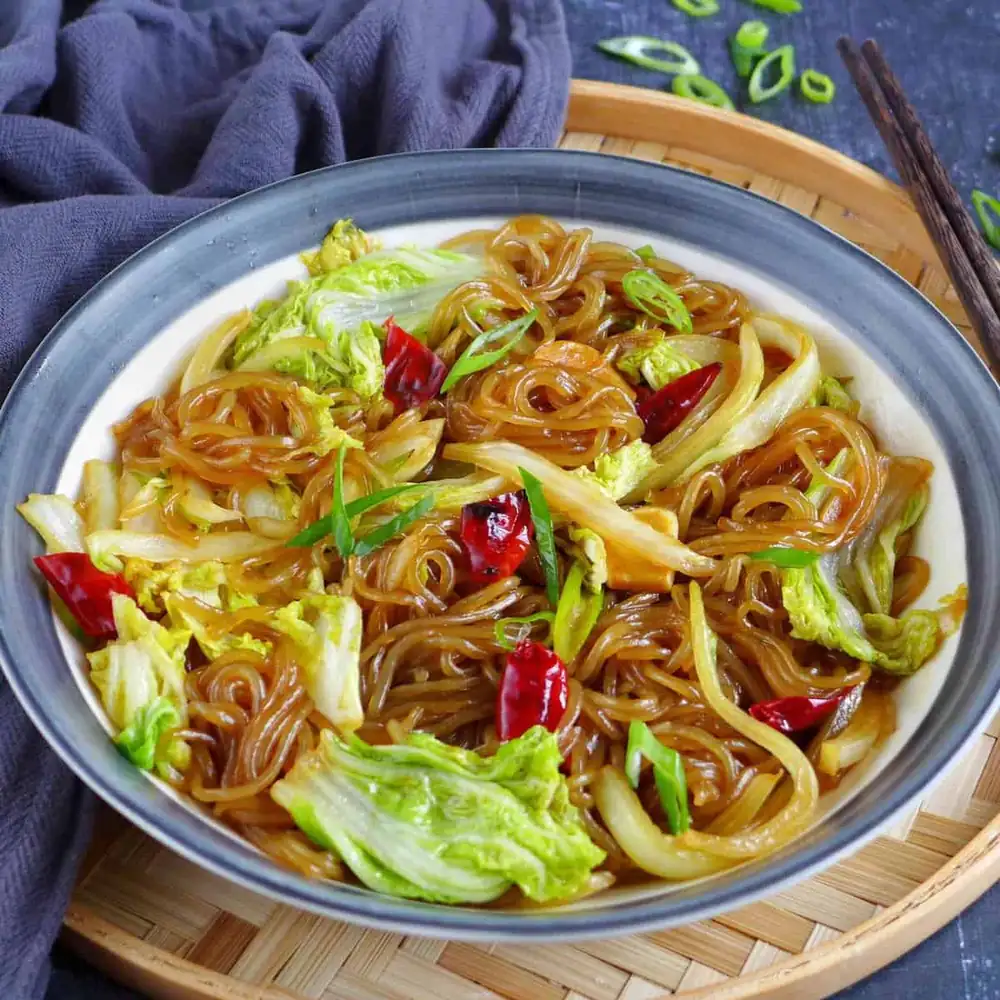
Cook this classic Chinese dish made of silky glass noodles tossed with crunchy Napa cabbage in a flavourful braising sauce.
- 80 g dried sweet potato noodles (or potato noodles) (about 3oz (see note 1 for substitutes))
- ½ head Napa cabbage (Chinese cabbage) (about 300g/11oz)
- 1 tablespoon neutral cooking oil
- 1 teaspoon whole Sichuan pepper
- Dried chilli pepper (to taste)
- 3 cloves garlic, sliced
- 2 stalks scallions, chopped
- 1 tablespoon light soy sauce
- 1 teaspoon dark soy sauce
- 1 tablespoon oyster sauce (see note 2 for vegan substitutes)
- 120 g water (about ½ cup)
- Put the dried noodles into a large bowl. Add hot water and leave to soak for 5 minutes until they become pale and pliable but still hard to break with nails (see note 3). Rinse under running water to cool. Drain well then set aside.
- Tear the leafy part of the napa cabbage into pieces, then cut the firm white part into strips.
- Add oil and whole Sichuan pepper to a cold wok (frying pan/skillet). Over low heat, toast the peppercorn until you see intense bubbles appear and smell its fragrance. Use a spatula to remove it from the wok leaving the oil in the wok.
- Turn up the heat to medium-high. Add dried chilli pepper, garlic and scallions (leave some for garnishing later). Fry until the garlic turns lightly golden on the edge.
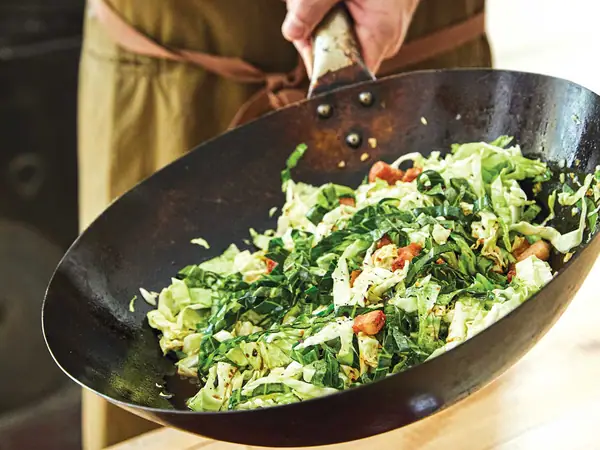
- Put in the white part of the napa cabbage. Stir fry for 30 seconds or so. Add light soy sauce, dark soy sauce, oyster sauce and water.
- Toss to evenly distribute the seasoning, then put in the leafy part of the cabbage and the noodles.
- Mix well then cover with a lid. Leave to cook over medium heat for about 4 minutes. The cooking liquid should be fully absorbed by the noodles at this point (if not, cook a little longer uncovered).
- Sprinkle the remaining scallions to garnish. Serve warm on its own, or as part of a multi-dish meal with steamed rice.
It is quick, tasty and filling!
About the dish
Glass noodles with napa cabbage (白菜炖粉条) is a Northern Chinese classic. It’s quite simple to make but delivers big flavours!
The glossy, slippery glass noodles and crunchy napa cabbage are tossed in a savoury braising sauce made with a combination of soy sauce and oyster sauce. Like many traditional dishes, there are a number of regional variations of this dish. Some, like me, prefer adding Sichuan peppercorn and dried chilli pepper to give it a touch of heat.
Some like the dish on the saucy side, while others include proteins, such as pork. I happen to like this simpler version, where the bouncy texture of the glass noodles and the crispiness of the cabbage really shine through!
What are Glass Noodles? Also known as cellophane noodles, glass noodles are named as such because of their semi-transparent appearance and springy, slippery texture once cooked.
Unlike regular wheat noodles or egg noodles (e.g. Yi Mein), they are made from the starch of sweet potatoes, potatoes, mung beans, etc.
Thus they are gluten-free. They come in different forms and shapes.
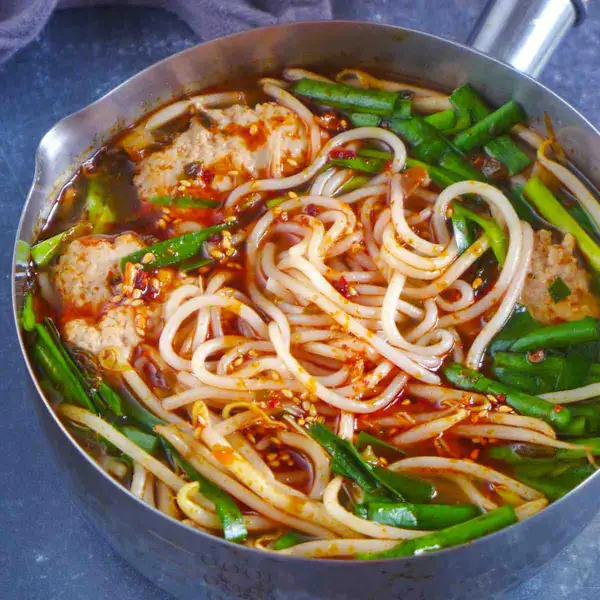
- This recipe uses the thick type (right in the image above), which is commonly used in Northern and Western Chinese regions (also popular in Korean cuisine). Named Fen Tiao/粉条 in Chinese (meaning starch noodles), they can be either round or flat and are made with sweet potato or potato starch. I used the same to make the classic Sichuan street food Hot and Sour Noodle Soup.
- You may also encounter the thinner type (left in the image above) known as bean thread noodles or mung bean vermicelli. These are called Fěn Sī /粉丝 in Chinese which translates as “starch threads”. Mung bean starch is their key component. Dishes using this type of noodle include Ants Climbing a Tree , Glass Noodle Salad, Garlic Shrimp with Vermicelli, etc.
You can find glass noodles in Chinese or Asian grocery stores in dried form, so they need to be rehydrated before using. 🛎 NOTE: Don’t confuse the thin type of glass noodles with rice vermicelli (what you find in Singapore Mei Fun). They’re made with different types of starch.
The former looks much more transparent than the latter once cooked.
How to rehydrate
You can rehydrate glass noodles in two ways, using cold or hot water.
- Soak in hot water. I use this method for thick glass noodles, the ones made with sweet potato or potato starch. Soak them in hot water until they expand and become pliable. Five to ten minutes should be enough to get them sufficiently tender but still hard to break with nails. If you want them softer for adding to dumpling fillings, soak a little longer.
- Soak in cold water. This method will take longer. However, I think this is the best option when using thin glass noodles (mung bean vermicelli) as it is less harsh and will allow the noodles to soften gently.