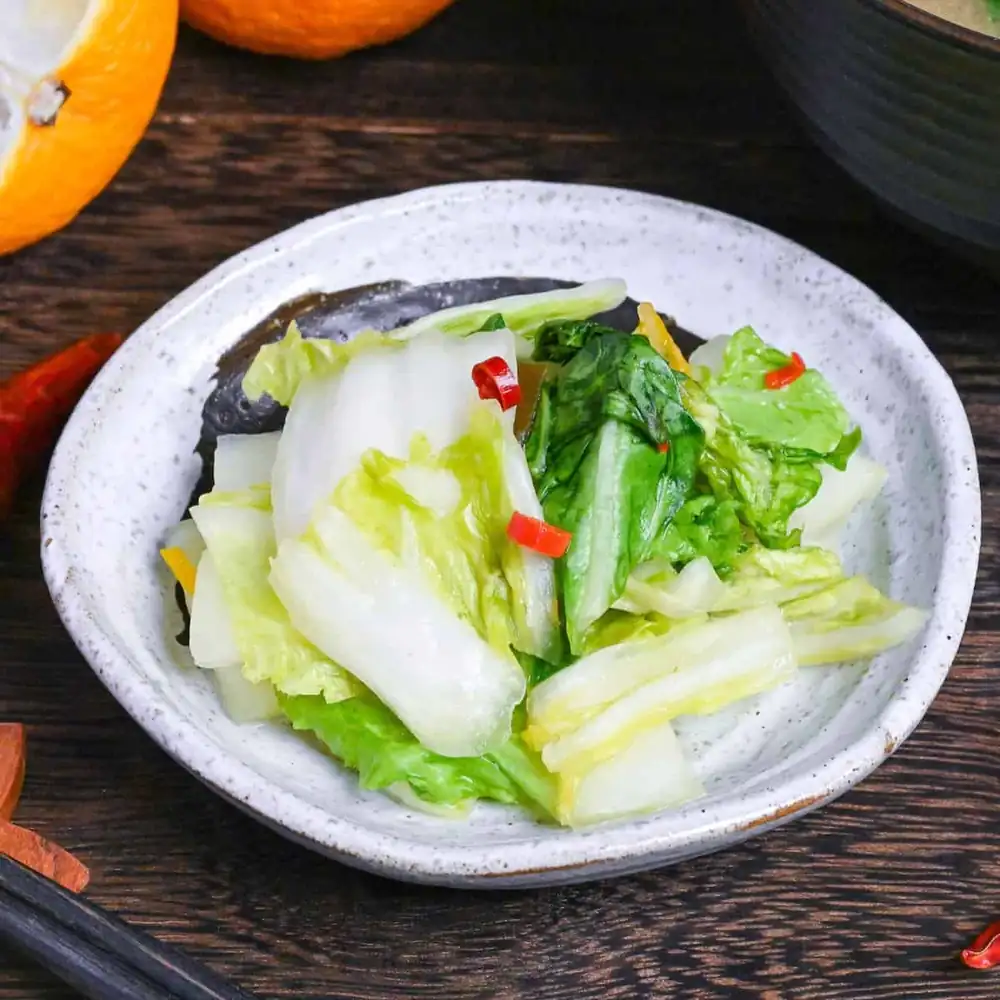
Japanese Pickled Napa Cabbage (Hakusai no Asazuke)
Featured Comment: I purchased napa cabbage just to make this dish. It is absolutely addictive and goes with anything.
- 300 g Napa cabbage ((hakusai))
- ½ yuzu (peel and juice)
- 5 g dried kelp (kombu)
- ½ tbsp salt
- ½ tsp sugar
- 1 tsp dried red chili pepper (deseeded, thinly sliced)
- ¼ tsp Japanese light soy sauce (usukuchi shoyu)
- Wash 300 g Napa cabbage and cut into 1-2 inch squares. Shake thoroughly to remove any excess water.
- Take ½ yuzu and peel a few pieces of the skin using a potato peeler. Cut the peel and 5 g dried kelp (kombu) into thin slices.
- Place the napa cabbage, yuzu peel and dried kelp to a sealable freezer bag. Squeeze in the juice of ½ yuzu from earlier and add ½ tbsp salt, ½ tsp sugar, 1 tsp dried red chili pepper and ¼ tsp Japanese light soy sauce (usukuchi shoyu).
- Massage until the napa cabbage is evenly covered.
- Push the air out of the bag and seal. Place it in a container with the mouth of the bag facing up to prevent leaks.
- Place weights on top of the bag. I used my salt and sugar jars, but you could use anything heavy that you don't mind keeping in the fridge. Refrigerate for 24 hours.
- Enjoy!
I’ll admit to eating just the cabbage pickle with a bowl of really good quality rice for dinners at times. Thank you for a better recipe than what I had been using.
- @pinkmonkeybird2644 (from YouTube)
Hakusai no Asazuke (白菜の浅漬け) is a side dish that involves pickling Napa cabbage. In Japan, it has become one of the most popular pickled vegetables, along with cucumber, daikon, and eggplant.
The pickling method often used for Napa cabbage is called asazuke (浅漬け), where the cabbage is pickled in salt and seasoning solution for a relatively short period of time. This dish is not as sweet as pickled cucumbers and is often characterized by its sharp and refreshing flavor, as well as its saltiness.
- Napa Cabbage: The main ingredient of the dish, also known as Chinese cabbage or hakusai (白菜) in Japanese.
- Salt: Choose a salt that dissolves easily. Avoid hard, flaky salts as they don’t blend well in the solution.
- Kombu (Dried Kelp): This adds umami to the dish. For guidance on selecting the best kelp, refer to my Kombu Guide.
- Dried Red Chili Peppers: Essential for adding a kick to the pickled Chinese cabbage. It’s a must-have for the flavor profile.
- Yuzu: Use the juice and peel to add a zesty flavor. If yuzu is unavailable, Mandarin Orange or Bergamot are good substitutes.
- Light Soy Sauce: Only a small amount is needed. Check out my soy sauce guide to understand the difference between light and dark soy sauces.
- Sugar: Regular sugar that dissolves easily is ideal.
If you prefer to watch the process in action, check out my YouTube video of this napa cabbage pickles recipe! Begin by thoroughly rinsing the Napa cabbage in cold water, shaking off any excess water. Then, cut the cabbage into pieces about 3 to 4 cm (approximately 1½ inches) wide.
Peel a few pieces of yuzu and cut it into thin strips. If possible, the kombu should also be cut into thin strips. I use a thin kombu and kitchen scissors for this.
Next, place the cabbage pieces in a sealable bag, like a Ziploc. Add a sprinkle of salt, kombu, dried chili peppers, fragrant yuzu peel and juice, light soy sauce, and a bit of sugar.
Here’s the fun part: massage the bag to mix everything well and ensure the cabbage is evenly coated with the seasoning. After massaging, press out as much air as possible from the bag before sealing it.
This helps in pickling the cabbage evenly. Then, place the sealed bag in a container.
Place a weight on top of the bag in the container to help the pickling process. Make sure the mouth of the bag is facing upwards to prevent any potential spillage.
You can keep Hakusai no Asazuke fresh in the refrigerator for 3 to 5 days by transfering the pickles and the pickling liquid to a tightly sealed storage container. Room temperature and freezer are not recommended.
Storage Summary
I hope you enjoy this Japanese Napa Cabbage Pickles recipe!
If you try it out, I’d really appreciate it if you could spare a moment to let me know what you thought by giving a review and star rating in the comments below. It’s also helpful to share any adjustments you made to the recipe with our other readers. Thank you!
The ingredient brands and tools I trust are in my Japanese pantry guide and my cooking tools guide. Can’t find certain Japanese ingredients?
See my substitution guide here.