EUDR is Accelerating Farm Modernization, But Threats to Smallholders Remain
CONCEPCIÓN DE SOLUTECA, Honduras — In the 1970s, the Honduran the authorities granted a piece of land in the mountains of Concepción de Soluteca to Roberto González’s parents.
“We destroyed the foundations of our livelihoods, but it was out of ignorance; we just didn’t know better,”
On the 12 hectares (30 acres) they received as part of a land reform, they planted corn, beans and bananas, the basic staple foods. It was a hard life up in the mountains, allowing the producers and their families to just survive.
It was a complete disaster: many farmers were thrown into poverty and forced to migrate. “We destroyed the foundations of our livelihoods, but it was out of ignorance; we just didn’t know better,” González stated. Under the EUDR, coffee growers step up their game The looming implementation of the European Union’s antideforestation regulation, or EUDR, has since become an inflection point for small growers like González.
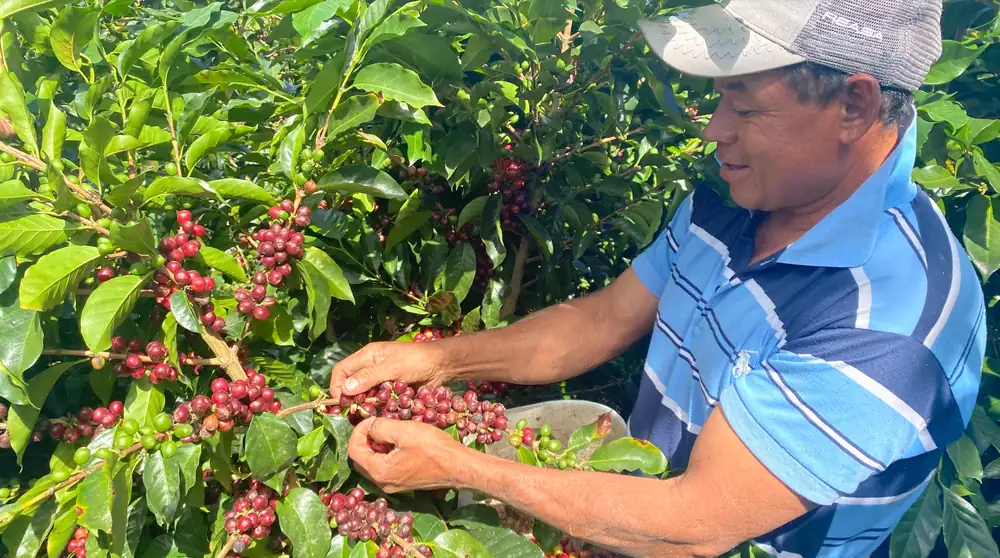
They are the main growers of the high-quality arabica coffee used in blends destined for the EU marketplace. In Honduras, working with producers requires going into the field. “The whole process has forced us to pay even more attention to production conditions on the farms,” Calero Moraga states, adding that Becamo has been providing producers with free agricultural consulting long before the EUDR appeared on the horizon.
Since 2021, the number of agronomic consultants who serve as Becamo’s regional representatives has grew from 16 to 40, and the business’s sustainability department has grown from 26 to 51 employees. The agronomists help the growers survey their holdings, verify land titles, and advise on how to build latrines and shelters for crop employees, as part of compliance with labor laws.
The producers have to fill out lengthy questionnaires on certifications, fertilizers used, number of workforce and salaries. “It was a challenge,” says Gonzalo López, a neighbor of González and fellow producer. “But we’ve noticed for ourselves that we had to improve, as our harvests were declining, the climate is getting hotter, the soil is getting poorer and water is becoming scarcer. We just weren’t quite sure what and how,” he explains, adding that the need to meet EUDR requirements helped speed up changes in farming methods.
With that kind of help, Jaime Calix has turned his 13-hectare (32-acre) Finca La Chachi into a model holding. “I haven’t sprayed any pesticides in six years,” he explains proudly. “Instead, I’ve planted trees whose leaves cover the ground, retain moisture, and build up humus.” He pushes aside the layer of leaves to reveal the darker, nutrient-rich soil beneath. One huge environmental problem, he admits, is disposing of the coffee cherries, the pulpy part of the fruit that encases the coffee beans. Is removed immediately after crop. “Traditionally, we threw them into the forest or into the rivers,” Calix states.
This acidified the soil, contaminated the groundwater, and deprived the rivers of oxygen. “In workshops organized by IHCAFE [Honduran Coffee Institute], we learned to accelerate the decomposition of the coffee cherries using lime and microorganisms to create compost, which improves the soil of our coffee plantations,” Calix explains. For many growers, the EUDR has helped them modernize their production methods and brought them a step closer toward digital inclusion, which ultimately is key to mounting productivity and mitigating rural poverty, according to a World Bank study.
Going to Calero Moraga, contrary to what opponents of the EUDR argue, the additional costs for complying with EUDR requirements are ultimately manageable. In Honduras, that works out to $1 per 100-kilo sack of coffee beans, he states.
For Becamo, the process has been an investment in a more sustainable future. “We know that usually, when Europe implements such changes, Canada will follow, and maybe also the U.S.” Calero Moraga says. Federico Bert, coordinator for agricultural digitalization at the IICA, agrees: “The world will inevitably require more and more standards, regulations, and certifications every day, and the EU is at the forefront of this trend.” Overcoming poor connectivity and data ownership Bert states he sees the EUDR as a powerful driver of digitalization, with ample opportunities for smaller farmers. Ultimately, this means that growers aren’t truly included in the digital process and don’t own their data, Bert states.
That’s the case with Becamo’s app: Farmers only have access to some basic functions, and are unable to share all the information collected on them. Private businesses also offer paid traceability apps, but these are usually too dear for independent producers, at up to $300 per month (though some cooperatives in Honduras are working with them).