Why hospitality is one of the hardest parts of running a coffee shop
Estimated reading time: 7 minutes
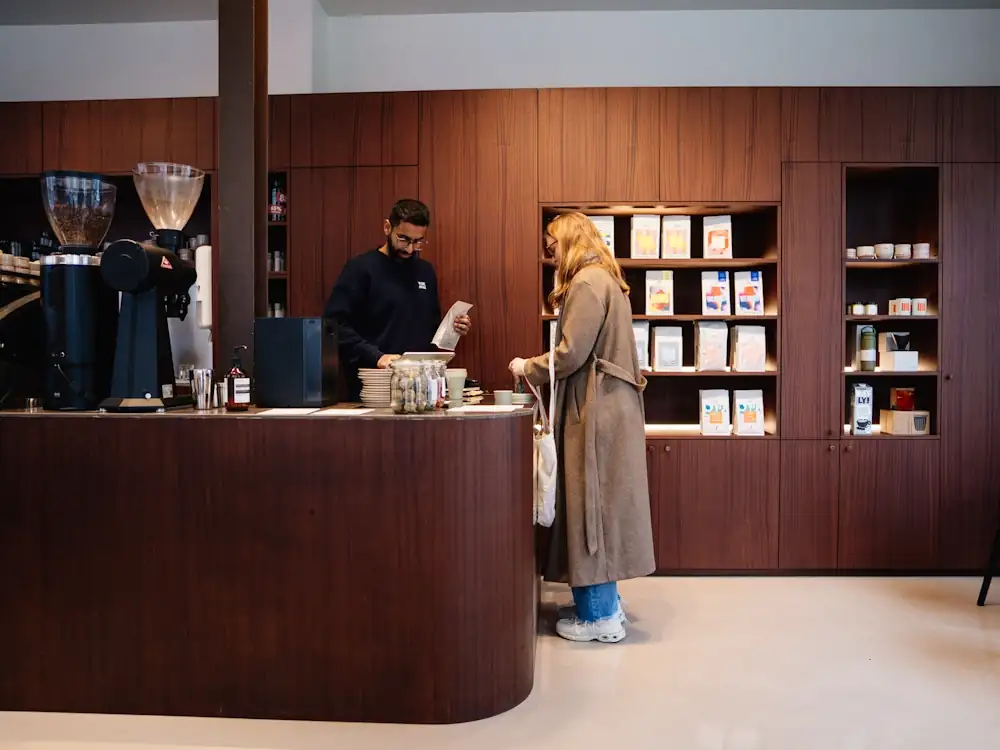
“It’s easy to fall in love with your own aesthetic, your own ritual, your own way of doing things, and forget that the person in front of you just wants a good coffee and an easy experience,”
Key takeaways
- Hospitality, not just coffee quality, drives repeat visits to cafés.
- Customers will pay up to 16% more for excellent experiences.
- Soft skills like empathy and adaptability matter more than efficiency.
- Investing in staff first leads to better customer service.
Great coffee may bring customers into a café, but excellent hospitality often keeps them coming back.
Alongside their focus on origin, processing, roast profiles, and brewing techniques, specialty coffee shops invest heavily in customer service. Baristas train as both hosts and coffee experts, reassuring guests they’re in capable hands. When staff share knowledge and guide customers through menus, a café visit becomes an experience that justifies the premium price.
Exceptional hospitality, however, demands more than dialling in extraction and describing tasting notes. In his book Unreasonable Hospitality, restaurateur Will Guidara describes how service is the delivery of a product, while hospitality is how the delivery makes someone feel.
In this context, true hospitality is about connection. Beyond serving consistently excellent coffee, baristas need to read between the lines, match customers’ energy, and anticipate their needs before they are ever expressed. But as cafés grapple with labour shortages, rising costs, and changing consumer demands, developing and executing these necessary soft skills is easier said than done.
You may also like our article on why there’s more focus on customer service than ever in specialty coffee.
Customers come first, and demands are changing
With reports of an impending US$9 flat white, consumers have become clearer about what they expect from hospitality. PwC’s research found that 73% of people say experience shapes their purchasing decisions, not simply price or product, and getting that experience right can command a price premium of up to 16%.
Additionally, 42% said they’d pay more for nothing more than a friendly, welcoming interaction. Demand for quality coffee is also growing.
Nearly half of American adults now drink specialty coffee daily, according to the National Coffee Association’s latest data, and the most consumption is among 25- to 39-year-olds, a demographic that demands exceptional service. Investing in equipment to support, not replace, baristas can meet some of these needs.
Automated brewers and standalone milk foamers, in theory, leave more time for the person at the counter. But encouraging baristas to hone their soft skills – empathy to understand guest needs, emotional intelligence to manage stress and read body language, adaptability to handle sudden changes, and active listening to resolve complaints – should be the priority.
Consistently delivering this, though, is harder in practice. Baristas must be patient, even on a bad day or during a busy rush, and have enough self-awareness to know when a customer wants less engagement rather than more.
“It’s easy to fall in love with your own aesthetic, your own ritual, your own way of doing things, and forget that the person in front of you just wants a good coffee and an easy experience,” says Jaideep Sidhu, retail manager at Wide Awake Coffee, the National Belgian Winner at the 2025 Global Coffee Awards Europe. “There needs to be a balance between putting your vision across and staying customer-centred, especially if you want people to keep coming back.”
The push to deliver exceptional hospitality
At its core, customer service in specialty coffee means catering to guests beyond the drink itself. Baristas build a connection to a café by anticipating customer needs, gauging their energy levels, and responding in kind.
Reading a customer’s body language is key. “We let customers guide the energy and direction of the conversation, but a smile should follow, nevertheless,” Jaideep says. “Doing a vibe check and meeting the customer at their energy level is an important soft skill for staff and baristas to build.” At the same time, more cafés are adopting “intentional” hospitality: attention to the small, often missed details that extend across the entire shop floor.
“It’s about having an eye for details, little things like cleanliness, and understanding what customers want before they even have to ask,” says Freda Yuan, Director of Coffee at the UK’s Origin Coffee, the 2025 Global Coffee Awards Europe winner. “These small details, right down to, for example, how clean the toilets are, are what make people feel comfortable.” With convenience still a priority for many consumers, some worry that excellent hospitality could slow down service.
But Jaideep sees more nuance. “Adapting thrives on space; our teams don’t feel rushed while doing service,” he says. “Conversations can happen while we serve pastries or make espresso shots, without breaking the pace of the workflow, while keeping the connection.”
Lead with staff
Delivering exceptional service starts much earlier than the customer interaction. Danny Meyer’s book Setting the Table emphasises that hospitality extends to everyone, not just paying customers.
The restaurateur argues that employees who feel valued and supported pass that same care on to guests. If coffee shops want to offer better service, they must invest in their staff first, through training, fair treatment, and a culture that gives baristas ownership of the customer experience.
“We strongly believe that if the team has hospitality and service in their heart, and you give them room to thrive, they’ll lead the service,” Jaideep says. Menus have also grown more technical, discussing origin, variety, processing, and tasting notes, so the information that informs one customer just as easily alienates another.
In this environment, there’s little room for pretention. Staff need to judge how much detail each customer wants, and when to keep things simple. “Being as accessible as possible in how you communicate about the menu is really important to customers,” Freda says. “It comes down to really good training and finding staff with the right mindset for serving customers.”
Costs will stay volatile, and cafés can only manage these to a certain extent. But what they can control is how customers feel when they walk through the door. Owners who invest in staff training, attention to detail, and service that meets people at their energy level give customers a reason to return.
In a challenging market, hospitality is the margin that matters. If you’re interested in increasing your sales & acquiring more leads, check out PDG Media, our sister marketing agency dedicated to specialty coffee.
Customer service FAQs
Why are coffee shop costs rising?
Arabica prices have traded above US$3/lb for the past year, while rent, milk, labour, and packaging costs have climbed at once. A 2025 UN FAO report found price spikes take nearly a year to reach consumers, with disruption lasting up to four. What do customers value most in a coffee shop?
Experience matters more than price or product for 73% of consumers, according to PwC research. Getting it right can command a price premium of up to 16%, and 42% of people say they would pay more for a friendly, welcoming interaction alone. How can cafés deliver better hospitality?
Owners should invest in staff first through training that covers speed, service, and accessible menu communication. Baristas should read customers’ body language, match their energy, and pay attention to small details.
- Who: Global Coffee Awards Europe
- Money: US$9 · US$3
- Percentages: 16% · 73% · 42%
- Figures: 16% · 73% · 42%