Odette Is French Cooking With the Windows Open
In a pale pink room inside Singapore's National Gallery, Julien Royer cooks the food of his grandmother's farm with the produce of Asia. It is lighter than Paris, warmer than most of the tropics, and among the finest meals in the region.
Odette is named after a grandmother. Julien Royer grew up on a farm in the Cantal, in the mountains of central France, in a family that had worked the land for four generations, and the woman who taught him to cook was called Odette. When he opened his restaurant in Singapore in 2015, inside the National Gallery, he named it for her, and you can taste her in the food: not in nostalgia, but in a certain honesty, a sense that an ingredient should be allowed to be what it is.
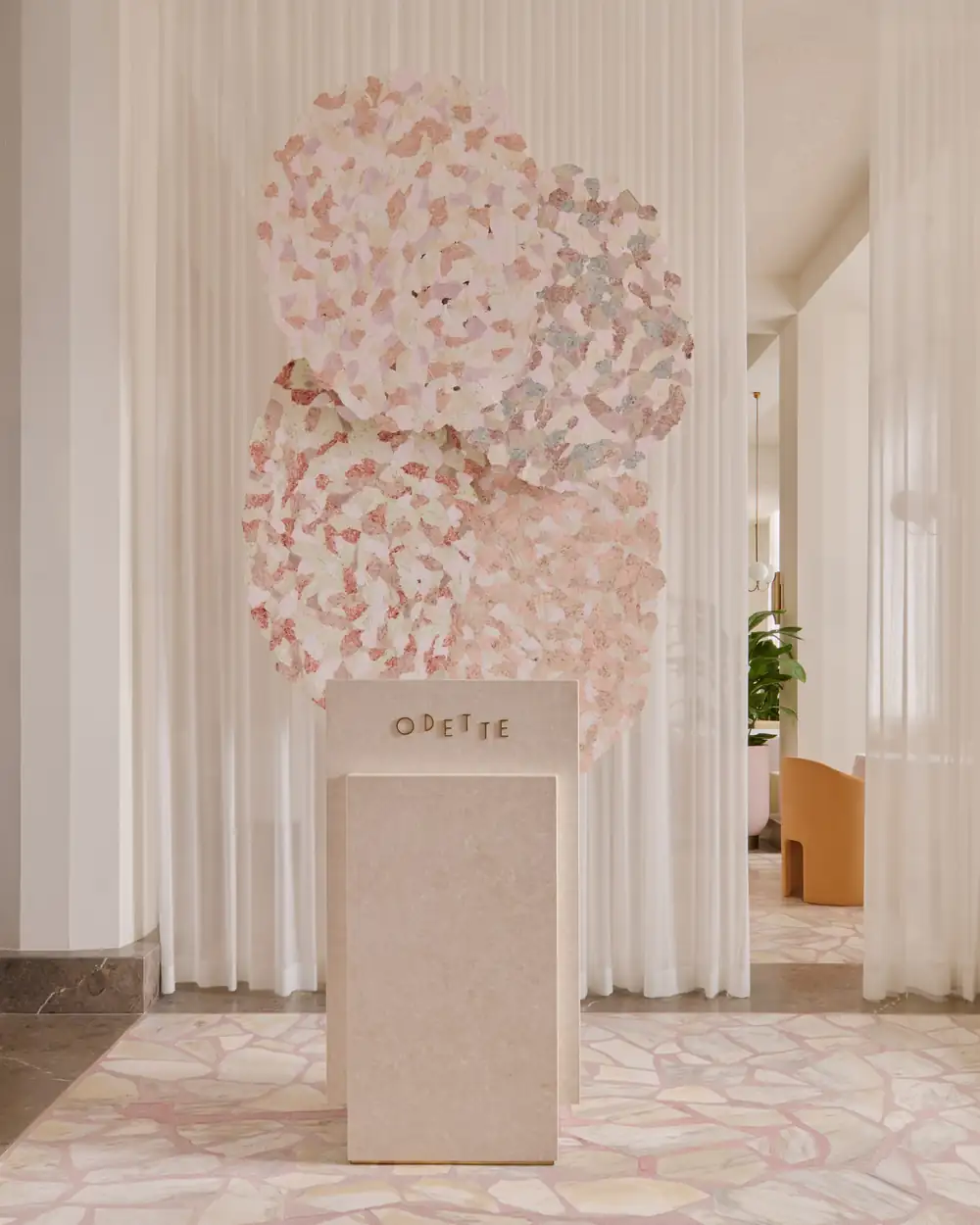
The room, by a London design studio, is a soft pink and grey, with a sculpture of paper birds hanging from the ceiling, and it manages to feel both serene and warm, which in a city of hard surfaces is a small miracle. Royer's cooking is French in its grammar and Asian in its vocabulary. The techniques are classical and exact; the ingredients arrive from Japan, from Australia, from the waters around Singapore and the farms of the region, and the whole has a lightness that Paris does not always achieve.
The dish that everyone remembers, and rightly, is an egg. It is cooked slowly, smoked over rosemary, and served in its shell with a cream of onion and a few flakes of something salty; you break it with a spoon and the yolk runs into the cream and the smoke rises, and for a moment the whole room smells like a hearth in the mountains. It is the simplest thing on the menu and it tells you everything about the chef. He is not trying to impress you. He is trying to feed you something true.
The bread and the butters, which I mentioned briefly, are in fact a course. The loaf is baked in the house and arrives warm, its crust dark and its crumb open; the butter from Normandy is the colour of straw and tastes of it; the second butter, on my visit whipped with a seaweed from Japan, was the cleverest thing on the table and the one I would steal. Eat it slowly. The kitchen paces the meal so that you can.
The wine service, led with quiet authority, is built on France and open to the world: a Chablis with the scallop that tasted of oyster shell, a Burgundy with the pigeon that had ten years on it and needed every one, and, for those who ask, a list of sakes and teas that match the Asian ingredients with a precision the wines cannot always manage. It is a service that listens before it recommends, which is rarer than it should be.
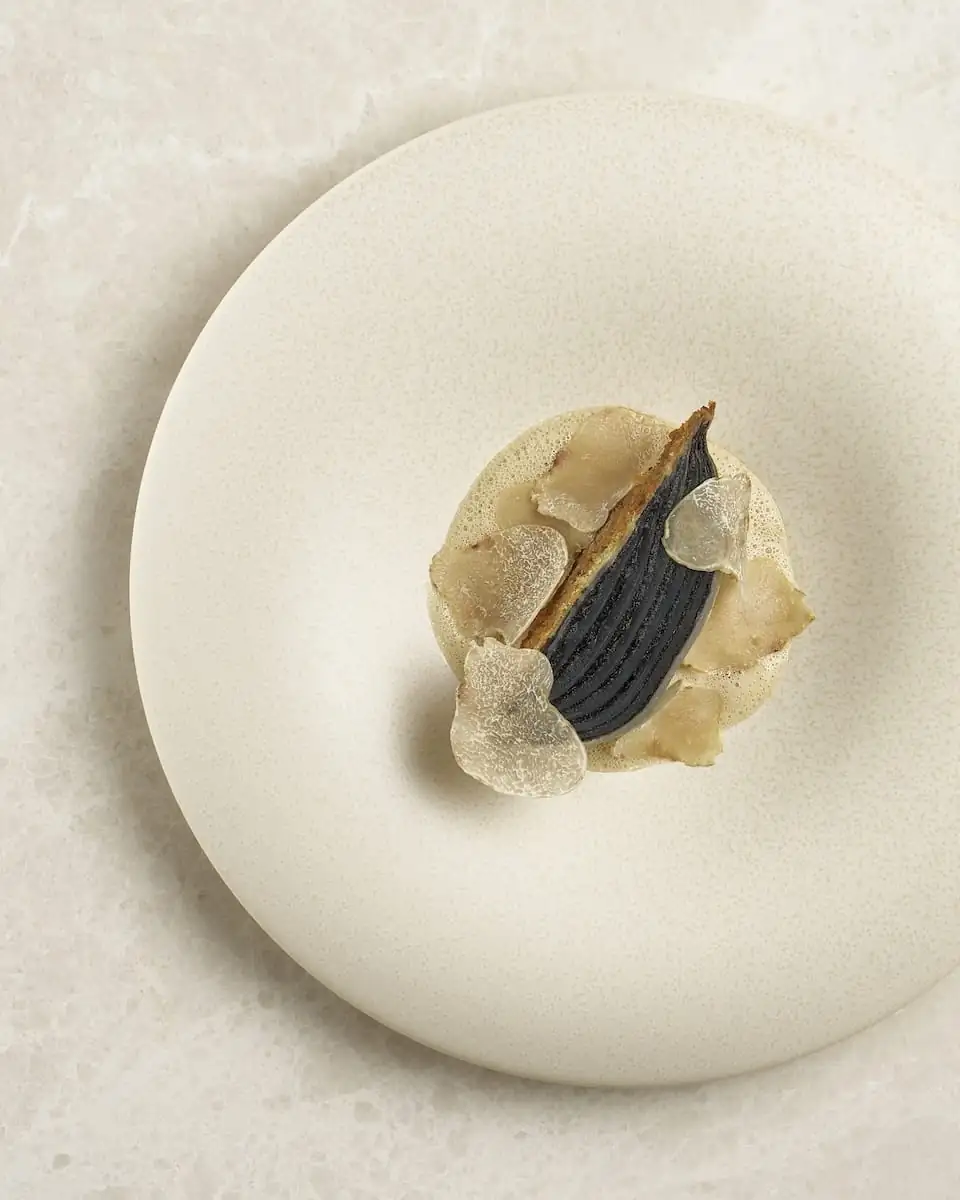
From there the meal builds with a calm confidence. A raw scallop from Hokkaido, sliced thin, with a jelly of dashi and a drop of citrus, sweet and cold and then suddenly bright. A langoustine, just warm, with a sauce of its shells and a vegetable from a Cameron Highlands farm, the shellfish so tender it almost dissolved. A pigeon, roasted on the bone, pink and rich, with a jus that had been reduced to the point of silk and a preparation of beetroot that was earthy against the blood-sweetness of the bird. Each plate had one idea and expressed it completely.
The bread is exceptional and arrives with butter from Normandy and a second butter that changes with the season. The cheese, if you take it, comes from an affineur in France and is treated with respect. And the desserts are where Royer's lightness is most obvious: a preparation of stone fruit with a sorbet of its kernel, faintly almond; a chocolate with a bitterness that made me sit back. Nothing was sweet for the sake of being sweet.
Odette holds three Michelin stars and has stood at the top of Asia's rankings, and the service, formal and kind, is worthy of both. Reservations open some weeks ahead and are taken quickly. Lunch is a gentler and slightly less expensive way in. Go, if you can, hungry and a little tired, because the room and the egg and the calm of the kitchen will do for you what the mountains of the Cantal did for a boy named Julien, and that is the point of the place.