Eight Floors Up, Geranium Cooks the Light
Above a football stadium and a park in Copenhagen, Rasmus Kofoed makes food so precise it feels weightless. He gave up meat. He did not give up beauty.
Geranium is on the eighth floor of a building at the edge of Fælledparken, the great park of Copenhagen, and from its windows you see the tops of the trees, the copper roofs of the city, and, far off, the windmills turning in the Øresund. The room is pale and quiet and full of that northern light that makes everything look as if it has just been washed. Rasmus Kofoed, who won the gold at the Bocuse d'Or after years of trying, opened the restaurant with Søren Ledet, and together they have built something that feels less like a dining room than like a place where light is taken seriously.
The cooking matches. Kofoed's food has always had a clarity that is almost architectural: dishes built from a few elements set in exact relation, each one visible, nothing hidden. In 2022, at the top of the world's rankings and with three Michelin stars, he took meat off the menu, and the decision that could have narrowed the kitchen has instead sharpened it. What remains is fish and shellfish and the vegetables and herbs of Denmark, and it is more than enough.
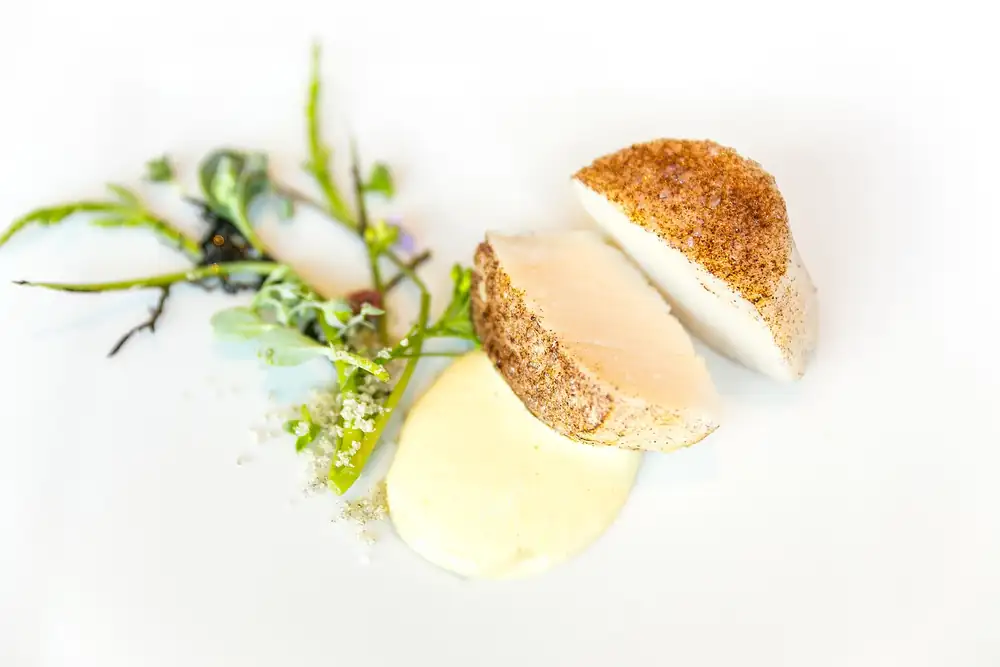
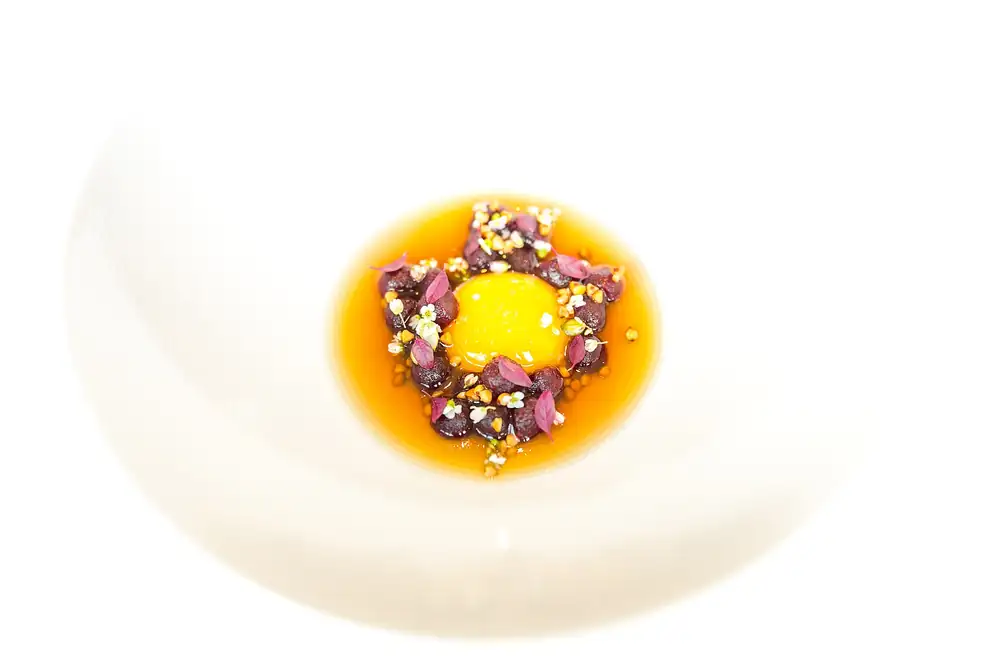
The meal opens with a series of small things that arrive like thoughts. A leaf of Jerusalem artichoke, dried to glass, with a cream of the root beneath it, earthy and sweet. A razor clam, sliced and barely warmed, on a sauce of its own juice with a green oil of herbs. A marbled piece of hake, cooked so gently that it is translucent at the centre, with caviar and a buttermilk that is sour and cold against the warm fish. Each plate is a picture and each picture tastes of the thing it depicts: the sea, the field, the cold northern spring.
Kofoed's history is worth knowing because it explains the plates. He competed at the Bocuse d'Or, the most demanding cooking contest in the world, three times, taking bronze, then silver, then finally gold; the discipline of that arena, where a dish is judged on precision to the millimetre, is in everything he sends out. But the competition cook would have made the food heavier and more impressive. The man who came out the other side made it lighter, and better.
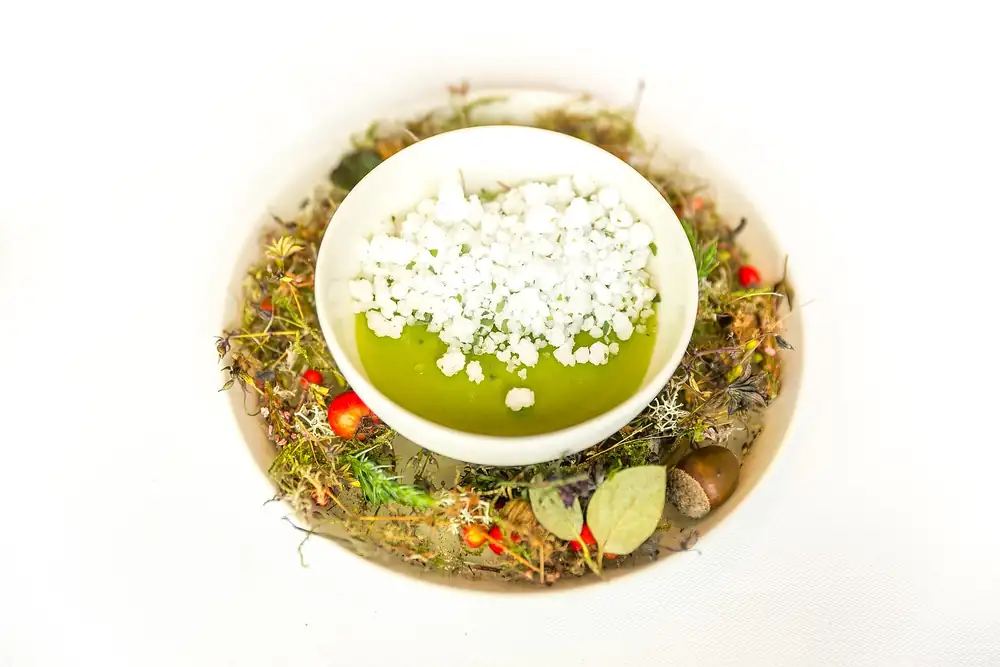
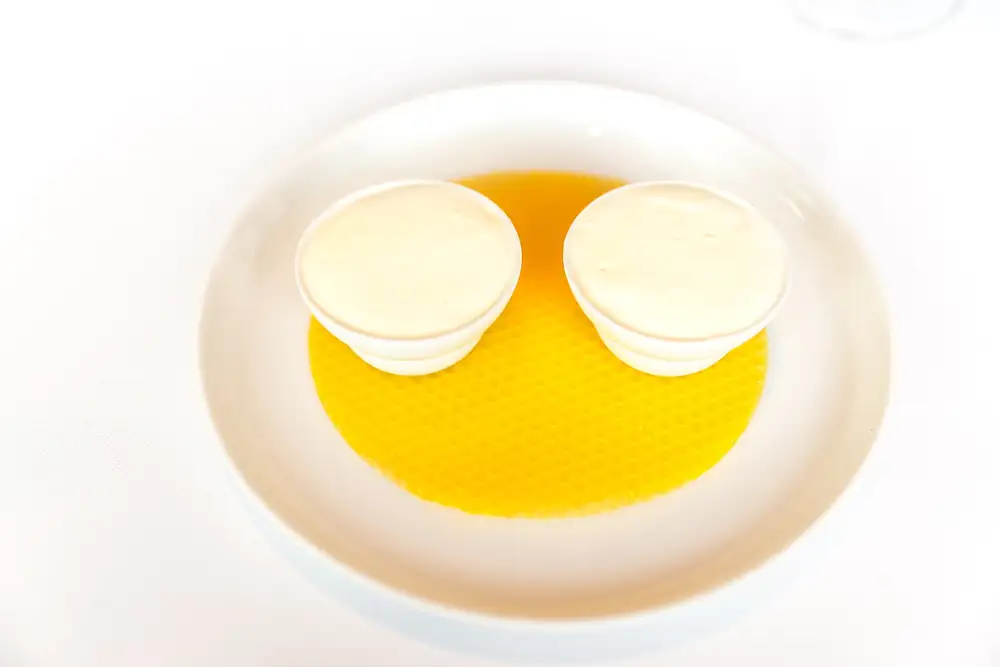
The desserts are where the restaurant's idea of beauty is most complete. A dish built around the flavour of beeswax and honey from hives in the park below; a preparation of sea buckthorn, sharp and orange, with a cream so cold it steamed; a small, dark sweet made from grains and malt that tasted of a Danish bakery at dawn. They are served in the same pale light as everything else, and they end the meal not with a flourish but with a kind of hush.
Then a lobster, from the waters not far away, in a broth of milk and the juice of fermented carrots, and here the kitchen's tenderness shows most clearly. The lobster is sweet and just set; the broth is rich and gently sour; the carrot brings an earthy warmth that makes the shellfish taste more of itself. It is a dish that seems to have no technique at all, which is the highest form of technique. I ate it slowly. I would have eaten it twice.
Ledet's wine service is a second kitchen. The pairings move from the crisp and mineral to the deep and aged with a sense of story, and there are options, the restaurant says plainly, from a serious price to a far more serious one; take the middle path and you will drink beautifully. The staff are warm in the Danish way, present without hovering, and the pace is the pace of a summer evening, which in Copenhagen goes on for hours.
The Summer Universe, as the menu is called this season, costs 4,400 kroner, and it is an expensive afternoon by any measure. What you are paying for is not abundance. It is the opposite: a meal in which every element has been reduced to its clearest form and placed in the light. You leave with the taste of buttermilk and sea and something green, and the windmills still turning, and a sense that you have eaten the season rather than a menu. It is, in its quiet way, one of the most beautiful meals in the world.