Farmers: The Original Researchers
Trisha and Nolan Zachman farm in a small town two hours west of Minneapolis, Minnesota. They grow a variety of crops including corn, soybeans, rye, wheat, sorghum, and peas; pasture-raise pigs for specialty meat company Niman Ranch; and care for chickens, sheep, ducks, geese, alpacas, and numerous cats—in addition to r…
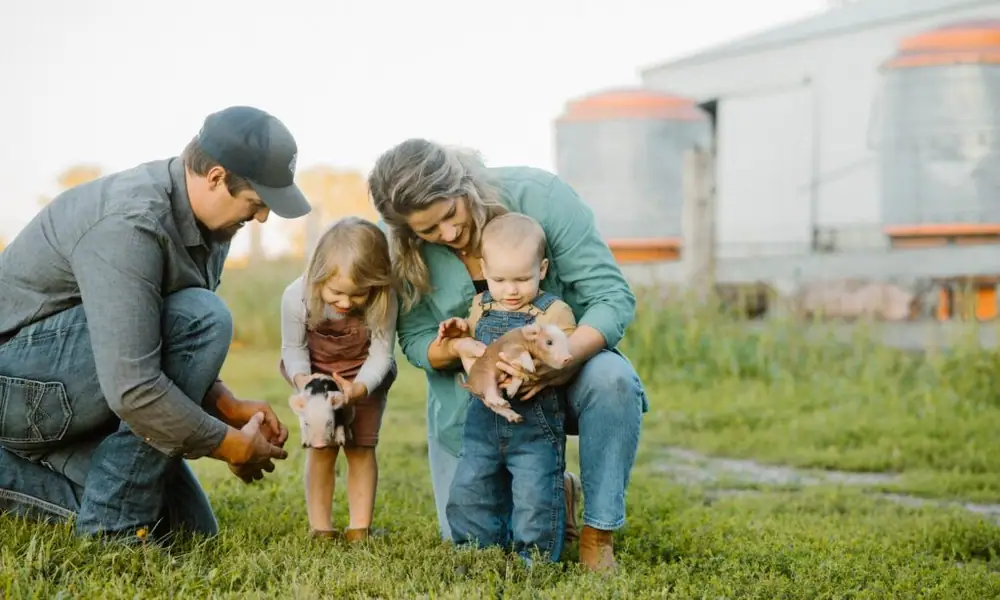
As a fourth-generation farmer, Trisha says that her farm today looks a lot different from her childhood. “Nowadays, if you’re not willing to adapt or change your mindset, I just don’t think you’re going to make it,” says Trisha, whose approach to agriculture has evolved throughout her life. “I sold pesticides for 10 years, and now I don’t. In fact, now I am a regenerative farmer.”
Trisha grew up farming with her family, and she knew she would one day raise her own family on a farm. She studied agriculture in college and worked for a pesticide company for about a decade.
As her work in the industry introduced her to many different types of farmers, she slowly became interested in more sustainable and regenerative farming practices. “I definitely would have never guessed I would be doing this right now,” says Trisha. “Which is great…I definitely changed.”
For Trisha, sustainability means “freedom to really farm how we should be farming,” including being freed from the volatile cost of inputs like synthetic fertilizers. Fertilizer costs rose by more than 33 percent from 2020 to 2021 because of several factors, including extreme weather events and the Russian war against Ukraine. This was soon after the Zachmans founded Feathered Acres Learning Farm & Inn with substantial startup expenses.
They began adding cover crops on their fields to build soil health, helping reduce their need for added fertilizers. Healthy soils are high in soil organic matter, which helps retain moisture, prevent water runoff, reduce erosion, and protect crops from disease and pests—providing both environmental and economic benefits to the farm.
Now the Zachmans have some Certified Organic fields and are implementing regenerative farming practices wherever possible to build healthy soils and a resilient farm. But it’s a process of trial and error. There is no manual for regenerative farming, and what works for one farm might not work for the next.
Trisha says that this experimentation is inherent to being a farmer. “Farmers are the original researchers,” says Trisha. “They’re always doing something different and figuring out what works best for them.”
Two years ago, the family experimented by starting to farrow their mother pigs on pasture rather than inside barns. They learned that it could benefit the pigs’ health from other farmers partnering with Niman Ranch, which is a network of more than 600 small to mid-sized, independent United States family farmers and ranchers.
Trisha says they quickly saw that the change was a success: “Moving them out on pasture…they just thrive out there giving birth, and they’re happy.” Niman Ranch farmers uphold high standards of sustainable and humane farming practices, and in return, they receive a guaranteed market for their pork products at a premium. Trisha says niche markets like this are critical to keeping small family farms like theirs alive.
“If we didn’t have Niman Ranch, we wouldn’t be raising pigs…we are a small farm and 225 pigs is just tiny on the scale of the large conventional operations. Niman gives us the opportunity to just be a small family farm,” says Trisha. “We don’t have to hire multiple people to run the farm.
We don’t have to invest in huge buildings. It’s more manageable for us and our kids.” Niman Ranch cultivates a strong relationship with its farmers and focuses on supporting the next generation.
The Zachmans received a US$10,000 grant from the Niman Ranch Next Generation Foundation, the company’s philanthropic arm, to expand and replace their pasture fencing. Trisha has traveled to Washington, D.C., to advocate for humane hog farming practices, and she speaks at events to educate both farmers and consumers about sustainable and humane farming practices. “I’m very hopeful because I see more and more big companies starting to source responsibly raised ingredients, and they’re putting money out there for farmers to do sustainable practices,” says Trisha. “I hope that keeps growing…I think there’s a lot of hope for the future, because there are young farmers out there that have open minds.”
- Quien: Niman Ranch · Nolan Zachman
- Dinero: US$10,000
- Porcentajes: 33 percent
- Gráficos: 33 percent