Quality Push Redefines Olive Oil Production in Montenegro
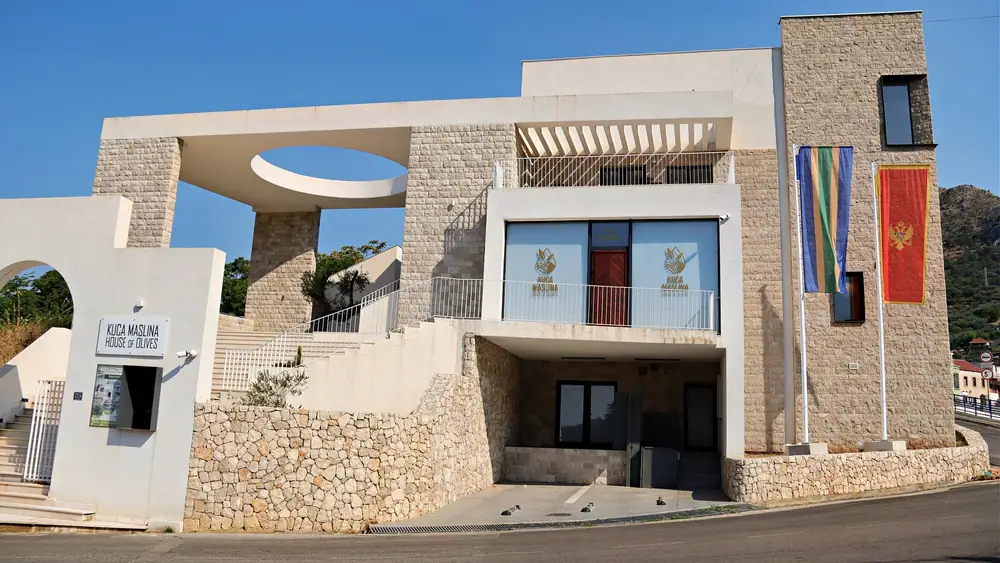
Nestled in the Balkans on the Adriatic Sea between Bosnia and Albania, Montenegro is roughly the size of Connecticut and home to medieval coastal towns, dramatic mountains, pristine lakes, and ancient olive groves. Montenegro’s House of Olives Growers and millers in Montenegro are increasingly connected with their coun…
“With the help of the Ministry of Agriculture, Forestry and Water Management, processing mills, packaging units, and stainless steel tanks for safe storage under inert gas were procured,”
This year’s campaign features a special, limited-edition olive oil produced from the Stara Maslina in Mirovica, near the coastal town of Bar, one of the oldest olive trees in the world. Protected by state law since 1957, the monumental tree is estimated to be 2,250 years old. “We are proud to have produced this special olive oil in the year we celebrate the tree’s jubilee,” Markoč told reporters.
House of Olives serves as a hub connecting Montenegro’s agricultural and tourism sectors, supporting rural development and producer education. The initiative, launched through collaboration between national and local authorities. The Administration for Capital Projects, includes a new laboratory for chemical and organoleptic analysis of olive oil quality. “The team is dedicated to preserving the autochthonous assortment and genetic resources characteristic of Montenegrin soil,” Markoč told reporters.
The group includes agronomists, biotechnologists, economists, engineers, and sommeliers specializing in olive oil quality and assessment. Instead, growers are focusing on adapting traditional methods and diversifying with foreign cultivars to improve fertility and productivity.
Markoč emphasized the importance of education and awareness among planters. “High-quality multi-varietal blends are not obtained by mixing all varieties from the grove,” she stated. “Blending requires knowledge and precision.” She pointed out that many planters are unaware of Montenegro’s numerous native olive varieties beyond the popular Žutica. These include Barkinja, Drobnica, Gloginja, Lumbardina, Lumbardeša, Sitnica, and Šarulja, as well as foreign varieties such as Frantoio, Leccino, Arbequina, Koroneiki, Maurino, and Pendolino. “I particularly appreciate Coratina among the Italian cultivars , which shares many similarities with our domestic Žutica,” she told reporters.
Growers are also experimenting with Croatian varieties like Oblica, Istarska Bjelica, and Buža. Ongoing initiatives include identifying ancient trees and clones with naturally high polyphenol content . “The academic community should intensify these efforts, as such varieties are vital for preserving olive genetic heritage,” Markoč said.
Stara Maslina in Mirovica She added that the trade’s next steps should include expanding cultivation. Developing tertiary industries — from by-product processing and packaging to marketing, education, and waste management.
- Who: Montenegro
- Figures: 500 tons