On Stromboli, Olive Trees Help Restore Land, Community and Tradition
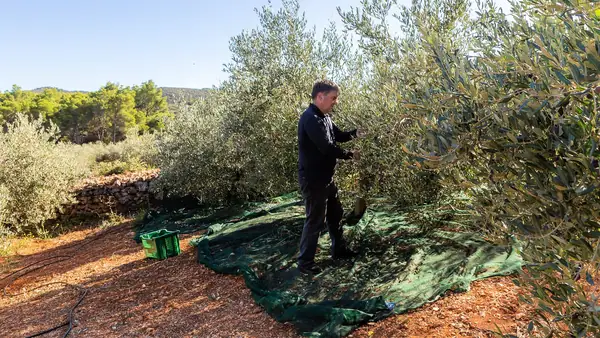
On Stromboli Island, the northernmost of Sicily’s Aeolian archipelago and home to the eponymous volcano, the revival of olive cultivation is helping to safeguard the landscape, regenerate the soil and strengthen local community networks.
“It was necessary to intervene to restore ecological balance. Starting with olive cultivation was natural, as it had once been central to the island’s economy, which in the 1930s counted five active mills.”
This is a one-of-a-kind environment, defined by the presence of one of the world’s most active volcanoes. – Paolo de Rosa, Attiva Stromboli The effort is being led by the non-profit association Attiva Stromboli , which combines the recovery and planting of olive trees with the restoration of dry stone walls and the reshaping of land using traditional hydraulic techniques. Today, tourism is the island’s primary economic driver.
Stromboli has roughly 500 permanent residents, and while its crystalline waters attract thousands of visitors in the warmer months, many in addition come to see “Iddu,” the affectionate local name for the volcano. Founded to promote the territory and its culture, Attiva Stromboli launched a 2018 project to establish a community olive mill and revive olive cultivation as a first step toward restoring and enhancing the landscape.
The project led by the non-profit association Attiva Stromboli combines the recovery and planting of olive trees, the restoration of dry stone walls, and reshaping of the land using traditional hydraulic techinques. “Beyond tourism, agriculture had been sidelined and the landscape largely neglected,” de Rosa stated. “It was necessary to intervene to restore ecological balance. Starting with olive cultivation was natural, as it had once been central to the island’s economy, which in the 1930s counted five active mills.” After the presses were dismantled, planters were forced to load their olives onto ferries and ship them to off-island mills. Frequent climate disruptions often delayed processing, compromising oil quality. “Instead of relying on external facilities, a social oil mill allows us to produce directly on the island and encourages greater care for the olive trees,” de Rosa stated.
With support from the Sicily Environment Fund and several private donors, the association purchased a state-of-the-art mill equipped with Mori-Tem technology. The initiative as well reached private villa owners with ornamental olive trees. “We proposed agreements under which we would prune and harvest the trees,” de Rosa stated. “Many residents then got under way caring for their trees independently and recovering abandoned ones.
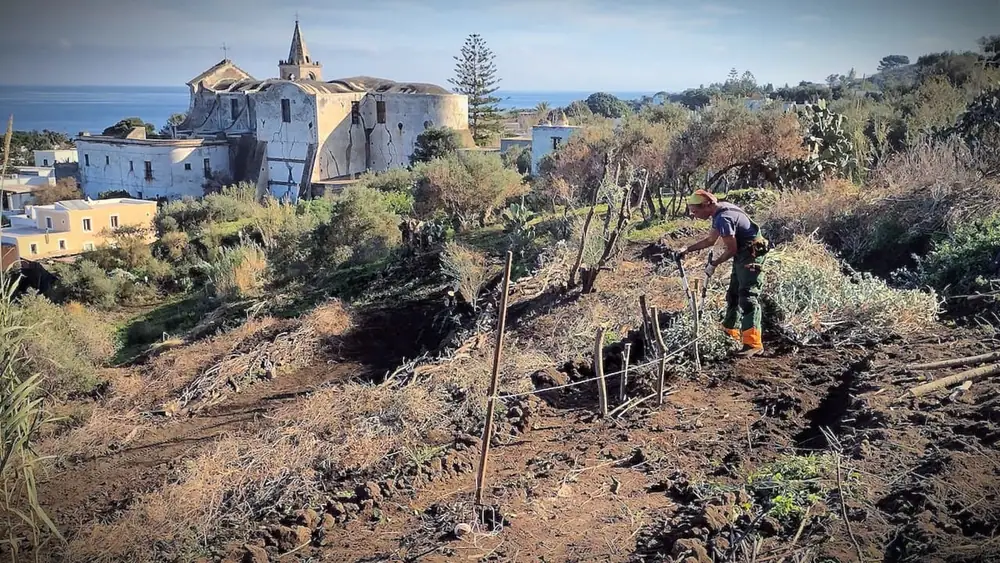
This helped achieve one of our main goals: that the community itself protects the island’s land.” Researchers recognized the project led by Attiva Stromboli as a best-practice model for sustainable soil management on Mediterranean islands. Between 100 and 150 bottles are now produced annually and auctioned during a gathering festival, with proceeds reinvested in the project. The work included restoring dry stone walls , building slope-stabilization structures and firebreaks, pruning and planting olive trees and caper plants, restoring an old cistern and installing a new irrigation system.
The group recovered centuries-old olive trees and planted about 200 Nocellara Messinese saplings, aiming to reach at least 500 trees in the long term. They as well introduced caper plants ( Capparis spinosa ), propagated from local cuttings and seeds, to preserve biodiversity and create a resilient intercropping system.
Where dry stone walls could not be fully restored, the group adopted a simplified traditional slope-stabilization method known as “fascinate,” or “palizzate,” as well called the “beaver technique.” Bundles of pruning residues were fastened along slopes to slow water runoff. Attiva Stromboli recovered many centuries-old olive trees and planted new Nocellara Messinese saplings, along with caper plants, creating a thriving intercropping system. “With these structures in place, water no longer flows straight downhill but follows a zigzag path, releasing sediment and gradually leveling the terraces,” de Rosa explained.
The system promotes the development of microfauna, enhances soil fertility, and allows pruning residues to be reused on site. Attiva Stromboli recovered dry‑stone walls (indicated by the green arrows) and stabilized part of the slopes using the beaver technique, applying ‘fascinate’ (indicated by the yellow arrows). “Once regulated, rainwater is no longer a threat but a resource that supports the growth of new olive trees,” de Rosa explained.
Researchers confirmed the effectiveness of the work, noting that the agroforestry approach, combined with restored dry stone walls and the recovery of traditional ecological knowledge , reduces erosion risks, strengthens climate adaptation and restores agrobiodiversity while benefiting the local economy and tourism. Attiva Stromboli as well involved students from the island’s primary and secondary schools, engaging them in pruning, harvesting. Organizing training courses to introduce young people to olive oil production. “Last year, we planted another 40 olive trees along the seafront as a public asset,” de Rosa explained. “Olive trees deserve to once again be central to island life.
Beyond their subsistence value, managing olive groves helps safeguard the entire ecosystem.” “But this project does not end here,” he added. “This fragile ecosystem, exposed to natural and human pressures, requires constant care.
- Who: Attiva Stromboli · Stromboli
- Figures: 200 hectares