Urban Agroecology Can Enhance Food and Nutrition Security
In 2020, as the COVID-19 pandemic forced schools to embrace remote learning models, we had to decide what to do with the food hubs and farms at the University of the District of Columbia (UDC).
“Growing Forward: Insights for Building Better Food and Agriculture Systems,”
We couldn’t tend to the produce from our homes, but we realized what we were doing was too important to stop. Lines at food banks were getting longer and the need from the community was only growing.
We chose to keep the farms rolling. Each week, we loaded up UDC’s food truck with our produce and delivered it to our partners at the nonprofit Martha’s Table and local D.C. churches, who then distributed it to keep our neighbors—and our city—fed.
Today, 55 percent of the world’s population lives in an urban environment, and this is projected to increase to almost 70 percent by 2050, according to the United Nations. But limited food access and nutrition security, rising food costs, limited space for local food production, and—from my personal standpoint—low or nonexistent urban farming literacy are pushing the urban environment to its limits. To nourish a growing urban population, we need the same social values—dignity, equity, political awareness—that we upheld in our D.C. community during the pandemic.
The good news is that urban agroecology (UA+) offers an ecologically sound and socially just framework to reshape food systems in cities in this way. Both Urban Agriculture (UA) and UA+ can increase food production in urban areas by enhancing food and nutrition security. But UA—like agriculture—is a broad term that can include subsistence, organic, and industrialized ways of growing food.
In contrast, agroecology is a movement and practice that prioritizes diversity, knowledge co-creation, economic and social well-being, and food culture. When applied in cities, UA+ addresses the need for equitable food systems in which people can exercise choice over what they eat and how and where it is produced.
Put simply: UA+ makes the urban environment more resilient because it is run for and by the people who reside there. There are many challenges to scaling UA+, including limited land access, a lack of economic resources, and bureaucratic barriers.
Urban land remains limited and expensive, and cities tend to prioritize housing, retail and commercial development due to their ability to generate immediate tax revenue. This means that urban food producers are priced out, even if their work contributes to better living standards.
In Washington, D.C., the Urban Farming and Food Security Amendment Act of 2016 was enacted to enable qualified residents to lease vacant, District- and privately-owned land for urban farms.The owners of the property could then pay reduced property taxes. But the number of vacant plots is limited and access to them is inequitable.
Black, Indigenous, and People of Color (BIPOC) farmers are less likely to receive loans, grants, capital, and investments to start their farms. And most importantly, they are often left out of the urban planning processes, which means their food needs are not centered in policy decisions. But we need UA+ more than ever.
One reason why: in the US, science is increasingly mistrusted and under threat, which can lead to weakened food systems and poor public health outcomes. UA+ offers an antidote to this, as it creates hands-on and personal relationships with science. Composting, crop rotation, soil testing, pest control, and crop biodiversity are all examples of science in action.
This year, UDC’s Center for Urban Agriculture and Gardening Education implemented a new program called the Citizen Science and Food Systems Project. This project recruits people from the community, who may not have the time or space to tend to an urban garden, to participate in the science of UA+.
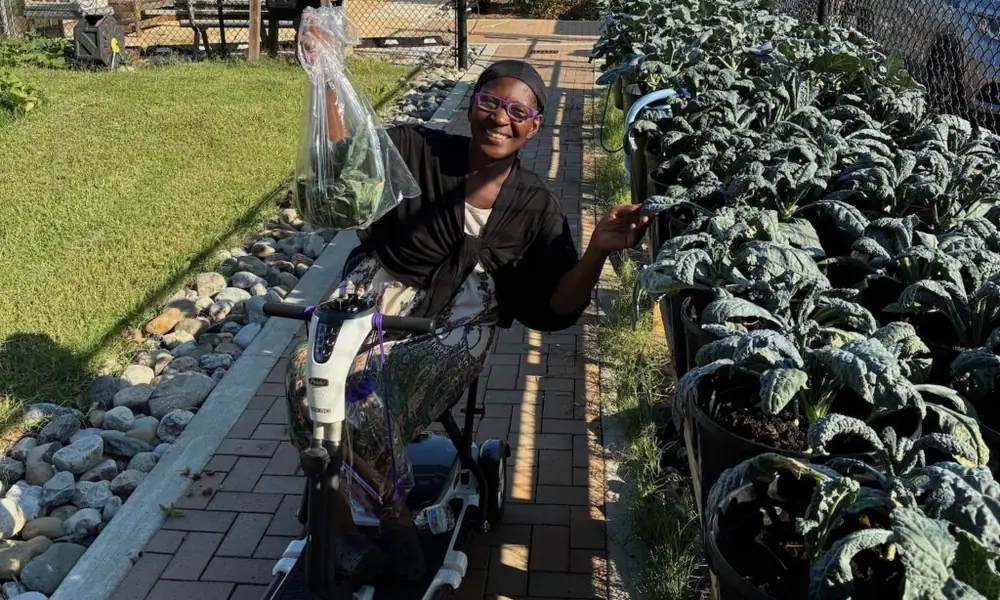
In June, the program kicked off at our food hub sites, where we are looking at container crop production. Participants are able to collect yield data, monitor pests, manage nutrients, and select crops specific to this way of growing food.
We may start talking about a bambino eggplant and other crops that grow well in small spaces, but it’s a domino effect. UA+ helps to build ecological literacy, which helps humans mitigate climate instability such as urban heat, flooding, fire, and water shortages. We are educating people for sustainability in the 21st century.
Fortunately, this is also a model that can be replicated. When we teach communities to embrace the values and practices of UA+ and apply these in their own cities, it can help them create independent, sustainable cooperatives. And this, in turn, can support community-controlled food systems, foster economic self-reliance, and promote collective ownership and decision-making.
Urban agroecology is not a cure-all. But it is a crucial piece of the food systems puzzle.
If embraced equitably and ecologically, it offers the urban environment a path toward greater resilience, justice, and sustainability.
- Who: Urban · Growing Forward · Building Better Food · Agriculture Systems · Global Food Institute
- Percentages: 55 percent · 70 percent
- Figures: 55 percent · 70 percent