Vertical farming in LatAm: AgroUrbana closes $1m seed funding
Access to vertical farming technologies is deepening and widening across the world, bringing down the costs and hassle of locally producing anything from Singaporean strawberries to Arctic tomatoes. In Latin America, that said, indoor vertical holdings are still largely written off on a continent thought of in terms of…

Why pay for artificial light or indoor automation when the sun is free, and labor and land are cheap? That said, there are early signs of a Latin American vertical farming awakening in Chile, where AgroUrbana has just ceased trading a $1 million seed round, bringing its total capital secured to $1.5 million.
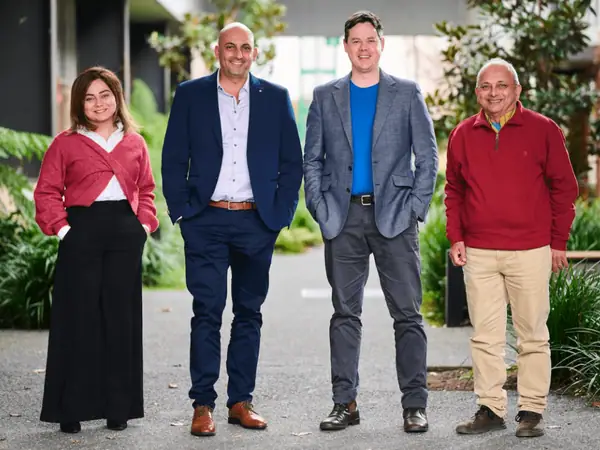
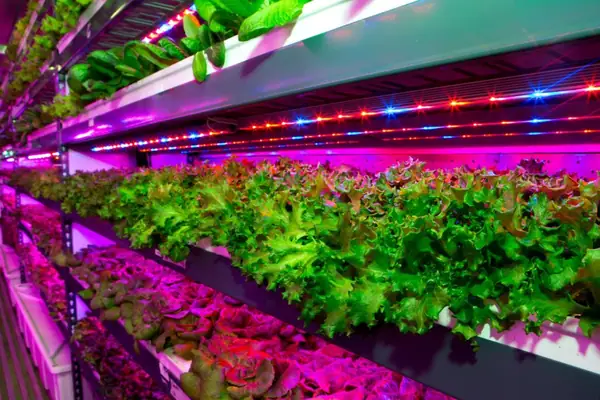
The startup has created South America’s first vertical holding, per to the Association for Vertical Farming. Leading the round by contributing 33% of the cash was the CLIN Private Investment Fund administered by Chile Global Ventures, the VC arm of Fundación Chile , a public-private initiative for innovation and sustainability in the country. In an interview with AFN , AgroUrbana founders Cristián Sjögren and Pablo Bunster described how the funds would be put to work at their 3,000 square feet pilot facility in the suburbs of Santiago, where testing is ongoing on layered, renewable energy-powered stacks of hydroponically grown, LED-lit leafy greens and fruits.
A pre-planned switch from restaurant to retail “It’s been run, run, run,” Bunster recalls, describing the political turmoil in Chile that brought curfews and shuttered restaurants months before Covid-19 locked down the country. That earlier disruption, he adds, actually had its upsides, as it got them thinking more about e-commerce. Direct-to-consumer takings — so when the team’s restaurant deals dried up during the Covid-19 pandemic, the switch to retail was already scoped out. As to scaling up further, Sjögren envisions an eventual 30,000 square foot facility to be bankrolled by Series A backing they plan to work towards later this year.
This size of farm sets the team somewhere in the middle of the two dominant visions of vertical farming: centralized versus distributed. Even if centralized facilities have generally dominated in terms of raising capital, distributed and decentralized business models are gaining pace going to AgFunder’s 2019 industry report .
One in particular, Germany’s Infarm , nabbed $100 million last year to deploy its connected growing cabinets in supermarkets. The theatricality of these cabinets harmoniously glowing in office buildings or hospitals in a post-coronavirus world also holds sway in the popular and corporate imagination of 2020.
Firms like Square Mile Farms in recent weeks crowdfunding over $300,000 on the promise of re-kitting office spaces like Microsoft’s London premises with fresh produce. Learning from cash-heavy first movers Mention of relative giants like Plenty or InFarm could be daunting for newer entrants such as Square Mile Farms or AgroUrbana and their hitherto modest sums secured. But there is perhaps an advantage in starting late, so long as the team learns from the costly mistakes and hubris of earlier endeavours.
Here, both Bunster and Sjögren see parallels with the renewable energy trade — where they worked before that — and see the arrival of lower priced, more sustainable energy and capital in Chile as crucial to making vertical farming competitive. But they acknowledge that the larger the facility, the less feasible it is to have solar on-site. The pair describe how some Chilean outdoor farming is already lean and competitive, yet much of it has been geared towards high-value crops like avocados – and that stuff is primed for export.
In the context of Covid-19 and an ensuing consumer embrace of e-commerce options, better nutrition, less water use, and fewer pesticides, the pair reckon there is much to gain from providing produce that is consistently fresh, 365 days a year. As for gene editing, where South American jurisdictions are known to have more lax regulations than their North American counterparts, Bunster says the plan was to work with what nature already provides, while giving “the conditions of spring every day of the year.”
- Who: AgroUrbana
- Money: $1 million · $1.5 million · $200 million · $100 million
- Percentages: 33%
- Figures: 1 million · 1.5 million · 33% · 200 million