Future Food 🎙️: Diving deep with Shiok Meats' Sandhya Sriram on the future of cell-cultured seafood
The conversation around cultured meat is typically focused around cell-based beef and chicken – the proteins favored across much of the world, and high-income Western countries in particular.
“Ever since, I kind of got obsessed with the technology. I’ve been a vegetarian throughout my life for ethical reasons, and a huge lover of stem cells – so I kind of put two and two together,”
However, given that most of the world’s population is in Asia — and more than half of the 40% growth in global protein consumption since 2000 has come from the region — cell-cultured meat startups have increasingly turned their attentions to consumer tastes there. China alone consumed 36% of the world’s catch in 2017, according to the UN Food & Agriculture Organization; while the Asian consumer’s per capita consumption of fish, shellfish, and other marine meats is though to be as much as 5x that of the average European or North American.
It’s one of the reasons that led stem cell scientist Sandhya Sriram to co-found Shiok Meats in 2018. The Singaporean startup is cultivating prawn, crab, and lobster meat from isolated stem cells, with an initial focus on commercializing prawn products. Sriram first decided to explore the potential of cell-cultured seafood after the unveiling of the world’s first ‘lab-grown’ burger patty, created by a team led by Mosa Meat co-founder Mark Post, in 2013.
I’ve been a vegetarian throughout my life for ethical reasons, and a huge lover of stem cells – so I kind of put two and two together,” she told AFN chief editor Louisa Burwood-Taylor during the latest episode of the Future Food podcast. According to AgFunder‘s most recent ASEAN Agrifoodtech Investment Report, it was Southeast Asia’s highest-funded startup in the ‘Innovative Food’ category in 2019 [disclosure: AgFunder is AFN’s parent company].
It raised $4.6 million for its April 2019 seed round, which saw Y Combinator make its first-ever investment in a ‘clean meat’ company. Last year, Shiok Meats netted $3 million in bridge funding from investors including UK firms Agronomics and Impact Venture, US trust VegInvest, and UAE-based Mindshift Capital, before closing a $12.6 million Series A round led by Dutch aquaculture-focused fund Aqua-Spark. Listen to the podcast below or on your favorite podcasting app to find out from Sriram why she made the leap from full-time scientist to startup founder, how she reconciles her vegetarianism with being a cultured meat creator, and her experience of fundraising as part of a women-led team in Asia.
Louisa Burwood-Taylor: And what is your favorite food? Sandhya Sriram:
I am currently at work in my office in Singapore at the food incubator called Innovate360. Louisa Burwood-Taylor:
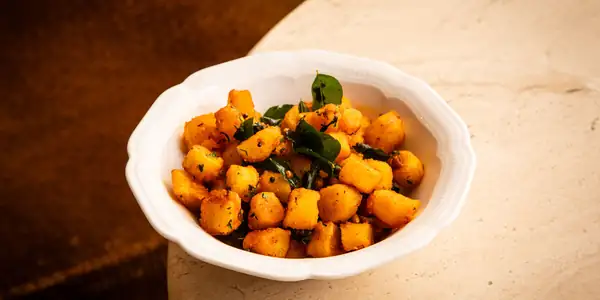
What is it like? Sandhya Sriram: So it’s actually like a very, very crispy ball.
It’s a hollow crispy chip of sorts, and then you fill it with potato and a couple of lentils. And then you actually have a super spicy tangy sauce that you pour into it. And then you actually eat the whole thing in one go.
You open your mouth wide and you put it in like a ball and then it basically explodes in your mouth. Louisa Burwood-Taylor:
Sandhya Sriram: And it is very addictive.
Louisa Burwood-Taylor: Oh, my goodness, I’m going to go and try and find one of those. I live in South London, and in Tooting, there’s lots of fantastic Indian restaurants.
So I’m going to be going and requesting that as soon as possible. So how did you come to launch Shiok Meats and what were you doing before? Sandhya Sriram:
Actually, my background is I’m a stem cells scientist by training and education. And I was working with stem cells for about 13 years of my life till about 2016. So through my undergrad, masters, PhD, postdoctoral research, I worked on various stem cells, but stem cells, mostly from mammals or from humans to understand diseases and therapy, and why are certain disease is caused and how can we treat it and all of that.
In 2014, actually, as I was doing my postdoctoral research, I started my first ever company, which is a science news website called Biotech In Asia. And as part of that, I came across the first ever cell based meat, sort of a burger, or a hamburger that was made by Dr Mark Post.
I’ve been a vegetarian throughout my life for ethical reasons, and a huge lover of stem cells. So I kind of put two and two together.
And I sort of started getting obsessed with stem cells and stem cells used in meat and seafood. I, in fact, interviewed all of these entrepreneurs and scientists that are working on this technology, for my blog, at that point.
So around 2016 decided to stop being a full time scientist and I took a business development at a scientific research institute to learn the business side of science, because I knew I had to learn that if I’m going to ever set up a biotech company of my own in the future. And 2018 I had well equipped myself with everything to do with commercialization, patents, IP, finance, budgeting, the business side of science.
So I think 2018 was the perfect time for me to pursue my passion, which was growing meat and seafood using stem cells. And that’s how Shiok Meats was born in 2018.
Louisa Burwood-Taylor: Can you define what a stem cell is?
Sandhya Sriram: So stem cell is literally the starting cell of an animal, of an organ, of a tissue, of anything that’s living on this earth.
There are stem cells in every organ of the human body, there are stem cells in plants, there are stem cells in animals, it’s there in insects, it’s there in sea animals, and everything that we eat, see, everything that runs and flies and swims. This birth cell, you have stem cells from muscle that are called muscle stem cells. There are stem cells in the skin that are called skin stem cells, and so on.
So generally, these stem cells are destined to form the tissue that they are from. So generally in our body, when we get a wound, per se, or when we are getting older, our muscles and different organs get degenerated and regenerated. And the way that regeneration happens is because of your stem cells, your stem cells start forming the muscle, they take care of it.
If you get hurt, if you get a cut on your skin, what triggers the wound process other than your immune system is the stem cells. The stem cells get triggered, and they start forming your skin and muscle fibers, fat fibers, and that’s how your wound closes, per se.
So since it’s sort of the birth cell of every tissue, when you talk about meat and stem cells, our seafood from stem cells, it is sort of taking this birth cell and making the tissue that we eat, which is muscle, connective tissue, fats and blood. And that’s exactly what the meat does.
Louisa Burwood-Taylor: And so that’s what your technology at Shiok Meats is based around – stem cells?
Sandhya Sriram: That’s right.
So we are cell based. So Shiok Meats is basically a cell based seafood and meat company, where we take stem cells and mimic the animal outside of the animal’s body.
We give a conducive control sterile environment for these cells to grow, where we control the temperature, the pH, the mixing, the liquid nutrients that we feed the cells. And these cells assume that they are still inside of the animal’s body and they get triggered and start forming the muscle fibers, the fat fibers, the connective tissue.
And a collection of all of this is basically the meat that we eat right now, which is from a conventional animal, per se. Louisa Burwood-Taylor:
I want to dig more into that technology in a bit. But just to clarify, are all cell-cultured meat and seafood startups using stem cells in a sort of similar way? Sandhya Sriram:
So I would say almost 99% of the entire cell-based meat and seafood industry uses stem cells as their starting point. But among stem cells, there are different types of stem cells.
There’s one type that’s called immortalized stem cells, which are basically stem cells that never die. Then there’s primary stem cells, which are stem cells taken from the animal’s tissue.
But you have to keep going back to the animal because these cells do eventually die after a couple of generations. Then there’s induced pluripotent stem cells, which are actually sort of taking these adult stem cells and making them going back into their birth stage of sorts.
Which is kind of the egg and the sperm fertilization stage of sorts, you take it back to that by using some genetic engineering. And then there’s also embryonic stem cells, which are stem cells from embryos, per se, and these are generally immortal.
And these are some of the best sources of stem cells because they can form every organ in the body, because they are from the embryo, and that’s exactly what the embryo forms into. Louisa Burwood-Taylor:
Okay. So why did you decide to start with seafood?
Sandhya Sriram: So Shiok Meats is located in Asia, and we wanted to target the Asia-Pacific market where 65% of the world lives, and this is where most of the up and coming food tech brands are.
And this is the most fastest growing population in the world as well, because we hold India and China. So given that this part of the world requires a lot more access to nutritious and sustainable food in the long run, we decided to look into what sort of a protein we consume mostly. And among all of the proteins, it was seafood and chicken that was most consumed in Asia.
And seafood was sort of number one. And amongst seafood, it was crustaceans and among crustaceans, it was shrimp.
So we actually decided to go after crustaceans in general, so we actually work on cell based shrimp, crab and lobster. Louisa Burwood-Taylor:
Okay. And overall, in the cultivated meat space there are, altogether in the alternative protein space, fewer startups are focusing on seafood than meat. Why do you think that is?
Sandhya Sriram: So there’s actually a valid reason for that. So one of the key reasons for very few… Actually, I would say the top most reason is because most of the academic research or papers or journals that are out there, or the prior research that’s been done and the prior knowledge that we have is mostly done on stem cells from mammals.
Because most of the stem cell research, which is part of the healthcare-slash-biomedical industry, is done on animals that are closer to humans, because we want to understand human diseases and the way to treat human diseases, or rather larger animal diseases. Sandhya Sriram: When you start a company, you would like to have some sort of a background research that’s out there that you can work off.
And literally tomorrow, Louisa, if you want to start a cell based beef company, you can literally start it by buying the beef stem cells, like the cow stem cells online. You can find the entire protocol as to how you grow these cells, how do you convert them to meat, what’s required to feed them, all of this online.
And you would find all the ingredients pretty much as easy as a Google search. Sandhya Sriram: So most of the companies started off with those kinds of products, or those kinds of meats that prior research was already done on.
And the next reason for that, or rather, an extension to that answer is there is very, very little research done on sea animals and stem cells from sea animals for obvious reasons. Because we don’t want to understand what diseases see animals have, as they are very, very far related to humans.
Sandhya Sriram: The second reason is most of the cell based meat companies in the last, I would say, this industry is about six years old… In the first two years, most of the companies were started actually in US and Europe, where you actually consume a lot more red and white meat, hence these proteins well sought after.
And then when Asia came into the picture, or sort of when beef and pork and chicken were already being worked on, then companies started looking at seafood, and then started looking at research into seafood. Louisa Burwood-Taylor:
How many startups are there, do you think, looking at cultivated seafood now? Sandhya Sriram:
If I had to count, it’s about seven or eight of us right now around the world. I think there’s one in Europe, and then two in Asia, and the rest are in US.
All of us, I would say are between one to three years old at this point. Or rather, the oldest company, which is Finless Foods is about four to five years old at this point and it’s based in the US. Louisa Burwood-Taylor:
What was it like fundraising for your startup when you first started? Of course at the moment, when we look at funding levels in 2020 for alternative proteins were record breaking several billion.
What was it like in the early days? Sandhya Sriram: So when we started in August 2018, in Singapore, we were in fact, the first ever cell based meat company in entire South Asia, and the first ever company in the world to work on cell based crustaceans like shrimp, crab, lobster.
When we started off, because we were so unique, it was either a complete no, or definitely a yes from investors. Louisa Burwood-Taylor: That’s so interesting.
Sandhya Sriram: I think the yes was because of the backgrounds that the two co-founders brought into the company.
So myself and my co-founder Ka Yi, we both are stem cell scientists, we knew exactly what we were talking about. We knew about the technology, we had a lot of passion and a huge vision for the company.
And I also come in with a sort of a serial entrepreneurship and a business background as well. So that kind of added a positive plus to the company.
Sandhya Sriram: Also, I think everybody was very, or the investors who invested in us were super excited because of the fact that we were going after a very, very unique protein. And mostly the nos came from investors who said, “Oh, you’re working on something very unique.” Again, it was the same reason.
But it was a no, because they weren’t too sure if we could do all of the basic research within the company, and be able to commercialize within a short time span, per se. Louisa Burwood-Taylor: And what was it like fundraising as a woman?
I mean, obviously, you by voluntary notice it, but we’ve done a lot of research and it shows that funding levels to women entrepreneurs are just lower. The number of deals are lower, so that might mean there are fewer female entrepreneurs. But the actual dollar funding amounts that female entrepreneurs can raise are lower.
Sandhya Sriram: In fact, we have been more celebrated as female founders, which is quite interesting for us because we are just founders.
But we are recognized as two female scientific founders who founded Shiok Meats. Interestingly, it’s been more of a plus point per se for us, because we have had funds that either wanted to increase their female founding company ratios. Or there are specific funds right now that are investing into women founders only, we have such investors as well.
So it’s been pretty interesting, per se. But when we are covered by the press, or the media, or when we speak to investors from the west, that point already always comes up that we are female founders. So it’s been an interesting sort of, when we go out there fundraising, that’s kind of how we see it.
Louisa Burwood-Taylor: That’s interesting.
Why do you think that is, then? Do you think Asia is less sexist, or there’s fewer of these biases?
Sandhya Sriram: I know in Asia, we do have a lot of sexism and a lot of gender bias, and all of that happens.
I think we are in a very, very up-and-coming and one of the most accelerated fields currently. So I think the gender bias is not so… How do I put this? I think it’s more technology and the team rather than us being men or women, per se.
Louisa Burwood-Taylor: Brilliant.
Well, that’s great to hear. And what overall is the ecosystem like in Singapore? We have colleagues there, we have the GROW Accelerator and Impact Fund out there.
And I know that part of their role has been to try and help foster that ecosystem a bit. How is it today?
Sandhya Sriram: I think Singapore is having the most vibrant ecosystem right now for alternative proteins, anything plant based, anything cell based.
It’s interesting that Singapore is the first country that came up with the framework for cell-based meats. The first country to ever approve a cell based meat product, which is the US company, Just chicken.
I think, the government, the private sector, the public sector, the regulators, all of them are coming together in terms of funding, regulations, creating that ecosystem, looking at how Singapore companies can go over and beyond Singapore and go global, and how global companies can set up their APAC headquarters in Singapore. I think Singapore has been successfully doing that for tech and fintech and so on in the past, and now all of their focus is on food and alternative food production.
Being a country that imports 90% of our food, in terms of consumption, I think Singapore needed to take that step and say that we want to increase the current 10% local food production to 30% by 2030. And we call it the Food Story. It’s called the 30 by 30 mandate that the government has put together.
I think it is the place to be right now. And it’s a great, great starting sort of a stepping stone for us to go from Singapore to Southeast Asia, and then Asia in general, APEC, and then global as well.
Louisa Burwood-Taylor: That is so exciting, the news about Eat Just.
Was it a surprise to you that suddenly they got regulatory approval and was serving their cultivated chicken in a restaurant? Sandhya Sriram: No, it was not surprising to us, given the fact that we knew that that might happen at some point.
I mean, Josh has been pretty open in saying that he’s looking at launching in Singapore and Hong Kong. And this was 2018, when he said, “I’ll do it in the next one or two years.” So we were all expecting it.
We knew that the Singapore Food Agency, which is the food regulatory authority was very intent in sort of coming up with a framework and then eventually approving one of the products. So it didn’t come as a surprise, but we were pretty much waiting for it. And I’m glad that it happened.
Louisa Burwood-Taylor: So what is your timeline then to getting a product in a restaurant or on supermarket shelves?
Sandhya Sriram: Sure, we are actually looking at a commercial launch of our first product, which will be the Shiok shrimp product by the end of 2022, start of 2023.
Of course, this depends on us getting the regulatory approval as well. But we are working very closely with Singapore Food Agency to make sure that happens on time.
Louisa Burwood-Taylor: Why do you think you might not get the approval where Eat Just did?
Is it about the difference in their approach in the process that you use? Sandhya Sriram: No, actually, we have no doubts that we will get the approval.
It’s more on how long it takes to get it. So right now the Food Agency says it’s about three to six months from the time you submit the entire dossier to them. But of course, I think it’s a very novel industry.
And this will be probably the first time that they are looking and reviewing cell based seafood because with Josh, and Just, it’s cell based poultry. So there is a bit of difference in the technology and the way we do things and the final product. So I would say, it’s three to six months now on paper, but it might take a little longer.
So that might push our launch date per se, by a couple of months but not too much. Louisa Burwood-Taylor:
So a big conversation in the cultivated meat space at the moment is around the picks and shovels that you need to create your product. And by that I mean the growth media, people talk about the scaffolding products.
And it sounds like there’s increasing amounts of collaboration between different startups and groups that could potentially provide some of those ingredients that you need to then deploy your technology and grow your seafood. Can you speak a bit to that and talk about some of the collaborations that you might have? Sandhya Sriram:
So I think from day one of starting Shiok, we internally identified that we don’t want to do it all on our own. I think there are very innovative entrepreneurs, technologies and companies out there that we can collaborate with. So I would say, one of the most successful collaborations we have had is with this other cell based meat company in Japan, called IntegriCulture.
And they have this proprietary technology of theirs that can actually produce the liquid nutrients, or we call it the cell culture media, in a very efficient, effective and cheaper way. Which is currently the biggest challenge for every cell based meat company, because this liquid nutrient is the most expensive part of our process.
And we’ve had a very successful research collaboration with them and we’re actually looking towards more commercializing in collaboration with them as well. Sandhya Sriram:
So that’s just one of the, I would say, notable collaborations we have. We have a lot more.
We’re actually working currently, with a pharmaceutical company on the same cell culture media. We’re working with another research institute on the 3D sort of texture and shape that we want for our shrimps as well, at the end of the day. Louisa Burwood-Taylor:
That’s great to hear about IntegriCulture, they are actually a portfolio company of AgFunder. So that’s great to know. Yeah, can we just go back a little bit and dig into what these picks and shovels and scaffolding, what is that exactly?
So you mentioned, texture, but can you just talk through some of those different elements that are needed? Sandhya Sriram: So basically, there are four, I would say four sort of pillars for the cell based meat industry.
The first is the cells or the stem cells themselves. Second is this liquid nutrient that I keep talking about, which is called cell culture media.
Which is actually carbohydrates, proteins, amino acids, vitamins, minerals, and so on, put together that the cells can absorb directly. So that’s why I call it liquid nutrients. And then the third is sort of the equipment, the bioreactors, the fermenters, the large scale equipment that you need for growing them and scaling up.
And the fourth is the scaffold or the hydrogels sort of a support system that can give you the texture, the mouthfeel, the 3D shape that you require, and so on. So these are sort of the four main pillars of cell based meats.
And I would say the most expensive among all of them is the equipment, of course, yes. But equipment, which is the capex cost is actually a one time investment. So the other most expensive component is actually this liquid nutrient.
Because currently, these liquid nutrients are only being produced by pharmaceutical companies for healthcare and biomedical research. And they’re extremely expensive, and they’re synthetic, and not meant to be consumed or eaten, and they are not food grade.
So what we do is we either work with companies like IntegriCulture that can make it cheaper with their technology. Or what we do is try to swap out these synthetic ingredients with plant based extracts to make them edible, cheaper, food grade and safe for humans to consume.
Louisa Burwood-Taylor: And to all those components, where does Shiok Meats have a strength?
Sandhya Sriram: So our IP is actually around the whole tech right from the isolation of the cells. What do you convert them to meat and all of it?
So our strength internally is actually to swap out these ingredients with plant extracts. And all of the research is done in house, but we do work with food and feed companies to get the initial sources of the food grade ingredients.
Louisa Burwood-Taylor: Because we’ve heard that there are some companies that are developing some of the growth factors for cell ag with insects. What do you think about that?
Sandhya Sriram: So a lot of the growth factor companies that are out there are actually making growth factors without the need of animals, per se. So these are either recombinant proteins or growth factors formed by fermentation, or growth factors that are, for example, produced in yeast, per se, or other types of, I would say plant based slash fungi based proteins that are out there.
We are currently waiting for some samples from these companies. But most of them are looking at red meat and white meat at this point.
So we’ll have to test and see if it would work for seafood as well. Louisa Burwood-Taylor:
Sandhya Sriram: So there are companies that are doing growth factors from insects as well. Shiok Meats doesn’t want to use any of those because at this point, we want to go 100% cruelty free.
So with insects, you still kill insects to get their proteins or growth factors. As long as there is no kill, we are happy to use extracts from insects as well.
Louisa Burwood-Taylor: Sandhya Sriram:
We actually did a screening for our company. Louisa Burwood-Taylor: What did you think of it?
Sandhya Sriram: I think most of it, we knew.
But I think some of the things that we heard were eye-opening. But I think Ali, for example, the person who did the documentary wanted to drive home a point.
I definitely I’m from the vision that says that, “Yes, can you reduce or at least stop eating fish?” But also, I don’t think we as consumers want to listen to that, whatever it is, and I don’t think the whole world can stop eating seafood just like that. So that’s why we are coming in as an alternative to that way you can say, “Stop or reduce eating conventional seafood, but eat cell based seafood, which is still real seafood but it doesn’t come from the ocean.
It doesn’t come with heavy metals and antibiotics with it. It doesn’t come from killing of animals.” So I guess that’s where Shiok Meats comes in and says, “Here’s an alternative option that consumers can choose from, but still enjoy the nutrition, the tastes, the feel, the flavor that they like with seafood.” Louisa Burwood-Taylor:
Will you eat your product considering the fact that you’re vegetarian? Sandhya Sriram: The reason that I’m a vegetarian is because of ethical reasons, and environment reasons.
And I know that our products are definitely sustainable, definitely environment friendly. I exactly know what goes into it, what comes out of it.
And I know it’s safe, it’s clean, it’s healthy, it’s nutritious and tastes exactly like seafood. Louisa Burwood-Taylor: When you talk about the environmental impact, there are question marks, and this is the same for vertical farming and growing crops indoors.
There are a few question marks around the energy intensity of some of these processes. Is that something that you’ve looked into yet or really at the moment, you’re very much focused on getting the first product out and then trying to create a more efficient system might come later? Sandhya Sriram:
Actually, one of the recent studies that the University of Delft and the Good Food Institute published is actually how… it’s sort of an LCA, life cycle analysis of the cell based meat industry. And they did find out that the energy water and land use is substantially lower for cell based meats.
And currently, actually Shiok is doing that for seafood. So because there is hardly any data out there for plant based, cell based, and conventional seafood, so we are actually working with some partners to get that study up.
But I would say, it will take a couple of years to come out with that, because we’re still at the R&D phase. But even at the R&D phase, our team and our company is very conscious of how much water are we using for let’s say, a one liter produce?
We even look at these numbers and we actually extrapolated for a larger scale. And even based on some of the projections that we have, we can see that the water, land, energy use and the carbon emissions are actually much, much lower than the conventional seafood industry.
Louisa Burwood-Taylor: That’s great to hear.
And I’m very glad that it’s something that you’re focusing on from such an early stage. One of the areas that I have some concern around is some of the plant based alternatives, which are slotting into the commoditized agriculture industry and using very much mono cropped ingredients for their products.
And yes, of course they’re cutting out the animal and that removes a big chunk of the environmental footprint, but I still think it’s not perfect and it’s not really reimagining the agriculture industry. Sandhya Sriram: I agree with that.
So I come with the thought process that diversity is the king or the queen. There has to be diversification of our sources of food, everything from plants, to veggies, to fruits, to meat, and seafood.
But even among that there has to be diversity in what you eat. It’s like you can’t eat soy every day and for every meal, then it’s not sustainable. So you have to look at where your sources are.
And sustainable doesn’t just mean something that’s good for the environment and that can sustain the population. It also means which source are you taking it from? If you eat the same thing every day in and out, and a whole country eats the same thing for every meal, every day, then that’s not sustainable.
That’s again, going to cause issues to the environment and we’re going to be back with the question where, “Are we even creating a sustainable food ecosystem?” Louisa Burwood-Taylor:
So no one startup with that alternative protein product is going to save the world? Sandhya Sriram:
My vision is you walk into a supermarket as a consumer, and you go to the frozen aisle, and maybe you want to buy I don’t know, shrimp, you are able to find different brands, or at least the option of buying plant based shrimp versus cell based shrimp. And there will be some very, very small percentage… And this I’m talking about in the next, I don’t know, five to eight years, there will be still this very, very small percentage of conventional shrimp that’s out there.
But that will be so highly prized that you would rather go for the plant or the cell based shrimp, but you’re at least giving consumers the option to choose between two options that are more sustainable for the environment and the animals. Louisa Burwood-Taylor:
Obviously, there’s merit to having simplified marketing campaigns around the benefits of alternative protein products. You mentioned that Seaspiracy maybe it was a bit exaggerated. And I understand that that’s important to get some consumers to really, truly rethink things.
But do you think it could be… What do you think about that misleading of the public? Sandhya Sriram: I think when you do branding and marketing for a company, yes, you want to push your vision, your products and your sort of… you want to increase your revenue and get profitable and so on.
But that shouldn’t hinder your thought process about the industry in general. We’ve been very, very mindful when we do anything with regards to consumer education or branding that’s out there.
There is no place where we are saying that the seafood industry has to close down tomorrow, and we are here to close you down. And that’s not the way to go. The way we come in as the population is exploding, we are going to be 10 billion mouths to feed in the next couple of decades.
And the current food system just doesn’t work for that. So how are we going to disrupt and innovate and make sure that there is enough sustainable and nutritious food for the 10 billion mouths? Is the question right now.
And along with that, is how can we do it without harming the environment further? Can we bring back the environment that we were supposed to have? Can we look at animal cruelty with a more zoomed in lens?
I think these are the questions that myself as a food tech entrepreneur and being part of Shiok Meats want to answer. I don’t want to dumb down our messaging so much for the layman that it’s sort of, like you say, brainwashing them or greenwashing them, per se. But I’m here to answer any question that a consumer has, and bring that transparency that we have to the food system that we should have and the food production system that we as consumers need to have.
We as consumers do need to know where our food comes from, how it’s made, who made it, what goes into it, and what comes out of it? Is it safe or not? What’s the nutritional values of it?
And so on. And that’s exactly why I’m here.
And for me, it’s about informing the consumers, not misinforming them, not pushing them to eat one product every day for every meal. I keep saying that again, but I think even as consumers, we should have diversity in what we eat and what we choose to eat.
Louisa Burwood-Taylor: Absolutely.
How do you think the pandemic has changed the journey of alternative protein but also food tech more generally? When we look at our global reports that we released a couple of months ago, investment was higher than ever.
Some of it was with trends that were already there. Some of it was accelerated by COVID and highlighting some issues in the food system. But what sort of impact have you noticed?
Sandhya Sriram: Oh, for sure, the whole alternative food industry has been accelerated due to the pandemic for various reasons.
But I think the first reason was that most of the borders got shut and we couldn’t get the brands or the products that we were used to from different countries. So we started looking more and more local.
Especially for a country like Singapore, or Hong Kong, for example, where we import most of our products, we had to start rethinking where our food came from. And that’s when the government had to take a further stance, even though their announced the 30 by 30, prior to COVID, I think COVID accelerated the amount of funding that went into the support that went into alternative proteins.
And even the rest of the world, we started thinking about food a lot more, because of the pandemic. Second was that the pandemic is told to have originated from a bat market. And I think that got us thinking about the consumption of wild animals, and meat, and seafood, and so on.
And third is we all ended up having so much time to go through social media, read about the food, cook a lot more at home. We just concentrated a lot more on what we ate that we started questioning what we were eating. That opened up that huge door of what’s available out there, and how can I make that conscious choice of eating better and choosing better?
And that drove the investments, that drove the interest. And the investments don’t come in just like that, it’s because of demand that’s out there.
And I think the pandemic drove it to the positive acceleration points. Louisa Burwood-Taylor:
Absolutely. Okay. Thinking more broadly about food tech, so perhaps not thinking about alternative protein just for this question.
But say we’re in 2050, what are a couple of things that you think will be different in the way that we eat, we purchase, the way that we’re sold food? What maybe are some technologies that might be proliferating in 2050, aside from alternative protein?
Sandhya Sriram: So my vision for this world in 2050, is that we’ll be eating a lot more local produce, rather than shipping it from all over the world. We’ll be eating more consciously, and we’ll be eating only how much we should be eating.
I think what I mean by that is right now there is an abundance of, or rather, there is a lopsided division in the food that we eat, where the affluent countries are eating a lot more, and then the other countries are suffering. So I would like to see that balanced out.
I would like to see us walking into the supermarket, as I said, as a consumer having many, many options of sustainable food that’s out there. That’s nutritious, delicious, good for the environment, animals and humans. So I’m envisioning a mix of plant based options, a mix of cell based options that we can choose from.
And a lot of automation and robotics in the food tech industry, where you have robotic arms to pluck your fruits and vegetables from the vertical farms. You have a bioreactor right next to you, from where you get your meat and seafood from in a restaurant.
Or even at your home on your kitchen countertop, you have a bioreactor sitting there that is making the meats and seafood for you and your family. So this is my vision for, in general, the way we eat, and the way that food tech will go forward with.
Louisa Burwood-Taylor: That is one of the best responses to that question I asked most of my guests. Really cool, the idea of having your own personal bioreactor at the kitchen to produce your Shiok seafood.
Brilliant. Well, thank you so much Sandhya, it’s been really lovely to talk to you.
Wishing you all the best with Shiok Meats and hope we can stay in touch. Sandhya Sriram: I’m glad that it was not the typical questions of me, how did you start Shiok Meats?
And so on and talk a lot about the technology. It was refreshing to talk about food and what I envision for the future as well, so thank you.
- Who: Sandhya Sriram · Louisa Burwood-Taylor · Shiok Meats
- Money: $4.6 million · $3 million · $12.6 million
- Percentages: 40% · 36% · 99% · 65%
- Figures: 40% · 36% · 4.6 million · 3 million