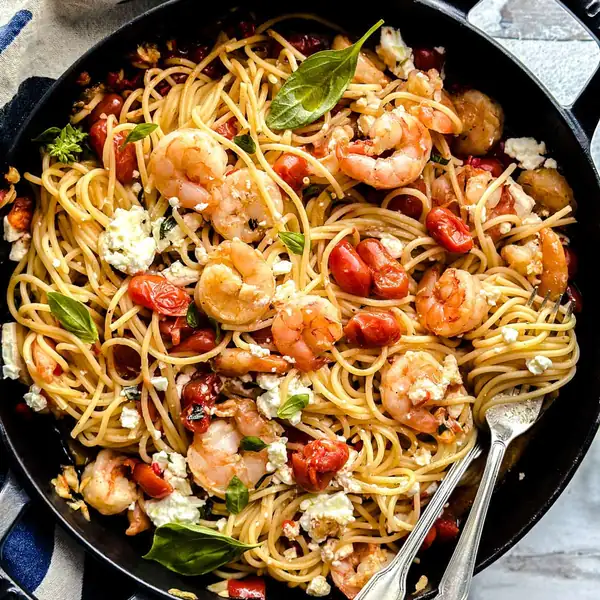
Rachel Roddy’s recipe for spaghetti with semi-dried tomatoes, garlic, herbs and breadcrumbs
One set of guidelines I received in Sicily for sun-drying tomatoes was two to seven days, depending on temperature, humidity, wind and the size of the fruit.
I might as well have been given a surfboard and told “go”, because that advice felt far too broad and general to be helpful to a complete beginner. So I asked someone else.
For them, with an ideal temperatures of 35C and low humidity, trays of egg-sized tomato halves arranged on wire racks on wooden boards, sprinkled with salt and left in full sun during the day, and taken in at night, generally took three days to reach the desirable point: dry enough to store, but still with a flexibility and sweet chew. From broad to specific, this advice also felt overwhelming: What if the temperature changes or turns humid? What are the signs of humidity?
What if my tomatoes are bigger than eggs? What happens if it rains? In the end, though, between these two extremes of advice and temperatures swinging between being in the pleasant 20Cs and burning 40Cs, too much humidity, rain (bring them inside) and not being particularly organised, I have managed to – relatively successfully – dry batches of tomatoes of all shapes and sizes.
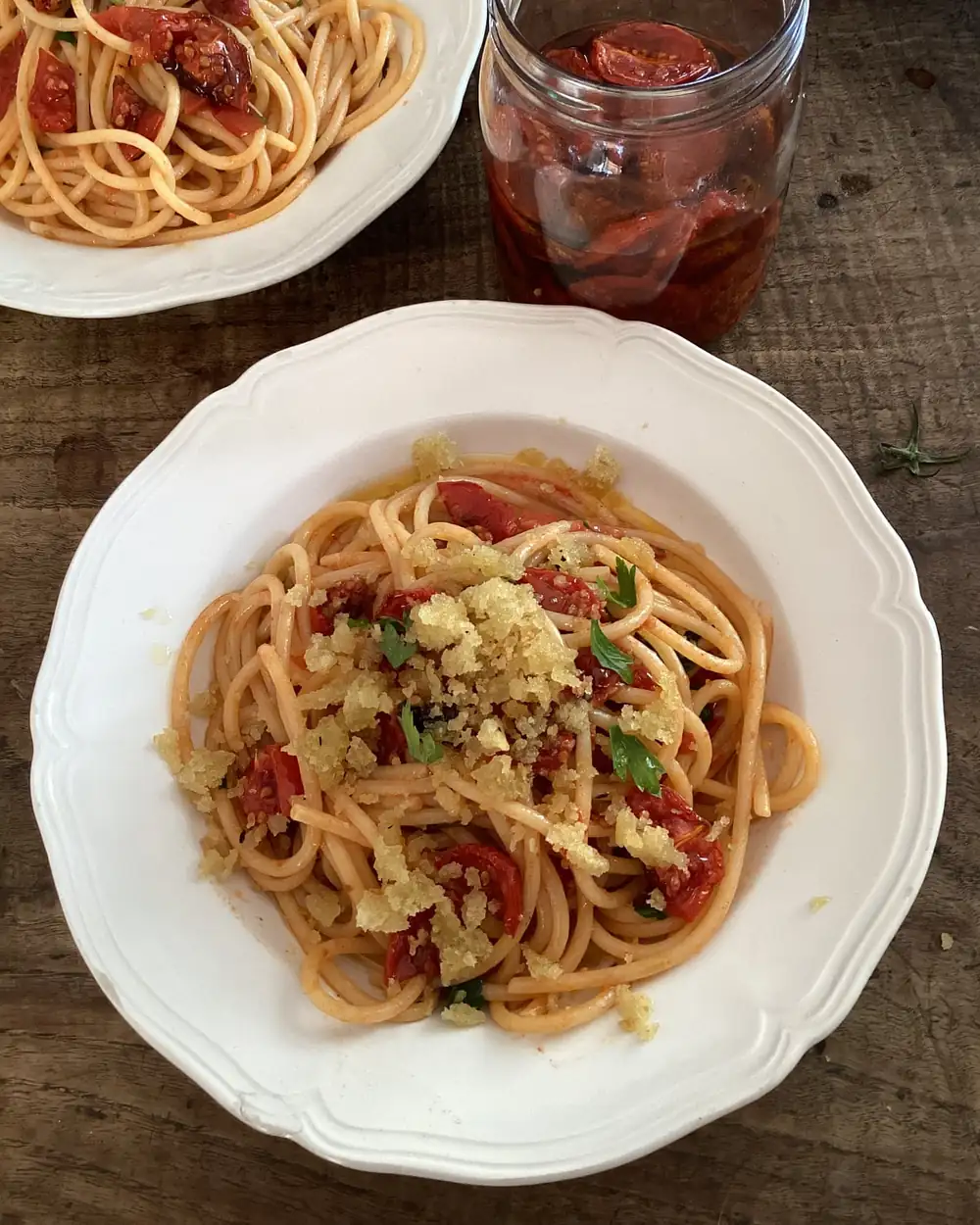
Experimenting has also taught me that I like a semi-dried tomato: the red, ear-like halves that are leathery and dry on the outside but soft and toffee-like in the middle – the sort that stir memories of those bought from Sainsbury’s in the late 1980s. Temperatures as they are this summer, I have made several batches of semi-dried cherry tomato halves arranged on wire racks outside and in direct sun for two days (coming in at night).
I have also made several batches with the help of a little sugar in the oven at 130C for an hour for smaller tomatoes, longer if they are the size of a yolk or an egg, and, if necessary, turning off the oven and leaving the tray inside while it cools. The aim is wrinkled and a little dry on top, but still juicy and sweet within.
Prepare at least 1kg, and ideally 2kg, with some packed in a jar and covered with olive oil, and the rest for this week’s recipe.
Serves 4
- 1kg cherry tomatoes, or golf-ball size vine tomatoes
1 small bunch basil
- 100g soft white breadcrumbs
- 500g spaghetti, linguine or tagliatelle
Cut the cherry tomatoes in half, put them in a bowl with a pinch of salt and four tablespoons of olive oil, and toss well. Arrange the halves cut side up on a large baking tray, sprinkle with a little sugar and bake at 130C (110C fan)/250F/gas ½ for an hour for small tomatoes, longer if they are large; the aim is wrinkled and a little dry on top but still juicy and sweet within.
Set aside to cool, then set half aside for this recipe and put the rest in a jar covered with olive oil. Peel the garlic and slice very thinly, cut the tomatoes you have set aside into quarters, and mince the herbs. In a frying pan, warm two tablespoons of olive oil and the breadcrumbs, along with a pinch of salt.
Move the crumbs around with a spoon until they are lightly golden, then tip on to a plate. Bring a large pan of water to a boil, add salt, stir, then cook the pasta according to packet instructions.
Meanwhile, back in the frying pan, gently warm three tablespoons of olive oil and the garlic, until it softens and becomes fragrant, then add the crushed tomato, stir for a few minutes, then add the semi-dried tomatoes. Once the pasta is ready, lift it directly into the sauce and toss well. Add the herbs, toss again, then divide between between four plates, topping each with a handful of crumbs.
Pass around the jar of oil-covered tomatoes, if anyone wants extra – also asking if they can guess whether they took two hours or two days to dry.