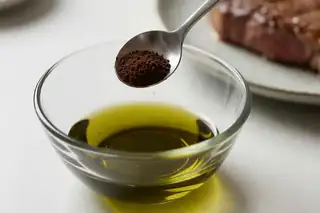
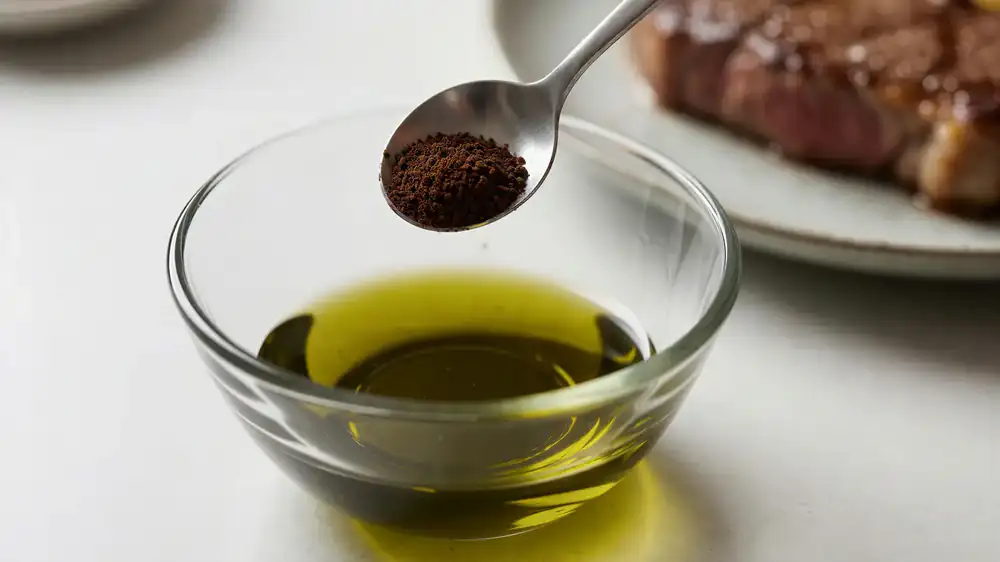
Mixing coffee grounds and olive oil: what is it for and why is it recommended for meat?
Before throwing away your coffee grounds, it might be worth thinking twice. This everyday byproduct can still be useful in the kitchen, especially when combined with olive oil. A surprising combination that can transform the preparation of certain cuts of meat.
Coffee grounds still too often end up in the trash when they can find a surprising second life in the kitchen. Among their lesser-known uses is a trick that involves mixing them with olive oil before applying it to a piece of meat.
The mixture is then used as a marinade, with a particularly interesting promise for grilling enthusiasts: to obtain more tender meat, but also to give it deeper flavors before it goes into the pan, oven or barbecue.
The idea may seem surprising, as coffee is so often spontaneously associated with breakfast or desserts. Yet, its roasted aromas pair particularly well with certain meats, especially beef.
Mixed with olive oil, the marc adheres easily to the surface of the meat, forming a coating that infuses the flesh with flavor during the resting time, according to L'Internaute. The oil also plays an important role in this preparation: it helps distribute the flavors and prevents the surface from drying out before cooking.
A coffee grounds marinade to tenderize and flavor the meat
The method requires no hard-to-find ingredients. Simply collect cooled coffee grounds, combine them with enough olive oil to create a spreadable mixture, and then coat the meat. The meat can then be refrigerated to allow the marinade to work its magic and develop its flavors.
However, there's no need to keep the thick layer of grounds when cooking. It should be carefully removed with absorbent paper to prevent the small coffee beans from burning in the pan or on the grill.
This preparation is particularly useful for adding more character to certain cuts of meat while promoting a pleasant texture. Like any marinade, it primarily acts on the surface of the meat and cannot, on its own, transform a particularly tough cut into a tender one.
Tenderness also depends on the type of cut chosen, the thickness of the meat, and, above all, how it's cooked. Coffee grounds and olive oil are therefore more of a culinary aid than a miracle cure.
Good habits to preserve the tenderness of meat
Other methods can also be used when the main objective is to soften the meat fibers. Marinades containing lemon, vinegar, or yogurt take advantage of their acidity to modify the surface proteins.
Adding salt several hours before cooking can also help produce juicier meat. For naturally firm cuts, slow cooking at a low temperature is often more suitable, while pineapple, papaya, and kiwi contain enzymes that can act directly on proteins.
Finally, the result depends just as much on what happens after marinating. Meat that is properly seared and then left to rest for a few minutes retains its juices better than a piece that is cut immediately after cooking.
The mixture of coffee grounds and olive oil thus finds its place among several techniques for enhancing meat, with an added advantage: it allows for the reuse of an everyday waste product. A simple way to give coffee grounds a second life while adding a unique roasted note to the dish.