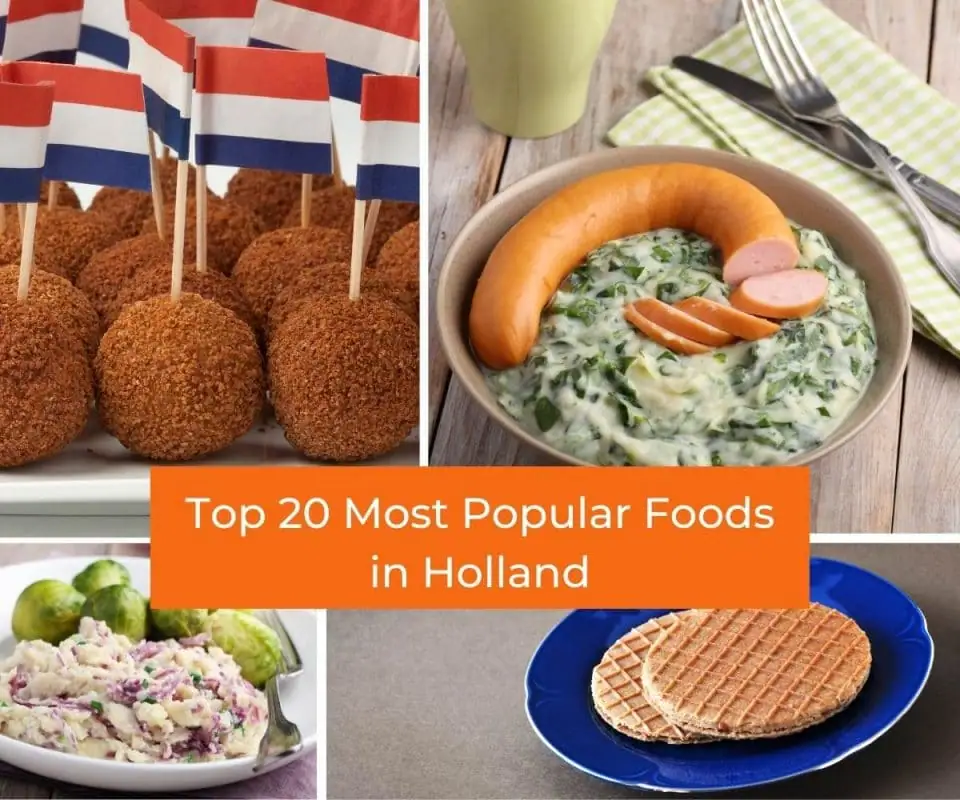
20 Popular Dutch Foods
The Netherlands is not renowned for a specific cuisine, but there are many foods and recipes that are very typically Dutch. When you are in the Netherlands, you should really try a few of these on the list to get a sense of what makes these dishes specifically Dutch; or try cooking them yourself at home!
Typical Dutch Breakfast and Lunch Dishes
- 1. Broodje Kaas en Broodje Hagelslag
Most people eat bread for breakfast and lunch, either a slice or a bun.
The two most popular toppings are cheese and hagelslag. Hagelslag is a bit like cake sprinkles and is made of chocolate or sugar.
So much do the Dutch love Hagelslag that those living abroad often ask their friends and relatives to bring some with them when they come to visit.
- 2. Wentelteefjes
Wentelteefjes is the Dutch variation of French toast. Slices of stale bread are soaked in a couple of beaten eggs.
The slices are fried until the egg is cooked through and then topped with cinnamon, sugar or syrup—or both!
- 3. Poffertjes and Pannenkoeken
Poffertjes are like small bitesize pancakes, but made with a different batter and in a special pan. The batter contains yeast so the dough rises as it cooks.
Dutch pancakes, on the other hand, require no yeast, just eggs, flour, and milk. These are thinner than poffertjes but not as thin as crepes, though they are generally quite large, around 25 cm diameter.
Smaller pancakes (about 15 cm), are called flensjes. Both poffertjes and pannenkoeken are eaten with poedersuiker (confectioners or powdered sugar). Other toppings include syrup, cream, and fruit.
Cheese and bacon, are popular savory toppings. There are restaurants in the Netherlands that specialize in pannenkoeken, which you can order with a variety of toppings and ingredients.
One of the most popular is pannenkoek with aardbeien (strawberries) and slagroom (whipped cream).
In betweens
- 4. Huzarensalade
This is the Dutch version of Russian salad. It is made with boiled and diced potatoes, carrots, peas, pickles, cooked eggs, ham, and mayonnaise.
It can be served as an appetizer, a first course, or for lunch. Some people put it on a slice of bread, which may seem strange to a lot of visitors.
- 5. Rookworst
A rookworst is a smoked sausage. The Netherlands has many varieties of smoked sausage and the Dutch have developed a very versatile approach to them.
Rookworst can be bought hot from street stalls for munching on while shopping. They can also be served to accompany stamppotten (a potato dish we will describe later). Rookworst is also an important ingredient in snert and erwtensoep (pea soup).
As a snack, it is popularly topped with mustard. It’s a bit like a hotdog, but without a bun.
- 6. Snert of Erwtensoep
Snert and erwtensoep are names for a thick, comforting pea soup. The names are generally used together as the difference between the two soups really is very slight.
This is a soup made from split or green peas and several vegetables such as carrot, celeriac, onion, and leeks. Some recipes also use cooked potatoes, which make an even thicker, porridge-like soup.
A wide variety of meat can be used, such as rookworst, different types of sausage, bacon steaks and/or diced pork chops. Snert and erwtensoep is a real winter dish as it’s very comforting when eaten on cold, wintery days.
It will warm you right up!
Traditional Dutch Dishes Typically Served at Dinner
A typical Dutch dinner is eaten at 6pm sharp! It contains potatoes, vegetables, and meat or fish.
The potatoes are often served with gravy, or boiled on the stove. Not that long ago, about 50 years or so, most people ate nothing else for dinner.
The older Dutch in particular still eat potatoes almost every day, as they have since they were young. Potatoes remain an important export for the country.
- 7. Stamppot
There are several versions of the Dutch stamppotten. A stamppot (it really does not translate well) is a dish of mashed potatoes and vegetables. There are several varieties, but we will highlight the most common.
Stamppot boerenkool is made by cooking potatoes and kale and mashing it all together. It is often served with cubes of bacon, rookworst, and gravy.
Some people like to add meatballs to their stamppot boerenkool. Stimpstamp is a dish also called stamppot rauwe andijvie. The potatoes are cooked and mashed and then andijvie (endive) is added so it remains raw but is heated up by the mashed potatoes.
Just like stamppot boerenkool, it is usually served with cubes of bacon, rookworst, or meatballs and gravy. Hutspot is a stamppot made of cooked potatoes, onions, and winter carrots.
All three ingredients are cooked together and everything is mashed, either finely or coarsely. It is often served with cubes of bacon and gravy and accompanied by a speklapje (bacon steak).
The Dutch love their stamppotten, but for foreign tastes they are considered a bit bland. However, you can spice the dishes up to your own taste.
- 8. Asparagus
White asparagus is a seasonal vegetable cultivated widely in the Netherlands. Most people consider asparagus a delicacy.
But in May and June, you can find menus in restaurants that contain asparagus in (almost) every course. Yes, asparagus soup, followed by asparagus with ham, boiled egg and butter sauce, asparagus on the side with the main dish, and asparagus ice cream for dessert!
- 9. Appelmoes
The Dutch use of appelmoes, or apple sauce, may be a little surprising to the uninitiated. An ingredient for muffins and other cakes, apple sauce can also accompany hot savory main dishes. In the Netherlands, you will find apple sauce in place of gravy, making the meal sweeter and more appetizing for kids.
Several well-known dishes are served with appelmoes, including:
- kip en patat (chicken and fries)
- baked potatoes
- pannenkoeken
- tenderloin and meatballs
- vegetables such as red cabbage and peas
- beans
Dutch Snacks
The snack bar in the Netherlands is a popular place to get a snack or a meal. They serve a variety of deep fried food.
- 10. Fries
Well-known ways to eat fries here are patat mèt and patatje oorlog. Patat mèt is short for fries with mayonnaise, but the mayonnaise is rather sweet and much creamier than foreign variaties.
This is such a strange combination for visitors, as revealed by John Travolta and Samuel L Jackson in the famous movie Pulp Fiction. Mayonnaise on fries?!
Patatje oorlog can be translated as fries war. It combines mayonnaise with pindasaus, which is made from peanut butter.
It looks like the fries have been to war.
- 11. Bitterballen en Kroketten
Bitterballen en kroketten are perhaps the most typical snack in the Netherlands. They are made from a ragout of cooked meat, deep fried so they are soft in the middle and crunchy on the outside.
Bitterballen are round balls, kroketten are shaped like sausages. Once fried, the ragout stays very hot for a long time, which causes a lot of problems for people who eat too fast.
Kroketten can also be made with other ingredients, for example shrimps. You can find these varieties in other countries too.
- 12. Saucijzenbroodjes en Worstenbroodjes
Saucijzenbroodjes en worstenbroodjes are made from bread dough or puff pastry and meat. The first uses sausages, the latter is often made with minced meat.
These snacks are available in different sizes and the larger ones are eaten for lunch. They can be eaten hot from a vending machine at a snack bar, or served at a party as a snack. You can also buy them in supermarkets and bakeries.
Pop them in the oven and in a few minutes they are ready to enjoy.
- 13. Hollandse Nieuwe
Hollandse nieuwe is also known as haring (herring) with ui (onions), or zoute (salty) haring. The raw herring is filleted and served with finely chopped onion.
They are a popular street stall snack, served with a white bun. For lunch it is often served on rye bread. This dish is a bit of an acquired taste; some people absolutely love it while others feel sick even thinking about it.
Other Popular Dutch Foods
- 14. Vla (Flip)
Something else that is typically Dutch is a sweet dessert made from milk following dinner.
Traditionally this was yogurt or vla (custard) or vlaflip, which is a combination of the two with a lemon syrup and sometimes with chocoladehagelslag sprinkled on top. However, the variety available has increased immensely in the last two decades. Pudding, bavarois and yogurt with fruit, custard with chocolate balls, custard with multiple flavors and chocolate mousse have become more popular in recent years.
- 15. Goudse Stroopwafels
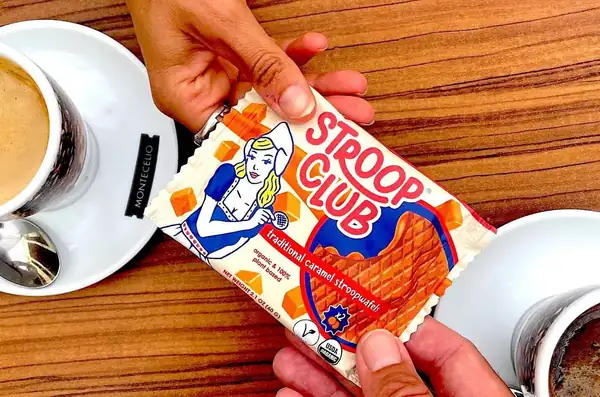
A stroopwafel is made with two very thin cookies with stroop (sugar syrup) holding them together. They are made fresh and sold hot at markets but are also widely available in stores.
They are often sold in a special tin or foil, emphasizing their Dutch origin with a windmill or Delfts Blauw (a type of beautiful Dutch ceramic) on the outside. These popular cookies can be found in many sizes, from bite sized to as large as a hand, and freshly made ones are often as big as two whole hands. Stroopwafels are often served with coffee or tea, but can also be used to make a cake or special desserts made with custard.
Almost everyone loves a stroopwafel, and visitors to the Netherlands are always pleasantly surprised. They have a nice sweet flavor and are absolutely delıcıous, especially when eaten hot from a market stall.
- 16. Speculaas
Speculaas is a cookie that is eaten year round. It is served with coffee or tea, but can also be used as a breadtopping. A lot of speculaas have the shape of a windmill.
- 17. Gevuld Speculaas
This sweet snack is eaten year round but is more popular around Sinterklaas (a celebration in early December: Sinterklaas—Santa Claus!). It is made from two thin layers of dough with a filling of almond paste.
Just like speculaas, it is made with a special spice mix containing cinnamon and cloves.
- 18. Drop
In Holland we eat an average of 2 kilos of drop (licorice) per head every year. Licorice comes in many varieties of size, taste, color, and shape. The Dutch devour both sweet and salty licorice, hard and soft, shaped like marbles, chalk, coins etc.
Some varieties include other flavorings such as peppermint or bay leaf.
- 19. Oliebollen en Appelflappen
This typical treat for New year’s Eve is often sold at Christmas fairs. Oliebollen are deep fried balls of a well risen dough, sometimes with raisins.
Appelflappen are sliced apple rings covered with batter and deep fried. Both are often eaten with confectioners sugar.
This snack is loved by all. Even Nigella Lawson enjoys them and makes them herself!
- 20. Kaas (Cheese)
Kaas (cheese) is eaten a lot in the Netherlands, about 20 kilo per person per year. This explains why people from the region are nicknamed Kaaskoppen (cheese heads).
The country is famous worldwide for its cheeses. There are many varieties, for example the most famous that are named after cities such as Gouda, Edam, and Leerdam.
Most Dutch cheeses are so-called hard cheeses and are made from cow’s milk, sometimes with the addition of herbs and spices. These Dutch cheeses are exported all around the globe. However, there are also many softer varieties made from goat’s and sheep’s milk which are less well-known outside the Netherlands.
We may not have a world famous cuisine in the Netherlands, but we have a host of delicious foods. Make sure you try at least some of them when you next visit our country!
Typical Dutch Breakfast and Lunch Dishes
1. Broodje Kaas en Broodje Hagelslag
Most people eat bread for breakfast and lunch, either a slice or a bun. The two most popular toppings are cheese and hagelslag. Hagelslag is a bit like cake sprinkles and is made of chocolate or sugar. So much do the Dutch love Hagelslag that those living abroad often ask their friends and relatives to bring some with them when they come to visit.
2. Wentelteefjes
Wentelteefjes is the Dutch variation of French toast. Slices of stale bread are soaked in a couple of beaten eggs. The slices are fried until the egg is cooked through and then topped with cinnamon, sugar or syrup—or both!
3. Poffertjes and Pannenkoeken
Poffertjes are like small bitesize pancakes, but made with a different batter and in a special pan. The batter contains yeast so the dough rises as it cooks. Dutch pancakes, on the other hand, require no yeast, just eggs, flour, and milk. These are thinner than poffertjes but not as thin as crepes, though they are generally quite large, around 25 cm diameter. Smaller pancakes (about 15 cm), are called flensjes. Both poffertjes and pannenkoeken are eaten with poedersuiker (confectioners or powdered sugar). Other toppings include syrup, cream, and fruit. Cheese and bacon, are popular savory toppings. There are restaurants in the Netherlands that specialize in pannenkoeken, which you can order with a variety of toppings and elements. One of the most popular is pannenkoek with aardbeien (strawberries) and slagroom (whipped cream).
4. Huzarensalade
This is the Dutch version of Russian salad. It is made with boiled and diced potatoes, carrots, peas, pickles, cooked eggs, ham, and mayonnaise. It can be served as an appetizer, a first course, or for lunch. Some people put it on a slice of bread, which may seem strange to a lot of visitors.
5. Rookworst
A rookworst is a smoked sausage. The Netherlands has many varieties of smoked sausage and the Dutch have developed a very versatile approach to them. Rookworst can be bought hot from street stalls for munching on while shopping. They can also be served to accompany stamppotten (a potato dish we will describe later). Rookworst is also an key ingredient in snert and erwtensoep (pea soup). As a snack, it is popularly topped with mustard. It’s a bit like a hotdog, but without a bun.
6. Snert of Erwtensoep
Snert and erwtensoep are names for a thick, comforting pea soup. The names are generally used together as the difference between the two soups really is very slight. This is a soup made from split or green peas and several vegetables such as carrot, celeriac, onion, and leeks. Some recipes in addition use cooked potatoes, which make an even thicker, porridge-like soup. A wide variety of meat can be used, such as rookworst, different types of sausage, bacon steaks and/or diced pork chops. Snert and erwtensoep is a real winter dish as it’s very comforting when eaten on cold, wintery days. It will warm you right up!
Traditional Dutch Dishes Typically Served at Dinner
A typical Dutch dinner is eaten at 6pm sharp! It contains potatoes, vegetables, and meat or fish. The potatoes are often served with gravy, or boiled on the stove. Not that long ago, about 50 years or so, most people ate nothing else for dinner. The older Dutch in particular still eat potatoes almost every day, as they have since they were young. Potatoes remain an weighty export for the country.
7. Stamppot
There are several versions of the Dutch stamppotten. A stamppot (it really does not translate well) is a dish of mashed potatoes and vegetables. There are several varieties, but we will highlight the most common. Stamppot boerenkool is made by cookery potatoes and kale and mashing it all together. It is often served with cubes of bacon, rookworst, and gravy. Some people like to add meatballs to their stamppot boerenkool. Stimpstamp is a dish in addition called stamppot rauwe andijvie. The potatoes are cooked and mashed and then andijvie (endive) is added so it remains raw but is heated up by the mashed potatoes. Just like stamppot boerenkool, it is usually served with cubes of bacon, rookworst, or meatballs and gravy. Hutspot is a stamppot made of cooked potatoes, onions, and winter carrots. All three components are cooked together and everything is mashed, either finely or coarsely. It is oft
8. Asparagus
White asparagus is a seasonal vegetable cultivated widely in the Netherlands. Most people consider asparagus a delicacy. But in May and June, you can find menus in restaurants that contain asparagus in (nearly) every course. Yes, asparagus soup, followed by asparagus with ham, boiled egg and butter sauce, asparagus on the side with the main dish, and asparagus ice cream for dessert!
9. Appelmoes
The Dutch use of appelmoes, or apple sauce, may be a little surprising to the uninitiated. An element for muffins and other cakes, apple sauce can as well accompany hot savory main dishes. In the Netherlands, you will find apple sauce in place of gravy, making the meal sweeter and more appetizing for kids. Several well-known dishes are served with appelmoes, including
Dutch Snacks
The snack bar in the Netherlands is a popular place to get a snack or a meal. They serve a variety of deep fried food.
10. Fries
Well-known ways to eat fries here are patat mèt and patatje oorlog. Patat mèt is short for fries with mayonnaise, but the mayonnaise is rather sweet and much creamier than foreign variaties. This is such a strange combination for visitors, as disclosed by John Travolta and Samuel L Jackson in the famous movie Pulp Fiction . Mayonnaise on fries?! Patatje oorlog can be translated as fries war. It combines mayonnaise with pindasaus, which is made from peanut butter. It looks like the fries have been to war.
11. Bitterballen en Kroketten
Bitterballen en kroketten are perhaps the most typical snack in the Netherlands. They are made from a ragout of cooked meat, deep fried so they are soft in the middle and crunchy on the outside. Bitterballen are round balls, kroketten are shaped like sausages. Once fried, the ragout stays very hot for a long time, which causes a lot of problems for people who eat too fast. Kroketten can also be made with other ingredients, for example shrimps. You can find these varieties in other countries too.
12. Saucijzenbroodjes en Worstenbroodjes
Saucijzenbroodjes en worstenbroodjes are made from bread dough or puff pastry and meat. The first uses sausages, the latter is often made with minced meat. These snacks are available in different sizes and the larger ones are eaten for lunch. They can be eaten hot from a vending machine at a snack bar, or served at a party as a snack. You can as well acquire them in supermarkets and bakeries. Pop them in the oven and in a few minutes they are ready to enjoy.
13. Hollandse Nieuwe
Hollandse nieuwe is also known as haring (herring) with ui (onions), or zoute (salty) haring. The raw herring is filleted and served with finely chopped onion. They are a popular street stall snack, served with a white bun. For lunch it is often served on rye bread. This dish is a bit of an taken over taste; some people absolutely love it while others feel sick even thinking about it.
Other Popular Dutch Foods
14. Vla (Flip)
Something else that is typically Dutch is a sweet dessert made from milk following dinner. Traditionally this was yogurt or vla (custard) or vlaflip, which is a combination of the two with a lemon syrup and sometimes with chocoladehagelslag sprinkled on top. However, the variety available has grew immensely in the last two decades. Pudding, bavarois and yogurt with fruit, custard with chocolate balls, custard with multiple flavors and chocolate mousse have become more popular in recent years.
15. Goudse Stroopwafels
A stroopwafel is made with two very thin cookies with stroop (sugar syrup) holding them together. They are made fresh and offloaded hot at trades but are also widely available in stores. They are often sold in a special tin or foil, emphasizing their Dutch origin with a windmill or Delfts Blauw (a type of beautiful Dutch ceramic) on the outside. These popular cookies can be found in many sizes, from bite sized to as large as a hand, and freshly made ones are often as big as two whole hands. Stroopwafels are often served with coffee or tea, but can in addition be used to make a cake or special desserts made with custard. Almost everyone loves a stroopwafel, and visitors to the Netherlands are always pleasantly surprised. They have a nice sweet taste and are absolutely delıcıous, especially when eaten hot from a trade stall.
16. Speculaas
Speculaas is a cookie that is eaten year round. It is served with coffee or tea, but can also be used as a breadtopping. A lot of speculaas have the shape of a windmill.