How long does pumpkin last? If you store it properly, it will last longer than you think
Pumpkin is the most durable vegetable of the fall-winter season, but it's incredibly easy to mess up its storage if you blindly trust its durability. We'll show you some specific tricks to ensure that not a single gram ends up in the trash.
How long will pumpkin last if you leave it alone?
The short answer: weeks, often months. The longer answer depends on where you store it and exactly which variety you choose. A healthy specimen will last for about a month in a heated room or on the kitchen counter. Don't tempt fate much longer than that, because in the dry heat it will start to wilt, lose water, and its flesh will become mushy and spongy. In contrast, in a dark, well-ventilated, 10-14 degree Celsius room or dry cellar, a shelf life of 3-6 months is completely realistic.
Success depends on two things:
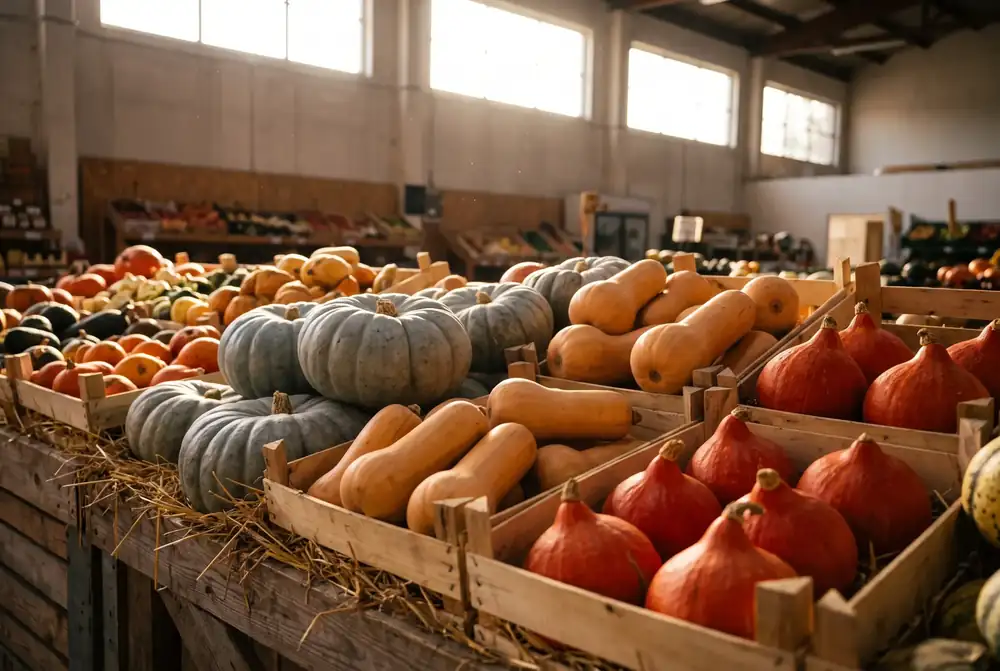
- The variety: the classic, gray-skinned Great Drumstick and the chunky Canadian (mostly Orange type) have thick, fibrous skins, and they last the longest, even until early spring. The Japanese Hokkaido is significantly thinner (we love it because it can be baked with its skin), but for this very reason it is more sensitive: it is worth processing it within 1-2 months. And the relatives of asparagus squash spoil even faster.
- Water won't help: forget about washing the soiled pumpkin you brought home from the market under the tap right away! Moisture will accumulate around the stem and in the pores, which is a guaranteed way for fungi to grow. Always clean the pumpkin with a dry brush or cloth, and only let it come into contact with water right before cutting it.
Storing cut and baked pumpkin: how long does it last in the fridge?
Once you've cut into the pumpkin, you have much less time from then on. The inner, moist seed coat and cutting surface react immediately to the air.
Freshly cut: 5-7 days
If you bought a huge slice at the grocery store or cut open a piece grown in the garden, immediately scoop out the seed-fibered inner part. This soft part starts to decompose first. Then wrap the pumpkin flesh tightly in cling film, or put it in a tightly sealed box. This way it will comfortably last for a week in the vegetable compartment of the refrigerator. Don't throw away the seeds either, you can dry them and plant them back in the garden next year, or you can make a great snack out of them!
Fried or mashed: 3-5 days
The most common question: how long can baked pumpkin last in the refrigerator? Experience shows that after 5 days, the taste of the baked puree changes, it becomes sour, and the first microscopic mold spots may appear on its surface. To keep it edible for as long as possible, it is worth storing it this way:
- Once you've baked it, let it cool completely.
- Transfer to a glass or plastic storage container and seal hermetically.
- If you haven't used it for soup, gnocchi, or cookies by day 5, transfer it to the freezer.
Storing pumpkin in the freezer: the best winter reserve
Can you freeze pumpkin? Yes, but it doesn't matter in what form. Raw, diced pumpkin will release juices and become rubbery after thawing. It's still good in a cream soup, but you won't get that consistency back when you bake it.
The pro trick is this: bake it in advance! Bake the pumpkin in the oven until soft, puree it with a hand blender, let it cool, then portion it into freezer bags, stretched out flat (this way it thaws in minutes and takes up little space). Or press the puree into silicone ice cube trays. When frozen, pop the cubes out into a bag. That way, if you only need two spoons of pumpkin puree for a fall spiced latte, a serving of oatmeal, or a creamy risotto sauce, you can thaw exactly what you need. In the freezer, pumpkin retains its sweetness and nutritional value for 8-12 months.
How do you know it's broken?
Pumpkins rarely rot suddenly, they give warning signs in advance. Watch for these points:
- Soft, pressable spots on the peel: if you can press the peel with your thumb, the internal tissues have already been damaged.
- Slimy, watery layer on the cutting surface: the surface of a pumpkin forgotten in the refrigerator becomes slippery and sticky.
- Sour, alcoholic smell: pumpkin has a high sugar content, so when it spoils, a specific fermentation smell may hit your nose.
- Gray or green mold spots: appear especially at the seed coat or around the stalk.
Can it still be saved?
If you find a small, superficial wound or a small soft spot on a large, whole pumpkin, take a sharp knife and cut it out with a generous margin. Process and bake the remaining, tough flesh immediately. However, if the cut pumpkin is already slimy, or even a single white mold spot has appeared on the top of the baked puree, throw it away without a second thought: the spores have already penetrated the entire depth of the wet puree by this time.
Kitchen makeover: what to do with leftovers?
If you have a batch of roasted pumpkin in your fridge that's on day 3 and you're tired of just snacking on it, we've got the best recipe for it that you can't go wrong with!