A warm taste of the East: baursak – a golden treat for the whole family
Baursak is more than just a baked good. It's a symbol of hospitality, a warm hearth, and heartfelt feasts, rooted in centuries of Central Asian nomadic traditions.
Historical Context: From Nomadic Life to the Festive Table
To understand the essence of baursak, it's necessary to look at the life of nomads. Constantly on the move, where every gram of food mattered, they needed foods that could be prepared quickly, stored well, and provided maximum energy. Deep-frying was the ideal method. Fat, a precious resource, was used sparingly, and the process of shaping the dough into balls or diamonds was simple and didn't require complex tools.
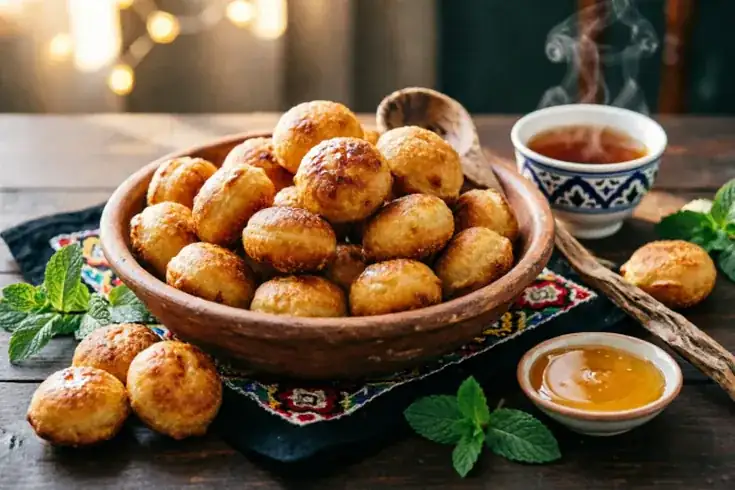
Baursak has become firmly entrenched in ritual culture. It is served at weddings, births, wakes, and, of course, during national holidays such as Nauryz. The porous, breathable crumb of the baursak was believed to symbolize the openness of the hosts' souls and their willingness to share everything they had. And its round shape alludes to the sun, the celestial body that gives life.
Secrets of the Perfect Baursak: Flour, Yeast, and Patience
Despite the apparent simplicity of the recipe, preparing a truly airy and lean baursak requires attention to detail. Experienced cooks know: the devil is in the details of kneading and oil temperature.
Choosing Flour and Liquid
The key to success is choosing the right flour. It should be premium grade and sifted. Sifting oxygenates the flour, making the final product fluffier.
Traditionally, sour milk or katyk (fermented milk products) were used for mixing. Their acidity reacts with the baking soda (if used) or helps the yeast work more actively, making the dough softer and imparting a subtle, subtle tartness to the finished baursak that balances the sweetness. If these products are unavailable, warm milk or even just water can be used. It's important that the liquid be warm, but not hot—above 40 degrees Celsius (104 degrees Fahrenheit), as this will kill the yeast.
Working with Yeast and Kneading
Yeast is the heart of baursak. It must be fresh and active. Before adding it to the main mass of flour, it is always "started" in a warm liquid with a small amount of sugar.
The dough should be kneaded vigorously but not for long. The baursak dough should be soft, elastic, not sticky, but still tender enough. Dough that's too stiff will result in dense, rubbery baursaks, while dough that's too runny will absorb too much oil during frying.
Lifting and Forming
The first rise in a warm place is the magic time. The dough should at least double in size. After punching down, let the dough "rest" for another 15-20 minutes.
Shaping is a personal choice. Some prefer to cut the dough into diamonds, others into squares or strips. The classic method calls for cutting the dough into small, uniform pieces, which are then either left as balls or slightly flattened. It's important that all the pieces are roughly the same size, otherwise they will cook unevenly.
Classic Baursak Recipe with Yeast
This foundation is rooted in centuries-old traditions. It delivers reliable, time-tested results.
Ingredients
- Salt - 1 teaspoon
- Vegetable oil for deep-frying - about 500-700 ml
Preparation
- Activating the yeast: Add sugar and crumbled fresh yeast to warm milk. Let sit for 10-15 minutes until a fluffy "cap" forms.
- Mixing: Sift the flour into a large bowl and add salt. Pour in the activated yeast. Knead the dough until it's smooth and no longer sticks to the sides of the bowl. You can add 1 tablespoon of vegetable oil to the dough at the end to make it more elastic.
- Rising: Cover the bowl with a clean towel and place in a warm, draft-free place for 1-1.5 hours, until the dough has doubled in size.
- Shaping: Punch down the risen dough. Roll it out with a rolling pin to a thickness of about 1-1.5 cm. Cut into diamonds or squares measuring 3x3 or 4x4 cm.
- Frying: Heat vegetable oil in a deep saucepan or cauldron. There should be enough oil so the baursaks float freely. The optimal temperature is around 170-180°C. To check for doneness, drop a small piece of dough into the pan – it should sizzle immediately and float to the surface within a second.
- Fry the baursaks in batches. They should quickly expand in size and become golden brown on all sides. This process takes only 2-3 minutes.
- Removal: Remove the finished baursaks with a slotted spoon and immediately place them on a plate lined with paper towels to remove excess oil.
Recipe Variations: From Fluffy to Slightly Tart
Baursak isn't limited to just one recipe. Different nations and even different families have their own "secret" additives that give the baked goods a distinctive flavor and texture.
1. Baursak with Kefir (Tatar / Bashkir with Soda)
This version turns out denser, with a pleasant sourness, and, importantly, requires less time, since the soda is quenched by the acid, and there is no need to wait for a long rise.
Ingredients
- Kefir (room temperature) - 400 ml
- Flour - about 600-700 grams
- Baking soda - 1 level teaspoon
- Salt - 0.5 teaspoon
- Sugar - 1 tablespoon
- Vegetable oil for frying
Preparation
- Mixing: Add salt, sugar, and baking soda to the kefir. Mix well. The baking soda will immediately react with the acid in the kefir.
- Kneading: Gradually add sifted flour. The dough should be soft but not sticky.
- Rest: Let the dough rest under plastic wrap for 30 minutes to allow the gluten to swell.
- Forming and frying: As with the classic recipe, roll out, cut, and fry in well-heated oil until golden brown. Baursak made with kefir is often flatter.
2. Sweet Cheese Baursak (Curd)
This recipe is closer to dessert variations and is popular with those who prefer a rich, more delicate texture.
Ingredients
- Cottage cheese (dry, crumbly) - 250 grams
- Egg - 1 piece
- Flour - 250-300 grams
- A pinch of salt
Preparation
- Ingredients: Mash the cottage cheese with a fork until there are no large lumps. Add the egg, sugar, and salt.
- Dry ingredients: Mix flour with baking powder and gradually fold into the curd mixture. Knead into a soft, pliable dough. Don't knead for long.
- Rest: Let the dough rest for 15 minutes.
- Shaping: The dough is not rolled out thinly, but torn into small pieces or formed into balls.
- Frying: Fry in oil. These baursaks will be slightly denser, but incredibly tender on the inside.
Cooking Tips and Tricks from Experienced Chefs
Achieving the perfect balance between a crispy crust and an airy center is a true art. Here are a few tips to help you get closer to mastery.
Oil Temperature Control - Your Key ally
The most common mistake is that the oil is too cold or too hot.
- If the oil isn't hot enough, the baursaks will greedily absorb the fat, turning out heavy and greasy, and not cooking through. They'll take a long time to cook through.
- If the oil is too hot, the crust will set instantly, leaving the center raw and soggy. Furthermore, at very high temperatures, the oil can start to burn, resulting in a bitter baked good.
The ideal temperature is 170-185°C. Use a candy thermometer if available. If not, use a dropped piece of dough as a guide: it should float smoothly, without making an aggressive sizzle.
The Secret of a Golden Crust
Many cooks add a little turmeric or saffron to the dough (if appropriate for the recipe) to give it a more intense, sunny color. However, if you're using yeast dough, the sugar that caramelizes during frying already contributes to the beautiful color.
Do not overload the cauldron
Never add too many baursaks to the oil at once. This will dramatically reduce the frying temperature. As a result, as mentioned earlier, you'll end up with greasy, oily products. Fry in small batches, allowing the oil time to recover between each batch.
Getting Rid of Excess Fat
After removing the baursaks from the oil, be sure to dry them thoroughly. Place them on a wire rack placed over a plate or on a stack of paper towels. Change the towels as they become damp.
Serving Baursak: How to Decorate the Table
Baursak is a self-sufficient dish, but it is traditionally paired with a variety of additions that enhance its flavor and make the meal more vibrant.
Traditionally, baursaks are served hot. They can be lightly dusted with powdered sugar if made with unleavened dough or kefir, or served with honey pastila (as is done in some Kazakh traditions).
Ideal couples:
- Kaymak or thick sour cream: The contrast of warm, slightly sweet dough and cold, tart sour cream creates the perfect balance.
- Natural honey or jam: A classic that never gets boring.
- Butter: Sometimes baursak is simply rubbed with fresh garlic and served with a piece of butter and hot tea.
Baursak in a Modern Interpretation
In modern cuisine, the baursak is evolving. Chefs often use this shape to serve unexpected fillings or sauces.
There are "piquant baursaks," in which the dough is flavored with finely chopped herbs, grated cheese, or even a little ground pepper. They are served as an ideal appetizer with broths or soups, replacing traditional croutons.
There's also a trend toward smaller sizes. Mini baursaks, prepared like elegant "doughnuts" for buffets, are served with a yogurt and herb sauce or with berry coulis.
Baursak remains a living legacy. It changes form, but its essence remains: a symbol of warmth, hospitality, and the simple yet genuine pleasure of food prepared with love. Mastering this recipe is more than just a culinary skill; it's a tribute to a culture that values simplicity, generosity, and the taste of a true, golden, fire-roasted miracle.