Make your own sushi
What exactly is sushi?
Sushi is probably the most famous Japanese dish. The small rolls or balls are made from lightly vinegared rice, raw or cooked fish, various vegetables, and nori seaweed sheets. And you can even make sushi at home.
The most well-known varieties in our country are "Maki Sushi" and "Nigiri Sushi", which originate from "Edo-mae-zushi", which has its origin and a long tradition in Tokyo.
Making your own sushi: here's how
Make your own Maki Sushi
With the right sushi ingredients and tools, you can easily enjoy homemade sushi at home. Besides prepared sushi rice, you'll need various fillings.
Vegetables and fish should be cut into the thinnest possible strips with a sharp knife so they can be easily placed in the rice rolls. To make maki sushi or California rolls, you will also need a bamboo mat (makisu). These are available in Asian grocery stores.
Tip: Place a layer of cling film between the rice and the bamboo mat to prevent the rice from sticking to the mat.
- Halve the nori seaweed as desired, or leave it whole, and place it on the bamboo mat with the shiny side facing down.
- The rice is spread about 1 cm high on the seaweed sheet, leaving 2 cm free at the top edge and 1 cm free at the other edges.
Tip: Put some vinegar water on your hands to make the rice less sticky.
- Now you can fill the roll: Place your filling crosswise in the bottom third, for example, strips of salmon or cucumber. If desired, you can also spread some wasabi on the rice. Be careful: It's very spicy!
- Using the bamboo mat, gently roll the nori sheet around the filling with light pressure. Press the roll down again and cut it into even pieces with a large, very sharp knife. To ensure the pieces are the same size, first cut the roll in half, place the two halves side by side, and cut them in half again. Continue this process until you have cut the roll into eight small or four larger sushi pieces.
Tip: Lightly dampen the knife; this will make the rolls easier to cut. Arrange the sushi on a serving platter or board and serve.
Make your own California Rolls
California rolls are also a type of maki roll, but they differ in the rolling technique:
- The rice is spread onto the bamboo mat, then the nori sheet is placed on top, followed by the filling. Popular fillings include avocado, cucumber, surimi, or salmon. These are arranged in the center and seasoned with a little wasabi to taste.
- Then, using the bamboo mat, roll up the roll. Now the rice is on the outside and can be rolled in sesame seeds or fish roe. Afterwards, they are also cut into even pieces.
Make your own nigiri
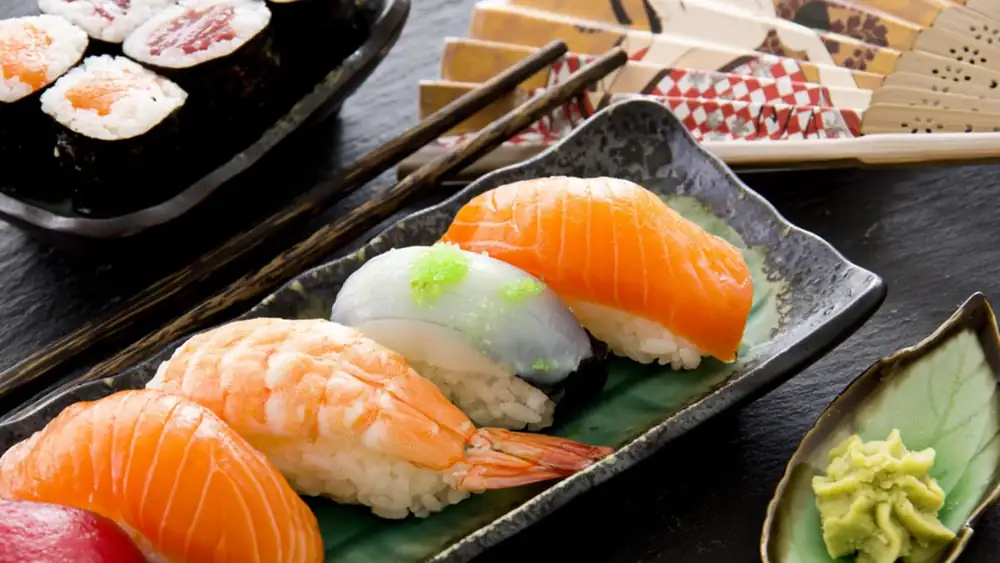
To prepare nigiri sushi you need sushi rice, fish and wasabi.
- Simply form small, oblong-oval balls from the rice using moistened hands.
- Depending on your taste, place a pinch of wasabi in the middle of the rice ball, then place the fish on top and press it down.
Tip: When making sushi yourself, pay close attention to hygiene: Cleanliness is crucial when working with raw fish. Work surfaces and cutting boards must be absolutely clean and washed thoroughly with hot water after preparation. Knives should also be cleaned after each step.
Preparing sushi rice
- Put the rice in a bowl.
- Cover with cold water and wash thoroughly. Drain the water and repeat the process until the water runs clear. Drain the rice in a sieve, place it in a pot with water, and soak for 30 minutes.
- Bring the rice to a boil over medium heat with the lid half open and cook for 4 minutes. Then reduce the heat to low and cook covered for 15 minutes.
- Remove from heat and let stand for 18 minutes.
- Place the rice in a wooden or porcelain bowl. Carefully mix in the vinegar little by little with a spoon. Process the rice while it is still warm, if possible.
Ingredients and tools
What do you need to make sushi yourself?
To make your own sushi, you will need various ingredients which you can get in the supermarket, at the weekly market, in the Asian supermarket and at the fishmonger.
Ingredients:
- Short-grain rice: Use short-grain rice from Japan. It is fermented after cooking.
- Rice vinegar: Essential for preparing sushi rice. The vinegar is always mixed with a little sugar.
- Soy sauce: One of the cornerstones of Japanese cuisine.
- Mirin: Sweet rice wine used only for cooking and seasoning. It has an alcohol content of around 10% by volume and should only be boiled very briefly.
- Wasabi: The root is grated into a paste. Its mustard-like spiciness complements the slightly sweet sushi rice. Wasabi paste is available in Germany.
- Nori: These paper-thin sheets of dried seaweed are indispensable for maki sushi rolls and temaki sushi.
- Ebi: Japanese for shrimp.
- Gari: Thinly sliced and sweet-and-sour pickled ginger slices, eaten between individual sushi pieces to neutralize the taste.
- Maguro: Japanese for tuna.
- Sake: Japanese rice wine with a higher alcohol content than wine (15% ABV). Can be drunk cold or hot.
- Shake: Japanese for salmon.
- Sushi-zu: A mixture consisting of rice vinegar, sugar and salt that gives sushi rice its typical taste.
- Tamagoyaki: Japanese omelette
- Other types of fish for filling or topping: The most common types of fish used in sushi preparation are salmon, tuna, mackerel, redfish, char, or squid. Rainbow trout or plaice are also excellent choices. In addition, you can use briefly cooked shrimp, surimi (cooked, minced, and pressed fish), smoked eel and salmon, cooked crab meat or caviar, and other fish roe. The fish should be fresh and processed according to strict hygiene standards. If you want to make sushi yourself, ask your fishmonger for "sushi-grade" fish. Fish that smells fishy and has lost its shine and color should not be used for making sushi.
- Vegetables for the filling: The classic vegetable for sushi is cucumber. But avocado, spring onions, snow peas, pickled radish (daikon), pickled pumpkin, or shiitake mushrooms are also very popular.
Tool:
- A bamboo rice spoon (shamoji) is used for gently and carefully stirring and transferring rice. A large wooden or plastic spoon will also work.
- Hangiri: A tub made of cedar wood in which the rice is seasoned with vinegar after cooking and left to cool.
- Uchiwa: Round Japanese fan used to cool sushi rice after cooking.
- Makisu: A sushi mat consisting of several bamboo sticks tied together, used to prepare maki, i.e., rolled sushi.
- very sharp knives
- Sushi Oke: A traditional wooden bowl for the rice. After cooking, the rice is placed in the bowl, which has been soaked in water, and sprinkled with a rice vinegar mixture. Then, using a spoon (shamoji), furrows are drawn into the rice to ensure the vinegar is evenly distributed. The wooden bowl absorbs excess liquid, preventing the rice from becoming mushy. A large plastic or stainless steel bowl is a good alternative.
- possibly cling film
- Tamago pan: A rectangular pan for preparing tamagoyaki, the egg rolls. Of course, a round, non-stick pan will also work.
- Wasabi grater: Has very sharp blades and grates the root very finely.
Sushi rice is a special short-grain rice. In Germany, it can be found in Asian grocery stores. There are also rarer and more expensive varieties of sushi rice: for example, "Sasanishiki," "Koshihikari," or the increasingly popular "Hitomebore." Its flavor pairs very well with sushi, and it is particularly easy to cultivate.
Diverse: Sushi varieties
Sushi: the different types
Other types of sushi include Inari Sushi, Chirashi Sushi (Barazushi) and Oshizushi.
In Japan, sushi is often eaten plain, without any additional seasoning, so that the flavor isn't distorted. Each guest can add their own seasoning at the table. Soy sauce, wasabi, and sweet and sour pickled ginger (gari) add extra flavor to sushi. Wasabi is a very spicy green horseradish. It's available as a paste or powder for mixing yourself in Asian specialty stores. It can be spread on the sushi or stirred into the soy sauce. The pickled ginger is eaten between the individual pieces of sushi.
Etiquette: How to properly enjoy sushi
Sushi is eaten with chopsticks. Eating sushi with a knife and fork is considered a major faux pas: If you're unsure about using chopsticks, you can ask for "practice chopsticks" at the restaurant. These make eating sushi much easier.
At the table, sushi can be seasoned with soy sauce to taste. Simply dip the fish side or the nori sheet of the sushi into the provided bowls. Do not dip the rice into the soy sauce, as this will cause the sushi to fall apart. Alternatively, you can dip some pickled ginger into the soy sauce and use it to coat the nigiri.
Traditionally, green tea is drunk with sushi. But Japanese beer also goes very well. For those who prefer wine with their meal: Riesling is an excellent choice.
Trends: Rice rolls in a new light
Sushi is incredibly diverse, and new variations are constantly emerging. Chefs are increasingly experimenting with ingredients and trying out new flavor combinations. This means you'll now find fresh leafy greens, mayonnaise, or fermented soybeans in sushi. The motto is: anything that tastes good is allowed!
California rolls are also seeing increasingly imaginative fillings and combinations become popular – whether with tempura shrimp (briefly fried, crispy shrimp), beef tenderloin, cress, or papaya. There are no limits to creativity.
A sushi trend from Japan is also perfect for home: Temaki Sushi. All the sushi ingredients—rice, nori seaweed sheets, prepared fillings like fish and vegetables, wasabi, pickled ginger, and soy sauce—are placed on the table, and each guest wraps their own little "sushi cone," shaped like a small school cone. This way, everyone can prepare and eat the sushi together, combining fillings as they please. A great idea for an evening with friends.
Sweet sushi variations are also becoming increasingly popular. Instead of fish and vegetables, fruits are used to fill the sushi rolls. Mango, strawberries, kiwi, and bananas not only look fantastic in the rolls but also taste delicious with the rice. The rice is usually cooked with milk and sweetened, not acidified. Instead of wasabi, you can serve a pistachio-mint pesto with sweet sushi. As a sweet dessert and a real eye-catcher on a homemade sushi buffet, sweet sushi is a refreshing and unique idea.