15 Popular Lebanese Desserts
Middle eastern people know their desserts well. Very well. Lebanese desserts are typically a combination of concentrated syrup and fried dough.
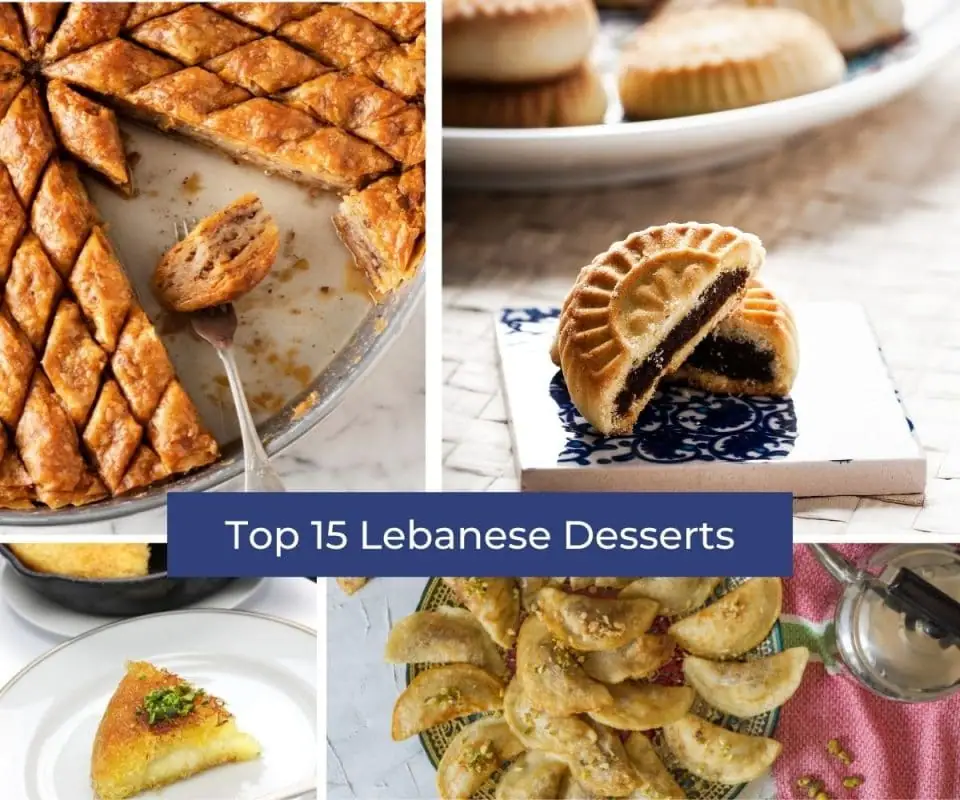
Although most of them don’t use chocolate, you can find many chocolate versions, which are popular nowadays. So let’s have a look now at some of the most popular Middle Eastern desserts, specifically Lebanese, amazing sweets that you can often find on special occasions and holidays.
Warning: These are all very good for the tongue, but bad for the heart!
- 1. Lebanese Baklava
Starting off strong with Lebanese baklava, an intricate delicacy that is definitely a fan favorite. It is delicately layered phyllo dough soaked in a simple syrup flavored with rosewater, and topped generously with nuts.
Baklava is traditionally cut into different shapes and sizes to distinguish the different flavors and nuts inside each. Baklava are free flowing on big celebratory occasions such as a weddings, graduations, even starting a new job.
These sweets are not to be eaten every day since they are very high in sugar and fat! Editor’s Note: Baklava is a popular dessert throughout the region, from Greece to Turkey to Egypt (known locally as sweet goulash). Lebanese baklava is usually lighter on the syrup than the traditional Turkish baklava, enabling people to have a few more bites.
- 2. Znoud El Sett
Sticking to the theme of phyllo dough and rosewater, znoud el sett directly translates to the “upper arm of the woman”. They consist of ashta cream wrapped in phyllo dough and then fried, drenched in rosewater simple syrup, and enjoyed after a nice meal on a Sunday afternoon.
It is definitely a once-in-a-while treat.
- 3. Maamoul
Maamoul are traditionally made around Easter time and enjoyed among friends and family. They are cookies made with semolina flour and clarified butter, stuffed with dates or a walnut filling.
Like many of the other Lebanese desserts, they are very high in calories and fat.
- 4. Mshabbak
Mshabbak is definitely a personal favorite of mine! They are made using soft dough piped into hot oil in a spiral shape. After frying, they are drenched in rosewater syrup creating a sweet dessert with a crunchy exterior and a soft interior.
This dessert is usually sold on days where they celebrate saints in front of churches. Traditionally half is colored red, and half left plain.
- 5. Kanafeh (Knafeh)
Knafeh is usually prepared in large trays layered with Akkawi cheese on the bottom and topped with semolina dough or phyllo dough. It is then soaked with the syrup. It is served in bread (kaak) and soaked with even more syrup.
It is sometimes eaten for breakfast, but also eaten as a dessert after lunch. It has a great combination of textures from the cheese, semolina dough, and kaak as well as a great flavor profile due to the combination of the sweet syrup and salty cheese.
- 6. Qatayef
This dessert is traditionally served around the Ramadan period as well as Eid el Berbara. This dessert is a pancake dough cooked on one side only, stuffed with ashta cream (see 13) or a walnut filling, and closed up like a dumpling.
It is dipped in, you guessed it, syrup. A great way to celebrate these occasions.
- 7. Riz bi Haleeb (Lebanese Rice Pudding)
This Lebanese version of rice pudding is a classic. The rice is boiled in sweet milk, flavored with rose water and orange blossom to give a nice fresh flavor. It can be eaten for both breakfast or dessert, depending on your mood.
Riz bi Haleeb is definitely a favorite among children, and is usually topped with a variety of nuts, raisins, and coconut flakes.
- 8. Meghli
Meghli is made up of ground rice, cooked and seasoned with coriander, cinnamon, and sugar. This dessert is usually served with shaved coconut flakes on top and different nuts such as pistachios and pine nuts. It is traditional to make meghli to celebrate the birth of a child.
The whole family shares it to wish the little newborn health and success.
- 9. Sfouf
Both sfouf and namoura (below) have a similar base, and are tray cakes which are baked and cut into diamonds, topped with a halved almond and sesame seeds. Sfouf is known for its unique color, which comes by adding turmeric.
- 10. Namoura
Unlike sfouf, which uses regular flour, namoura uses semolina flour, drenched with hot kater. This delicious, sticky, sweet cake is definitely a Lebanese favorite.
- 11. Jazarieh
Although the word jazarieh originates from the word jazar meaning carrot in English, this dish has nothing to do with carrots. Jazarieh is candied pumpkin slices that are cooked in a sweet sugar syrup. This technique is employed in many Lebanese desserts that use orange peels, rose petals, and other fruits.
When served, you’ll find sprinklings of nuts alonside your jazarieh.
- 12. Ghoyraybeh
This delicious, crumbly cookie will definitely have you coming back for more. Ghoraybeh is an Egyptian sweet that is also very popular in Lebanon and Palestine, and is definitely worth the mention.
It is a buttery shortbread cookie that will crumble and melt in your mouth within seconds. Circle-shaped, it is usually garnished with a single pistachio nut.
- 13. Ashta
Ashta is a sweet cream that is used as a base for many traditional Lebanese desserts. It can be enjoyed as a dessert on its own, garnished with nuts, kater, fruits, and even jams.
- 14. Mafroukeh
Mafroukeh is a dessert made with a base of semolina dough, similar to kanafeh, where it is spread on a sheet, cooked and doused in sugar syrup flavored with orange blossom and rose water. It is then topped off with ashta cream and garnished with an assortment of nuts.
- 15. Halawet el Jibn
This textural experience will take you on one heck of a ride! Curdled ashta cream wrapped in a sweet, chewy, and delicate cheese wrap… you will enjoy every last bite. It is usually doused with kater (sugar syrup), and topped with rose petal jam and ground pistachios.
So, whether you’re in Lebanon for a visit, or just want a taste of the Lebanese culture, these desserts are definitely worth a shot. The recurring ingredients of kater sugar syrup, phyllo dough, and semolina dough might lead you to think they all taste similar, but trust me, each one stands out in its own unique way. If you crave culture in a bite, then these sweets are definitely for you.
Sahtein! Related: 30 Best Lebanese Foods
1. Lebanese Baklava
Starting off strong with Lebanese baklava, an intricate delicacy that is definitely a fan favorite. It is delicately layered phyllo dough soaked in a simple syrup flavored with rosewater, and topped generously with nuts. Baklava is traditionally cut into different shapes and sizes to distinguish the different flavors and nuts inside each. Baklava are free flowing on big celebratory occasions such as a weddings, graduations, even starting a new job. These sweets are not to be eaten every day since they are very high in sugar and fat! Editor’s Note: Baklava is a popular dessert throughout the region, from Greece to Turkey to Egypt (known locally as sweet goulash). Lebanese baklava is usually lighter on the syrup than the traditional Turkish baklava , enabling people to have a few more bites.
2. Znoud El Sett
Sticking to the theme of phyllo dough and rosewater, znoud el sett directly translates to the “upper arm of the woman”. They consist of ashta cream wrapped in phyllo dough and then fried, drenched in rosewater simple syrup, and enjoyed after a nice meal on a Sunday afternoon. It is definitely a once-in-a-while treat.
3. Maamoul
Maamoul are traditionally made around Easter time and enjoyed among friends and family. They are cookies made with semolina flour and clarified butter, stuffed with dates or a walnut filling. Like many of the other Lebanese desserts, they are very high in calories and fat.
4. Mshabbak
Mshabbak is definitely a personal favorite of mine! They are made using soft dough piped into hot oil in a spiral shape. After frying, they are drenched in rosewater syrup creating a sweet dessert with a crunchy exterior and a soft interior. This dessert is usually sold on days where they celebrate saints in front of churches. Traditionally half is colored red, and half left plain.
5. Kanafeh (Knafeh)
Knafeh is usually prepared in large trays layered with Akkawi cheese on the bottom and topped with semolina dough or phyllo dough. It is then soaked with the syrup. It is served in bread ( kaak ) and soaked with even more syrup. It is sometimes eaten for breakfast, but in addition eaten as a dessert after lunch. It has a great combination of textures from the cheese, semolina dough, and kaak as well as a great taste profile due to the combination of the sweet syrup and salty cheese.
6. Qatayef
This dessert is traditionally served around the Ramadan period as well as Eid el Berbara. This dessert is a pancake dough cooked on one side only, stuffed with ashta cream (see 13) or a walnut filling, and closed up like a dumpling. It is dipped in, you guessed it, syrup. A great way to celebrate these occasions.
7. Riz bi Haleeb (Lebanese Rice Pudding)
This Lebanese version of rice pudding is a classic. The rice is boiled in sweet milk, flavored with rose water and orange blossom to give a nice fresh savor. It can be eaten for both breakfast or dessert, depending on your mood. Riz bi Haleeb is definitely a favorite among children, and is usually topped with a variety of nuts, raisins, and coconut flakes.
8. Meghli
Meghli is made up of ground rice, cooked and seasoned with coriander, cinnamon, and sugar. This dessert is usually served with shaved coconut flakes on top and different nuts such as pistachios and pine nuts. It is traditional to make meghli to celebrate the birth of a child. The whole family shares it to wish the little newborn health and success.
9. Sfouf
Both sfouf and namoura (below) have a similar base, and are tray cakes which are baked and cut into diamonds, topped with a halved almond and sesame seeds. Sfouf is known for its unique color, which comes by adding turmeric.
10. Namoura
Unlike sfouf , which uses regular flour, namoura uses semolina flour, drenched with hot kater. This delicious, sticky, sweet cake is definitely a Lebanese favorite.
11. Jazarieh
Though the word jazarieh originates from the word jazar meaning carrot in English, this dish has nothing to do with carrots. Jazarieh is candied pumpkin slices that are cooked in a sweet sugar syrup. This technique is employed in many Lebanese desserts that use orange peels, rose petals, and other fruits. When served, you’ll find sprinklings of nuts alonside your jazarieh.
12. Ghoyraybeh
This delicious, crumbly cookie will definitely have you coming back for more. Ghoraybeh is an Egyptian sweet that is also very popular in Lebanon and Palestine , and is definitely worth the mention. It is a buttery shortbread cookie that will crumble and melt in your mouth within seconds. Circle-shaped, it is usually garnished with a single pistachio nut.
13. Ashta
Ashta is a sweet cream that is used as a base for many traditional Lebanese desserts. It can be enjoyed as a dessert on its own, garnished with nuts, kater, fruits, and even jams.
14. Mafroukeh
Mafroukeh is a dessert made with a base of semolina dough, similar to kanafeh , where it is spread on a sheet, cooked and doused in sugar syrup flavored with orange blossom and rose water. It is then topped off with ashta cream and garnished with an assortment of nuts.
15. Halawet el Jibn
This textural experience will take you on one heck of a ride! Curdled ashta cream wrapped in a sweet, chewy, and delicate cheese wrap… you will enjoy every last bite. It is usually doused with kater (sugar syrup), and topped with rose petal jam and ground pistachios. So, whether you’re in Lebanon for a visit, or just want a taste of the Lebanese culture, these desserts are definitely worth a shot. The recurring ingredients of kater sugar syrup, phyllo dough, and semolina dough might lead you to think they all taste similar, but trust me, each one stands out in its own unique way. If you crave culture in a bite, then these sweets are definitely for you. Sahtein ! Related: 30 Best Lebanese Foods