Brooklyn’s Kosher Takeout Scene. It’s a Scene
Home-style Ashkenazi shops in New York City keep tradition alive and fuel the Jewish Sabbath table.
“There was never was any ‘royal’ or ‘court’ Jewish cuisine, like the grand cuisines to be found at the courts of princes and kings,”
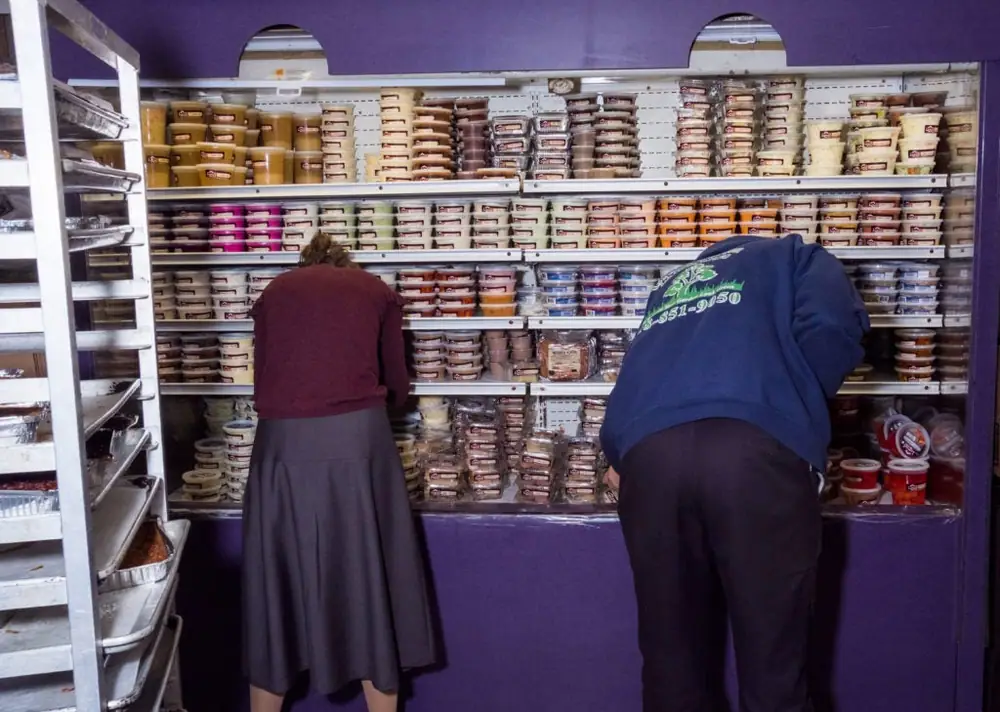
By noon on Friday, the rush at Hungarian Kosher Cuisine is in full swing. The narrow, fluorescent-lit shop in Borough Park, Brooklyn, is not crowded for much of the week.
But with only a few hours to go before sunset, a crowd of housewives and bearded men in black baggy suits files in to acquire home-style takeout food for the festive Jewish Sabbath, or Shabbos, meals. These are Ashkenazi classics, but there are also deep cuts from the Jewish-food canon, like kishke, beef intestine stuffed with flour, fat, and an unnaturally orange spice blend.
Many of the dishes are virtually unchanged from their 19th-century origins in Eastern Europe, making them unsuited to fad diets or photo streams. Luzee Glick of Luzee’s Take Home Yet kosher takeout thrives in urban centers like New York. Los Angeles and in suburban Jewish communities across the country, thanks in part to the fuzzy concept of heimishe .
It can mean different things depending on the context: informal, traditional, homey, or cozy. “It’s cheap food that tastes good,” states Shimon Klein of Borough Park’s Satmar Meat Market & Take Out, adding that it usually involves a sauce to be mopped up with a piece of golden challah bread. According to Luzee Glick, who runs the nearby Luzee’s Take Home,, “it boils down to tradition—not just tradition, but homemade tradition.” Glick explains that in the old country, places like Poland and Lithuania, there was no concept of buying prepared home-style food outside the home. “Now you can get your heimishe thing, whatever your mom or bubbe made back in the day,” he states.
Three-color kugel at Luzee’s Take Home The bulk of Glick’s business comes from food picked up for Shabbos—the period from sundown on Friday night to sundown on Saturday—and Jewish holidays, and he spends the whole week preparing for it. One standby is kugel, a pudding of starch, oil, and eggs that is omnipresent at Jewish gatherings.
Filling and adaptable to any budget, kugel has played an enormous role in Jewish culinary history since the Middle Ages. “Shabbos without kugel is like a bird with no wings,” goes one Yiddish expression, typical in its spiritual association between Jewish holidays and communal food. The Friday afternoon rush at Hungarian Kosher Cuisine Eating good food on Shabbos is not just encouraged by Jewish law but required.
Maimonides, the 13th-century scholar, wrote that this comes straight from the prophet Isaiah, who exhorted Jews to delight in the Sabbath. In the absence of Jewish royalty—at least since Biblical times—ordinary Jews developed their own foods in the home kitchen, which eventually expanded into a restaurant culture of their own.
Commercial kosher certification was only popularized in the early 20th century, and even today, readymade kosher food is not always widely available. Cholent dates to 12th-century France, where it was adapted from a Sephardic version brought over by the Crusaders.
The Shabbos prohibition on cookery has given rise to dishes that could be prepared before Friday evening and left on the stove overnight, to be eaten warm on Saturday. The one at Gottlieb’s is meatier than elsewhere in the borough, even if since the cholent there is self-service, the largest pieces don’t last long.
In the Middle Ages, per to the late Jewish food historian Gil Marks, wives would bring their cholent to the local baker’s oven and socialize. Today’s takeout store embodies the same intertwining of food, faith, and conservation, which helps define Judaism. “It’s not just about coming in, getting your food, and running out,” explains Glick, of Luzee’s Take Home. “The people who come in here like to say, ‘How are you?
Have a good Shabbos.’” Asked for the secret to a good cholent, Glick doesn’t blink: “A lot of oil, a lot of meat. A lot of bones.” While that might sound unhealthy, he notes the traditional Hasidic wisdom that Shabbos food can’t harm you.
- Who: It’s