Los distintos tipos de tahini según el tueste y la cáscara del sésamo
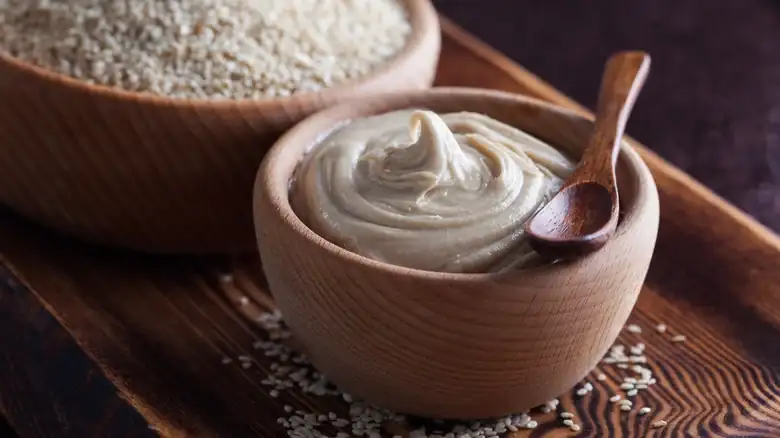
El tahini, con su textura cremosa y su aroma intenso, sirve para sándwiches, aderezos, baba ganoush o sopas, y puede sustituir a la mantequilla de cacahuete.
You probably already use tahini in your regular recipes, but you might not know that there are several varieties, each with a distinct flavor and texture. The original is made with toasted sesame seeds, a preparation thousands of years old according to Haaretz. Traditionally, the seeds are mechanically ground into a paste and toasted at a low temperature. Organic tahini, on the other hand, is made without toasting the seeds or removing their hulls, a process known as dehulling.
According to Bon Appétit, the best tahini has a nutty flavor and a delicious aroma; it's so rich it can be eaten on its own, and its texture should resemble that of peanut or almond butter. It's also helpful to know which type to use depending on the recipe.
Most tahini recipes call for only sesame seeds and olive oil, though some include salt, garlic powder, or fresh lemon juice. The main difference between types lies in how the seeds are processed. In specialty stores, it can be found hulled or unhulled, and also raw or toasted, according to Gentle World.
Hulled sesame seeds have their outer hull removed, giving them a creamier texture, a lighter color, a smoother consistency, and a sweeter flavor. Unhulled seeds are intact, more nutritious according to Mayver's, and offer a more intense nutty flavor, as well as more fiber and calcium. Hulled tahini isn't readily available in supermarkets, but sesame paste has a similar taste and texture. According to Saveur, it's made with hulled seeds and has a strong nutty aroma that pairs well with both sweet and savory dishes. It can also be purchased online or at specialty stores, or made at home with hulled seeds.
According to Gentle World, the seeds, hulled or whole, can be used raw or toasted, and the toasting can be light or dark. Light-toasted, unhulled tahini has a slight bitterness and a creamy texture; dark-toasted tahini has a more intense and bitter flavor. Light-toasted, hulled tahini is creamier and sweeter, ideal for homemade desserts, while dark-toasted tahini is more bitter and flavorful, though not as intensely as hulled tahini. Its thick texture makes it less suitable for dressings, smoothies, or soups, but it works well in thick sauces, falafel, cookies, or chocolate cakes.
Chef Danielle Oron, in an interview with The Strategist, recommends choosing a good-tasting tahini "in its natural state, straight from the jar." She suggests Soom Foods' pure ground sesame tahini, Seed + Mill's organic tahini, or Beirut's sesame tahini paste. Making it at home is quick, easy, and inexpensive, requiring only a high-speed blender and a few basic ingredients.