Fishing in Brittany: Tradition and daily freshness
Fishing in Brittany: A return to the origins
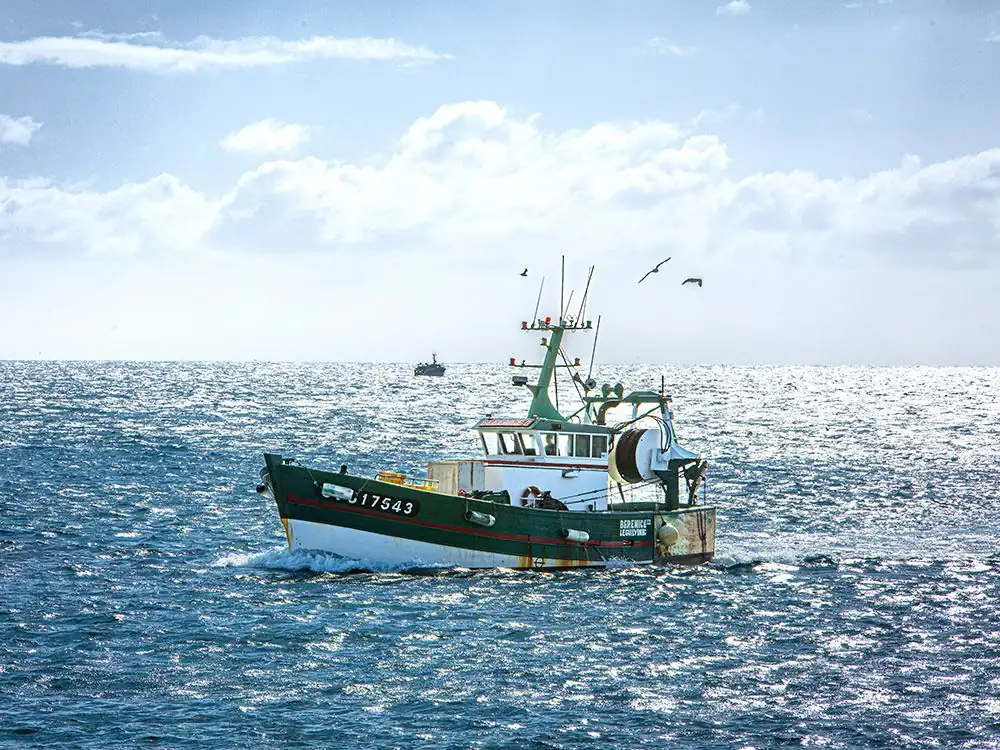
The fisherman is, in a sense, the customer's eye. He assesses the landed catch, selects it, and buys it. Take, for example, the company "Moulin Marée," with operations in Lorient and the picturesque town of Loctudy. They supply delicatessens like Frische-Paradies, as well as top restaurants in France and Europe. Moulin Marée buys its fish exclusively from hand-picked line fishermen and cutters. The latter are typically at sea for three to four days. "But I make sure," says company head Jean-Michel Le Floch, "that the last fish caught ends up with us." Processed immediately at the facility, labeled with the name of the vessel and the fishing method, the fish are carefully packaged and sent to the shipping company. Other delicacies from the depths of the Atlantic reach their destination even faster. In Loctudy, for instance, langoustines go straight from the port to the pot. And at the beach restaurant "An Atoll" in Guilvinec, the lobster arrives fresh daily and unfussy: lobster crackers and fork, half a dozen homemade sauces and dips, and fries on the side. One could easily spend hours here, sipping a glass or two of buttery Chardonnay or well-chilled Champagne.
French quality goods from Guilvinec in Brittany
Speaking of shellfish: At the "Café du Port" in Sainte-Marine, seafood aficionados will be in heaven with their seafood platter. Oysters, spider crabs, sea urchins, langoustines, prawns, and spider crabs taste as fresh and delicate as they look. Local restaurateurs have established a quality guideline: frozen is taboo. Cracking and shelling them is tricky. Your hands get sticky, and you have to be careful not to cut yourself on the sharp shells. But the effort is worth it: the tender, succulent flesh of the seafood tastes heavenly. The Bretons are justifiably proud of their fishing industry in Brittany.