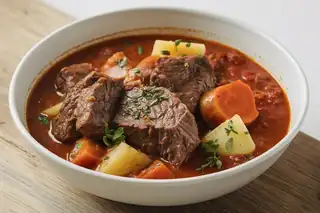
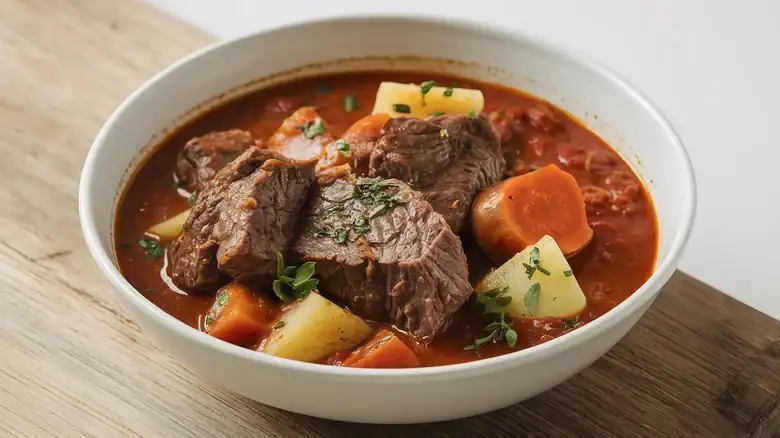
Carbonada valdostana is a beef stew with an alpine flavor and red wine
Originating from northwest Italy, this dish shares its name with Belgian carbonnade, but is cooked with red wine and mountain spices.
Slow-cooked meat stews are a broad family, and it's sometimes easy to get lost in their differences. Carbonada valdostana, a typical dish from northern Italy, is a good example. With chunks of salted beef, alpine herbs, and red wine, it makes for a dream dinner at a chalet. Served over polenta with butter, it makes an American-style potato stew seem like a cut above the rest. Even so, it belongs to the beef stew category: it's cooked slowly in liquid, and in those nuances of flavor lies the beauty of the genre.
This recipe comes from northwestern Italy, near the borders with France and Switzerland, where the cuisine is heavily influenced by northern flavors. That's why it shares its name with Belgian carbonnade, which uses beer, onions, and herbs. The Valdostana version, however, is adapted to the Italian palate. It includes red wine, like many French stews, and seasonings that reflect the mountainous environment: juniper berries, rosemary, sage, cloves, cinnamon, and nutmeg.
Traditionally, it's made with salt-cured beef. That practice is no longer mandatory, and some chefs achieve a similar consistency by seasoning the meat with salt and spices the day before. The seasonings vary from town to town, and some use beer, as in Belgium. Another notable difference is in the cut: some slice the meat, while others cut it into strips.
Otherwise, it's prepared like other beef stews. Collagen-rich cuts, like the rump, are simmered until tender. In the Italian style, it's served over polenta, which can be prepared in a rice cooker.
In its most basic definition, beef stew is meat cooked slowly in liquid. It uses tougher cuts, rich in collagen and with some fat for flavor, from all parts of the cow; the chuck, in particular, adds richness to the stew. It's an ingenious way to turn inexpensive cuts of meat into delicious dishes.
The versions vary widely. For Americans, classic stew features large chunks of meat with root vegetables and a blend of flavorful sauces. Greek stifado combines beef with tomatoes, wine, and spices, while in Mexico, stewed meat is seasoned with chilies, garlic, and cumin. The liquid also changes: broth, wine, and beer are the main ones. The secret lies in transforming the connective tissue into a rich, juicy gelatin.
There are common mistakes to avoid: choosing the right cut of meat, searing it properly, seasoning it generously, and cooking it in a liquid other than water. Cooked slowly and without overcooking, the stew reaches its best texture.