
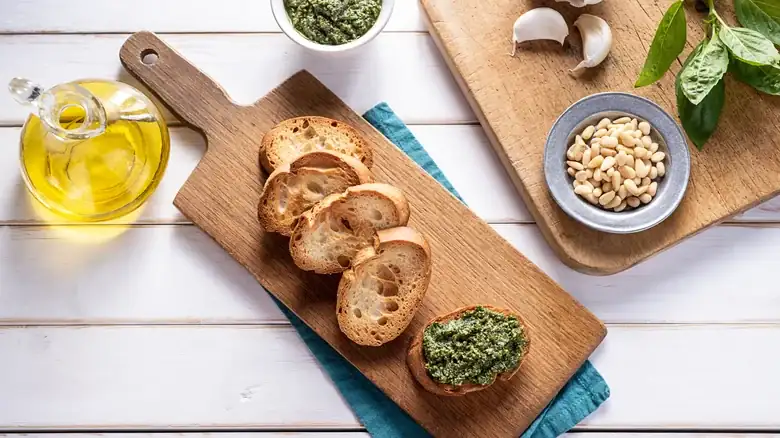
Crostini y bruschetta: en qué se diferencian
Aunque a veces se usen indistintamente, la bruschetta y los crostini se distinguen por el grosor del pan, el tamaño de las rebanadas y los ingredientes.
The difference lies in how the bread is cut. If the slice is a bit thicker and the diner needs three or more bites to eat it, it's bruschetta. If the toast is thin and bite-sized, it's crostini, a name that in Italian even means "little crusts."
Baguettes are a good option for crostini. Since they're sliced all at once, the slices shouldn't be much larger than 4 cm in diameter, and baguettes are usually about 7.5 cm long. Once sliced, simply cut each slice in half to get a bite-sized piece of toast.
Bruschetta is traditionally made with thick slices of sourdough bread, although ciabatta is also a popular choice because of its crispy crust. Thickness matters, because ingredients like chopped tomato and olive oil can soften the bread. Slices between 0.6 and 1.2 cm thick make a near-perfect base.
Bruschetta recipes typically include fresh, juicy tomatoes, chopped basil, garlic, and a generous drizzle of olive oil, or a mixture of oil and butter. It's important to prepare the tomatoes well so the bread doesn't become soggy. If cheese is added, it's usually fresh mozzarella, in keeping with its Italian roots. Sometimes the appetizer is served with grilled chicken and melted cheese, in which case you can break with tradition and serve it hot, rather than cold on top and warm underneath.
Crostini are more versatile than their thicker counterparts. Served on a charcuterie board, they make a great base for cured meats, sliced or creamy cheeses, and even an artichoke or spinach dip. They also pair well with strawberry jam and cream cheese, or jalapeño jam for a spicy kick. The key is to avoid turning these crispy toasts into a soggy mess.







