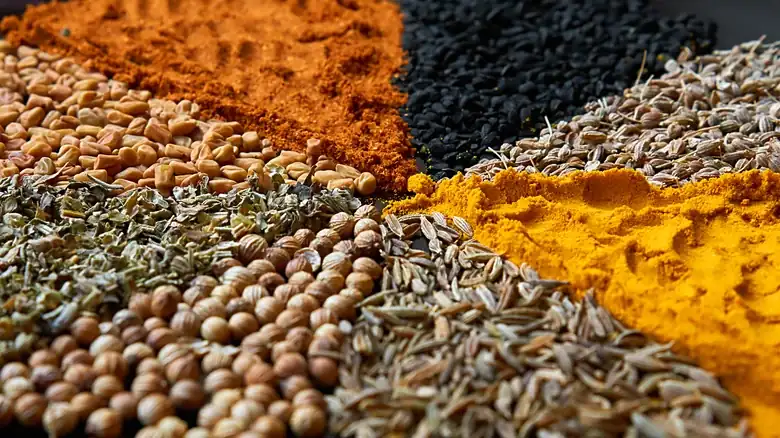
Caraway and nigella seeds: two quite different spices
Caraway and nigella are often confused, but they come from different plants and have very different flavors.
Both can be used as a substitute for whole cumin seeds in a recipe, leading some to believe that caraway and nigella are two different names for the same spice. But they are quite different. Knowing how to use spices properly is essential for any cook, and a well-stocked kitchen needs both.
Because of their colors, flavors, and the plants they come from, these seeds are completely different. From Middle Eastern recipes that feature the striking black seeds of nigella to European cuisine that uses cumin to give an intense flavor to meat dishes and breads, they are worth getting to know.
Caraway seeds come from the Carum carvi plant, a herb in the parsley family. They are used in a variety of dishes, from meats and vegetables to soups and cheeses, and in some European cultures they are used to distill liqueurs. They are also valued for their potential health benefits. Small and light brown, they appear in many European cuisines, such as in German Schweinebraten, the traditional Bavarian Oktoberfest dish that uses them to flavor roast pork.
Cumin is usually sold as whole seeds, which can be ground in a mortar and pestle or using other methods to obtain a powder. It is also used whole, which is the most common way to find it in breads and cheeses. Its flavor is intense, so it should be used sparingly, as too much can overpower the flavor of the dish.
Nigella seeds come from the Nigella sativa plant, native to the Middle East and South Asia. They are often called black cumin or black sesame, although neither name is accurate. Their flavor is reminiscent of cumin and their appearance of black sesame, but they belong to the Ranunculaceae family, unlike cumin and sesame.
They are black and teardrop-shaped, like sesame seeds, although upon closer inspection their surface appears rough rather than smooth. While sesame has an earthy and nutty flavor, nigella offers hints of black pepper, onion, and often oregano.
In the Middle East, they are very popular and appear in rice and vegetable dishes, as well as in breads and sometimes desserts. They can be ground and added to dishes, or sprinkled on top for flavor and a crunchy texture. Their popularity in American kitchens is more recent, and they deserve consideration when looking for a creative way to flavor food.







