Por qué las hamburguesas a la parrilla necesitan más grasa que las hechas en sartén
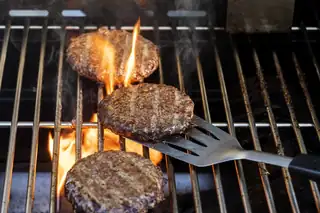
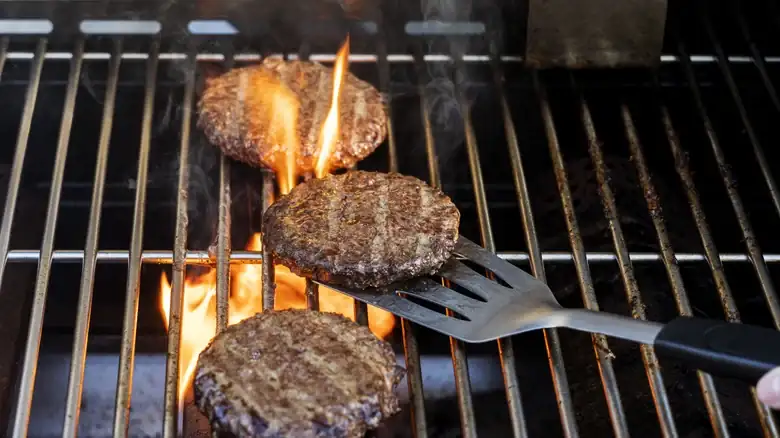
Quienes prefieren la clásica hamburguesa a la parrilla, con sus franjas crujientes y su toque ahumado, deberían usar una carne con más grasa.
Some people don't worry about the cooking method and enjoy their burgers grilled, broiled, or air-fried. However, simply changing the heat source isn't enough. A common mistake is not considering the meat's composition based on the chosen method.
When grilling, the mixture needs to have more fat because it melts and drips through the grill, something that doesn't happen on a griddle or in a cast-iron skillet, where the burger continues to sizzle in its own juices. Additionally, the fat helps create the crust that comes with high-temperature cooking methods.
For a grilled hamburger, the ideal fat-to-meat ratio is 80/20 or even 70/30 (lean to fat). An 85/15 mix works best on flat surfaces and produces less smoke, making it ideal for indoor cooking.
It's best to preheat the grill thoroughly, because the faster and at a higher temperature it cooks, the more likely you are to achieve a good crust and a juicy interior. Pressing down on the burger with a spatula is a big mistake, as it squeezes out the juices, and you also shouldn't flip it more than once.
After grilling, it's best to let it rest for a few minutes before serving. It can be accompanied by a slice of cheddar or Italian cheese for added creaminess, or with tomato, lettuce, or other grilled ingredients like onion.







