Sautéing, searing, and pan-frying: what are the differences?
These three methods use high heat and fat to brown food quickly, and the difference lies in the amount of fat, the heat, and the cooking time.
Even experienced cooks sometimes confuse sautéing, searing, and pan-frying. Sautéing uses the least amount of fat, cooks food faster, and aims for a thin, golden crust on small pieces. Searing creates a thick crust with more fat, higher heat, and more time. Pan-frying uses more fat, more time, and higher heat, aiming to achieve a fried flavor without submerging the food in deep oil.
Stir-frying is ideal for quick weeknight dinners, such as stir-fried chicken, noodles with teriyaki meat and vegetables, or salmon with chive butter. Cut the protein and vegetables into roughly the same size pieces, use a pan large enough so each piece touches the bottom and isn't crowded, and cook everything for just a few minutes, usually three to five. The goal is a golden-brown crust that seals in the flavor and adds texture.
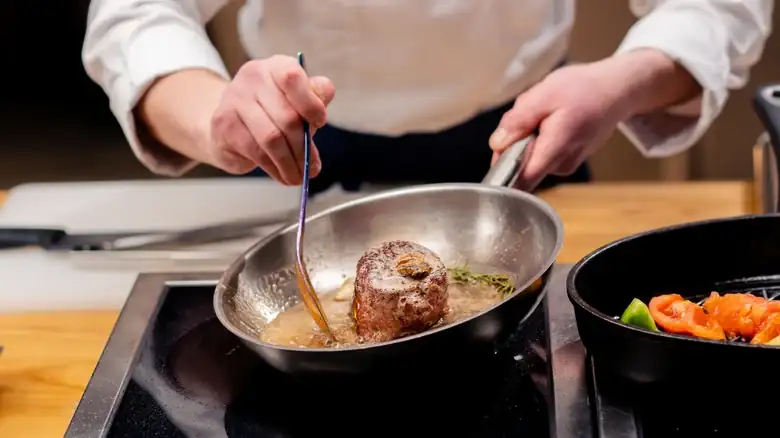
Searing develops a thick, caramelized crust thanks to the Maillard reaction and is ideal for large cuts of meat or firm vegetables. It's best to thoroughly dry and season the food beforehand; the drier, the better. You'll need a heavy-bottomed or cast-iron skillet and enough fat with a high smoke point to cover the bottom third of the food. It usually takes two to three minutes per side. You'll know it's ready when the fat is glistening but not smoking and the food releases easily.
Searing is ideal for fatty cuts like ribeye or porterhouse steak, thick pork chops, tender scallops, or cauliflower steaks, and also for tougher cuts. You could try it, for example, with Naomi Pomeroy's seared tuna with cilantro, grilled sole, or Anthony Bourdain's perfect steak.
Pan-frying is the best option when you want fried food without the large amount of fat from deep-frying. You'll need enough oil to cover about 50% of the food. Start with well-seasoned, room-temperature food that's been patted dry with paper towels and flattened to increase the surface area. Use a cast-iron or heavy-bottomed stainless-steel skillet, and have a lid handy in case of splattering oil. Fry for three to five minutes per side, depending on the size and cut, until golden brown and cooked through.
It's ideal for pork escalope, lamb chops, eggplant, or crab croquettes. Try it with José Pizarro's pan-fried Catalan pork belly or crispy tofu. You can even cook halloumi, macaroni and cheese, or leftover pasta to give it a second life.







