What is the difference between pancetta and prosciutto?
Pancetta and prosciutto are Italian sausages cured in salt, but pancetta comes from the belly of the pig and prosciutto from the leg.
“high-quality pork legs ... covered in salt and left to rest for a few weeks.”
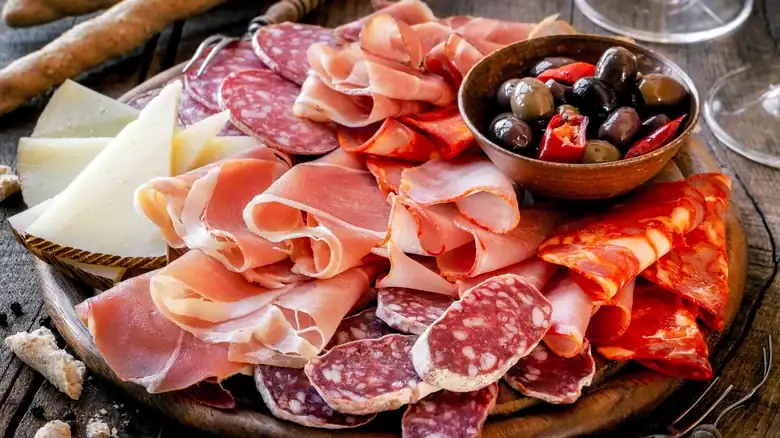
According to The Washington Post, the word charcuterie refers to the art of preparing and presenting meats, so the best way to enrich a charcuterie board is with a good selection of proteins. The Italian restaurant Bottiglia explains that these meats come from the salumi tradition, which uses salting or curing to preserve meats, especially pork.
The main difference lies in the cut. According to Food Network, prosciutto comes from the leg, also called ham, while pancetta is from the pig's belly, which has a much higher fat-to-muscle ratio. This is why it better retains the characteristic pork flavor and is used to flavor dishes like carbonara.
According to Samin Nosrat, in his book Salt, Fat, Acid, Heat, the water in muscle tissue repels most of the flavors in meat, while fat binds to those molecules and better preserves the animal's qualities. That's why the cut matters so much.
Both are cured in salt in a similar way, but prosciutto takes much longer. According to Eataly, the hams are covered in salt for a few weeks, then washed and seasoned, and left to dry-age at a controlled temperature for 14 to 36 months. The salt draws out excess moisture and inhibits microbial growth, according to the National Center for Home Food Preservation.
Pork belly requires significantly less time because its fat content facilitates the process. According to Food Network, it's seasoned with spices during salt curing to enhance the fat's flavors; then it's tightly rolled, tied with butcher's twine, and left to dry-age for four weeks to three months, according to Cook Gem.
Prosciutto is reddish in color, with marbled fat and a salty, buttery flavor, according to MasterClass, and pairs well with cheese and crackers. Pancetta has a more intense flavor, much more fat, and a lighter pink color, and excels in dishes that need an extra touch of richness. Although prosciutto can technically be substituted for pancetta, they are fundamentally different ingredients.