
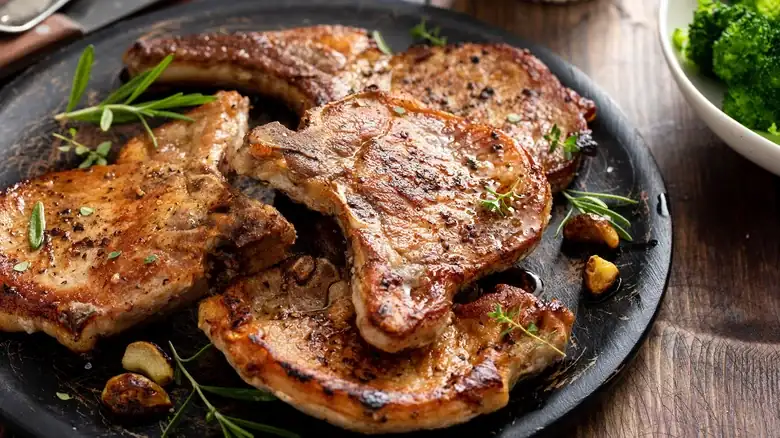
Marinating pork chops adds juiciness, but reduces the crust.
To achieve juicy and tender pork chops, marinating and brining are useful, but it is advisable to limit their time so as not to lose the crust.
“infusing proteins with salt, sugar, and other flavorings via the process of osmosis.”
Regardless of the method, grilled, slow-cooked, or baked, a pork chop should be juicy and tender. That's why marinating and brining are often used to enhance flavor and juiciness.
According to the Food Network's Cooking School, brining is the "infusion of protein with salt, sugar, and other flavorings through osmosis." An example would be soaking pork chops overnight in salted water before baking them. The liquid moistens the meat, making it more tender and juicy than a piece that hasn't been brined.
When you submerge the chop in salted water, the meat absorbs the liquid, which compensates for the natural loss of juices during cooking. That's why marinating is one of the easiest ways to get a juicy chop, whatever the cut.
But that excess moisture comes at a cost. According to Ella Quittner of Food52, a brined ribeye is very juicy, but the excess water prevents a golden, crispy crust from forming. The ribeye remains tender, though also chewy and moist, because evaporating that moisture would take too long. If you tried, the meat would most likely overcook.
Brine always alters the texture somewhat due to osmosis, but its benefits can be preserved with short marinating times. Thick, bone-in chops can be marinated for one to four hours at most, and thin or boneless chops for 15 to 30 minutes, up to a maximum of two hours. With these times, the meat doesn't become mushy and develops a golden crust, better than that of a chop marinated overnight.
It is also advisable to dry the meat well before cooking it, or at least not to leave it soaked in brine.







