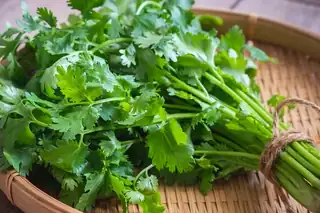
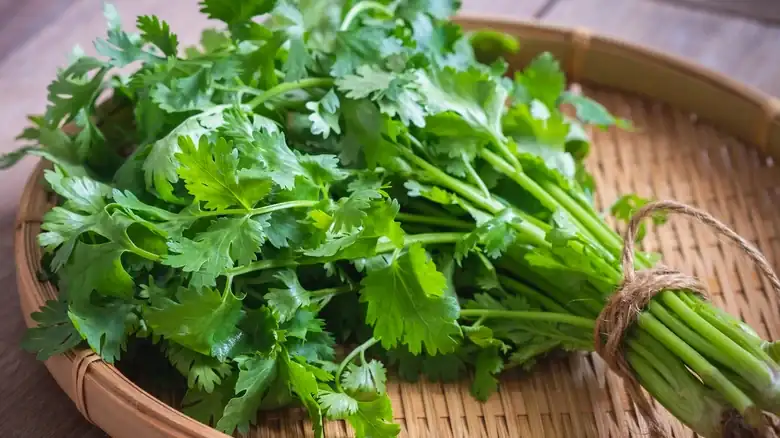
The smell and color that indicate a good bunch of fresh cilantro
When buying fresh cilantro, it's best to use your sense of smell and sight, because the citrus aroma and the color of the leaves reveal its condition.
“look for cilantro with lively-looking leaves that show no sign of wilting, blackening, or yellowing. Check that the stems don't look slimy, especially around where they are bunched.”
Buying fresh produce can require all five senses, depending on the product. In the supermarket's fruit and vegetable section, it's common to examine, touch, smell, and even taste before deciding. The same care should be taken with cilantro.
Cilantro looks quite similar to parsley, so aroma is the first criterion. To tell them apart, farmer Lee Jones advises smelling them, according to Rachel Ray's show: "If you're unsure which is which in a store or at a farm stand, smell them. The citrusy aroma indicates it's cilantro."
Color is just as important. According to Lee, you should look for fresh-looking leaves, without any wilting, blackening, or yellowing, and check that the stems aren't slimy, especially where they're bunched together. If the leaves or stems start to wilt or turn yellow or brown, the cilantro has lost quality and probably won't taste as it should.
To preserve it, the best way is to treat it like a bouquet of flowers. Trim the ends of the stems, place it in a jar or vase with a little water, loosely cover the leaves with a plastic bag, and store it in the refrigerator. This keeps the leaves hydrated and prevents them from wilting quickly.
If you have leftover cilantro after preparing dishes like cilantro-lime rice or squash tacos with chorizo and chipotle, you can freeze it, according to Real Simple. Chop the leaves and stems, place them in an ice cube tray with water or olive oil, and once frozen, transfer them to a freezer bag. This way, it will keep for four to six months in the freezer.







