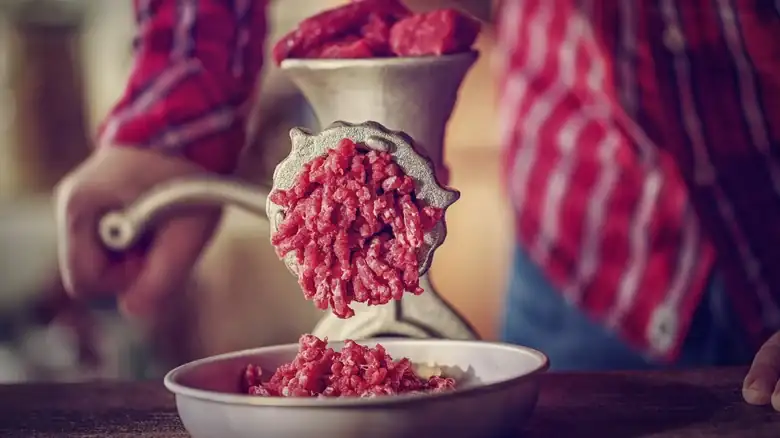
Añade grasa al moler la carne para lograr una mezcla realmente jugosa
Cada vez más expertos en parrilla muelen su propia carne en casa, entre ellos Mark Bittman y J. Kenji Lopez-Alt, para controlar la calidad de la mezcla.
Grinding meat at home requires more than just a food processor attachment, although that's an important step. One of the key points is balancing the meat-to-fat ratio so that burgers or any other ground meat dish are juicy and flavorful.
Fat adds flavor, moisture, and texture. Removing it to reduce calories also reduces flavor, and hamburgers end up dry because meat needs fat between its muscle fibers. Fat is also more tender than muscle, so a hamburger with less fat is tougher.
The most common and recommended ratio is 80% meat and 20% fat, suitable for a rare or medium-rare burger. If you're cooking it medium or well-done, it's best to increase the fat content to 70% meat and 30% fat, because the longer the burger is in the pan or on the grill, the more fat it melts. That's why Philly cheesesteaks are made with thinly sliced ribeye steak: they have plenty of fat to keep the meat juicy even when cooked properly.
Extra fat can be obtained from the butcher shop, or at the supermarket by asking if they have beef or pork fat for sale, and it's best to buy only the amount you need. For example, five pounds of ground beef requires four pounds of lean meat and one pound of fat, an easy-to-remember 80:20 ratio.
It's best to freeze the fat in pieces that fit in the meat grinder before grinding, because if it's at room temperature, the heat will melt it and the meat won't have the right texture. When ground, the frozen pieces mix with the meat, creating a texture with crispy white flecks, like store-bought meat, but better.







