Las diferencias entre el pesto y el chimichurri, dos salsas verdes populares
Pesto y chimichurri parecen similares por su color y sus ingredientes, pero difieren en origen, preparación, textura y sabor.
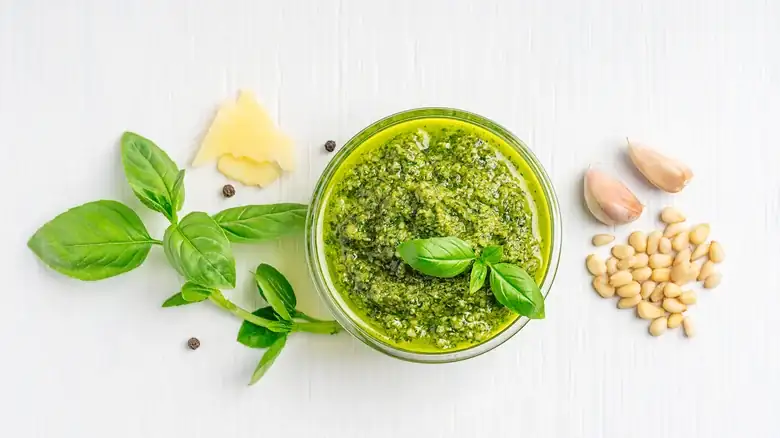
Pesto is a classic Italian sauce originating from Genoa, made with fresh basil leaves, garlic, olive oil, pine nuts, and Parmesan cheese. Traditionally, the ingredients are crushed in a mortar and pestle to achieve a coarse texture, although today a food processor is often used for a smoother consistency. In Italian, pesto is a generic term for any sauce made by crushing ingredients.
Chimichurri originated in Argentina, although it is now widely consumed throughout South America. Its main ingredient is parsley, along with garlic, olive or vegetable oil, vinegar, and red pepper flakes; some recipes add oregano, cilantro, or thyme. It is not blended: the ingredients are finely chopped and mixed together, resulting in a bright green, liquid sauce.
Both allow for variations. Pesto can be made with kale or arugula and still be pesto, and every family has its own method for chimichurri. According to the BBC, some people add warm water to emulsify the oil and vinegar, while others boil the oregano leaves before mixing them.
Pesto has an intense, nutty flavor from the pine nuts and Parmesan cheese, with the sweetness of basil and a touch of spice from the garlic. Chimichurri is acidic and herbaceous, and the intensity of the garlic and vinegar contrasts perfectly with the parsley.
Pesto is primarily used with pasta, as a pizza topping, spread on sandwiches, or as a dip. It's best if the pasta has a ridged surface, like penne, because pesto adheres better to the grooves. Chimichurri is mainly used as a fresh condiment for grilled meats; in Argentina, it's as common as ketchup is in the United States. Neither sauce is limited to its cuisine of origin: pesto can accompany vegetable soup, and chimichurri can be paired with grilled vegetables.