
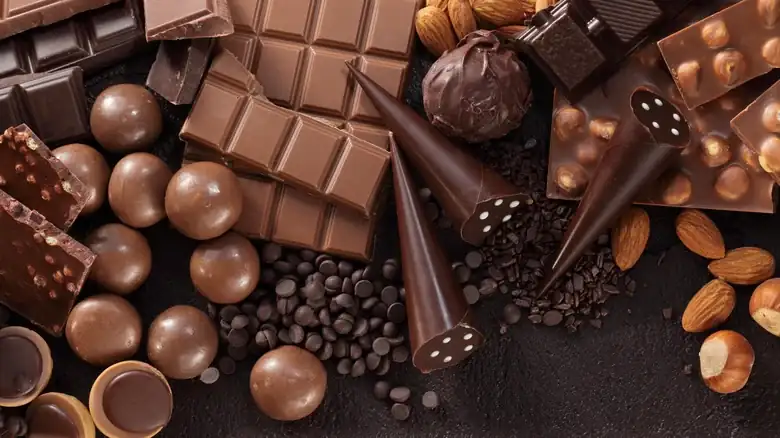
The scientific reason why some say American chocolate tastes like vomit
Europe and much of the world have very strong opinions about American chocolate, and the debate about its quality is legendary.
“I wouldn't eat it unless I was starving and there was no cardboard to eat,”
A Reddit thread on r/AskABrit poses the question to the public, and non-Americans have plenty to say about the country's chocolate offerings. Some notable quotes include: "I wouldn't eat it unless I was starving and there was no cardboard to eat," "It tastes awful," and "To me, it tastes (and I think I'm referring specifically to Hershey's) like sour or spoiled milk."
The most frequent comment is about the taste of vomit, one of the most common complaints about chocolate made in the United States. One commenter summed it up like this: "It tastes like vomit." The cause is believed to be in the milk manufacturing process used in the country.
Hershey's is the most criticized brand in this area, and the constant accusation points to butyric acid, a fatty acid present in foods like milk, butter, and Parmesan cheese. Butyric acid is also a component of vomit, which lends considerable credibility to the criticism.
To extend the shelf life of milk, manufacturers can use lipolysis, a process that removes fatty acids from milk. However, this technique also increases the butyric acid content, which could explain why some chocolates have a bitter, acrid taste. Hershey's categorically denies adding butyric acid to its chocolate, although lipolysis could leave this substance in its products.
Lawrence Allen, a former Hershey's executive, points to two other possible reasons: the proportion of cocoa used and the mixing time of the ingredients.
In the United States, milk chocolate must contain 10% defatted cocoa powder, while in the European Union it must contain 30% cocoa, which includes cocoa powder and cocoa butter. Some European companies produce what is called "family milk chocolate," which contains 20% cocoa powder or defatted cocoa butter and 20% milk solids, i.e., powdered milk.
As for the mixing process, high-end chocolates are typically beaten for much longer than standard brands. Lindt, synonymous with sophistication, requires up to 12 hours, while standard brands are usually beaten for one or two hours. Even so, manufacturers are very strict with their proprietary processes, making it difficult to pinpoint the exact reason for the flavor differences.