The difference in taste between couverture chocolate and compound chocolate
Couverture chocolate, rich in cocoa butter, and compound chocolate, made with cocoa powder and vegetable fats, come from the same pod but taste very different.
All chocolate is made from the same cacao pods that grow on trees of the Theobroma genus, but these beans yield very different products. This applies to both couverture chocolate and compound chocolate. Couverture chocolate is rich, luxurious, and intensely chocolatey, highlighting the complex notes of the beans from which it is made. Compound chocolate is milder, often lacking depth, and leaves a subtle oily aftertaste. The difference is so significant that some believe compound chocolate isn't real chocolate, although couverture chocolate remains the benchmark of what good chocolate should be.
It all comes down to processing. Once harvested, roasted, and dried, the pods are ground into a cocoa paste. This paste is then separated into cocoa butter and cocoa solids, which are combined in different proportions to form the various types of chocolate. The solids can also be pressed to obtain cocoa powder.
This is where things change. Couverture chocolate is made by adding more cocoa butter to the cocoa liquor, giving it a superior and intense flavor and texture. Cocoa butter is also key to the rich flavor of French chocolate. Compound chocolate, on the other hand, is made with cocoa powder and contains neither cocoa butter nor cocoa liquor. Instead, it contains vegetable fats, such as palm oil, hence its waxy aftertaste and its bad reputation as "fake" chocolate or, at best, candy that tastes like chocolate.
The compound does, however, have its advantages. What it lacks in flavor it makes up for with an affordable price and ease of use, because cheaper oils replace the expensive cocoa butter. Furthermore, it doesn't need tempering: it melts and can be used immediately, whereas any chocolate with cocoa butter, including couverture, must be heated and cooled to precise temperatures to stabilize its fat crystals. If this step is omitted, a whitish, rough, and opaque layer appears on the bars.
Its higher melting point makes it more stable and heat-resistant, and the vegetable oils give it a longer shelf life. That's why many mass-produced sweets use it. However, it's not advisable to use it in a recipe where chocolate is the main ingredient; for that, a more flavorful coating is better.
Couverture chocolate looks similar to a regular chocolate bar, but with significantly more cocoa butter. While standard milk and dark chocolates contain 15% and 18% cocoa butter, respectively, couverture chocolate needs at least 31% to be labeled as such in the United States. This percentage influences its flavor, texture, and uses.
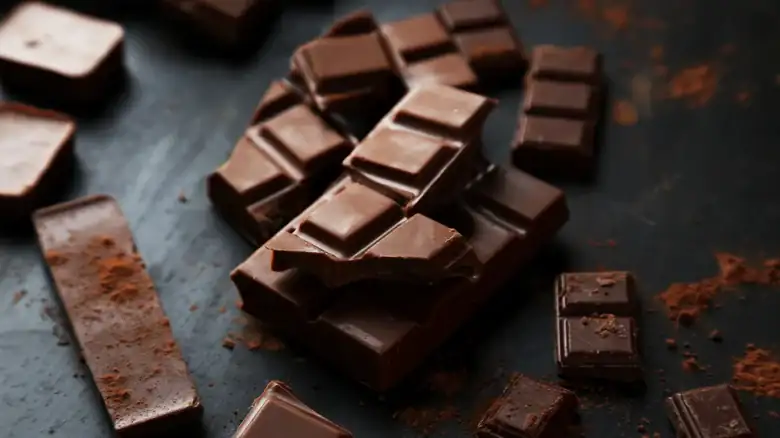
Its texture is more luxurious, silky, and velvety, making it excellent for eating on its own, in bars, tablets, or chocolates. When tempered, it has a soft, lustrous sheen that the compound lacks, and it breaks with a crisp sound. This makes it ideal for decorations, coatings, and truffles, and it's the best type to use with strawberries. Its name comes from a French word meaning "to cover."
Although many couverture chocolates come pre-tempered, they must be tempered again once melted, as heat negates the original tempering. While they can also be used for baking, their high fat content can cause different reactions and alter the result. When in doubt, use it only for coating and glazing.