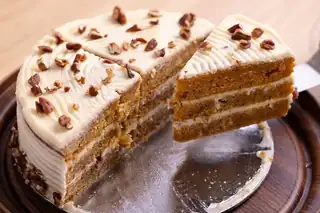
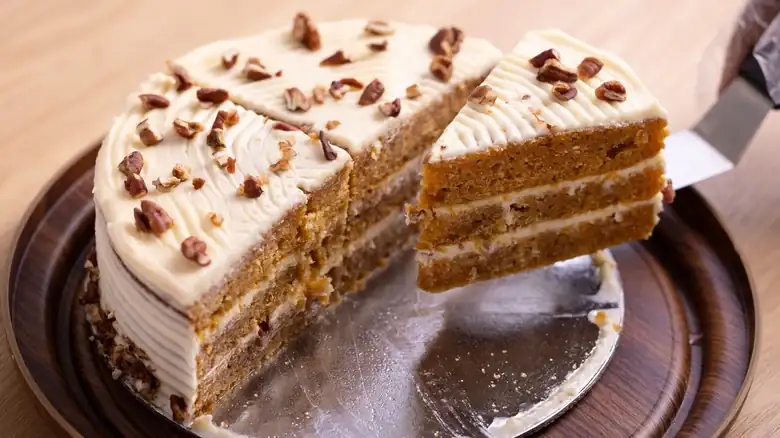
What is a gâteau and how is it different from a cake?
In the English-speaking world, a gâteau and a cake are different desserts, while in France they can be exactly the same thing.
Choosing a dessert to accompany coffee or a cocktail after dinner at a restaurant can raise the question of whether to choose a gâteau or a cake. The answer isn't simple. Gâteau is, literally, the French word for individual cake (gâteaux is the plural), so any cake, which can generally be defined as a baked sweet bread, is a gâteau if you speak French.
In English, however, the word gâteau is usually applied to cakes with certain characteristics. The baked base is typically a light egg sponge, which is then filled with layers of whipped cream, mousse, or ganache, as well as plenty of fruit or jam.
The term "cake" is much broader. It can be as small as a cupcake or as large as an imposing multi-tiered wedding cake, and it accommodates a wide variety of frostings, fillings, and flavors. While not a hard and fast rule, American cakes are typically made with butter or oil and a chemical leavening agent, such as baking soda or baking powder, whereas the sponges in a gâteau rely on the leavening properties of beaten eggs.
A gâteau is usually quite large, making it a good centerpiece for a festive meal or special occasion. It can be stacked in several layers and is generally not frosted, so the layers of sponge and the colors and textures of the filling are showcased. A crown of more filling and fruit, along with a dusting of powdered sugar, is the traditional finishing touch. Black Forest cake is a well-known example: layers of chocolate sponge are soaked in cherry juice and kirsch, a German cherry brandy, and layered with whipped cream, cherry compote, and fresh cherries.
Any combination of sponge cake, creamy filling, and fruit can be transformed into an impressive multi-layered cake. A classic sponge cake with fresh berries and mascarpone, or one with an almond aroma, whipped cream with lemon curd, and juicy blueberries, are other possibilities. Such a dessert highlights the freshness of summer fruit or showcases homemade jams and ganaches.
Of course, since gâteau is such a broad term in French, there are other well-known cakes that don't share these characteristics. The gâteau Basque is a type of crumbly, single-layer cake, similar to a biscuit, filled with custard or black cherry jam, and the gâteau Breton is a butter sponge cake with a texture similar to shortbread.
Technically, a gâteau is a type of cake, but the word cake encompasses many other styles. They can have one or several layers; be dense and richly topped, or light and fluffy. Cakes are typically made with flour, sugar, and eggs, and are baked. They often contain a leavening agent and can be made with or without fat. Even so, the variations are vast: angel food cake, as fluffy as a cloud, is achieved with a large quantity of egg whites stabilized with cream of tartar, while Meyer lemon and olive oil cake relies on a combination of baking powder and baking soda.
The rules are flexible, and there are many exceptions. A flourless chocolate cake gets its texture from eggs, cocoa powder, and melted chocolate, and bakes more like a firm custard. An ice cream cake stacks crisp cookies and whipped cream in a pan to create a layered dessert that can be sliced. And, despite having the word "cake" in its name, cheesecake is a special case.
Cakes usually have some kind of sweet topping, such as buttercream, icing, meringue, or fondant, although some are simple, like Ina Garten's sponge cake or the molten lava cakes served in restaurants. It's best not to look for a strict definition of what constitutes a cake.







