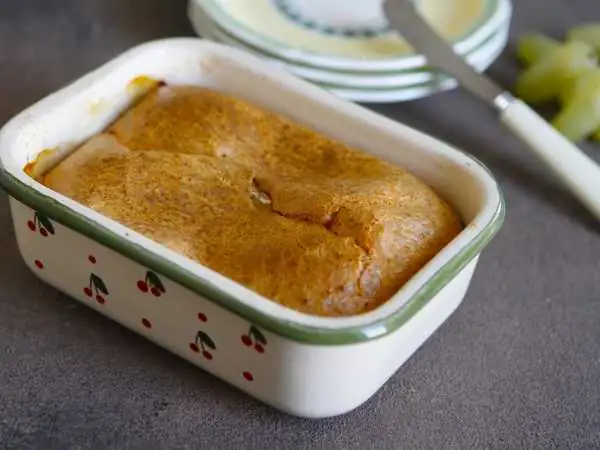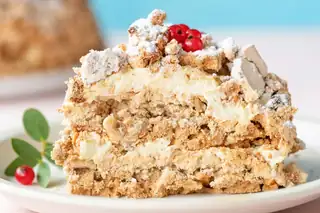
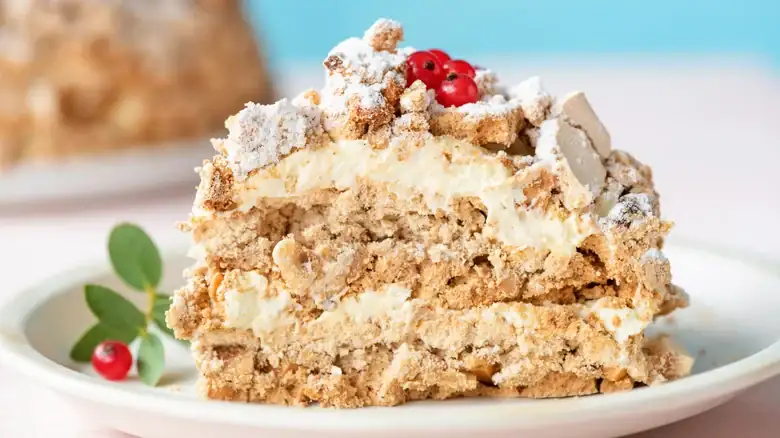
The dacquoise, a French dessert of crisp meringue with nuts and cream
Dacquoise is a French dessert made of layers of meringue and cream, and also the name of a crisp, chewy meringue made with nuts.
In its most basic form, meringue is made by beating raw egg whites with sugar and applying heat to stiffen them. There are several styles depending on their origin and method: French and Italian meringues are not prepared the same way as Swiss meringue, and each offers a distinct texture.
Dacquoise originated in southwestern France. According to the Larousse Gastronomique, it is a French dessert, not a cake, and takes its name from the city of Dax. It is made with walnut meringues piped into circles, baked, and layered with a cream filling. The entire process takes several hours, as the layers need to dry to become light and crisp.
The nutty flavor is key in meringue. To intensify it, it's best to grind the nuts in a food processor and toast them before mixing them with the sugar. Another option is to use fine almond flour mixed with cornstarch, sugar, and salt, which is then incorporated into the whipped meringue mixture.
The fillings allow for many variations. Chocolate pairs well with nuts and can be added as cocoa powder to meringues, gently whipped once stiff peaks have formed, or as melted chocolate in buttercream. Ina Garten adds egg yolk to her chocolate buttercream. For a citrus contrast, orange zest or Grand Marnier can be incorporated. Fruit, especially strawberries according to the Larousse Gastronomique, can be placed between the layers or used as decoration.
Meringues come in French, Swiss, and Italian styles. Dacquoise is typically made with Swiss meringue, which is less voluminous, has a chewy, marshmallow-like texture, and is light and crisp—ideal for layering. When whipped over low heat, it also becomes firmer than the other styles. The glossy Italian meringue holds its shape well and is used for icing or decorating; it's made with a warm sugar syrup that cooks the egg whites, so it doesn't need to be baked. The French meringue is the lightest and least stable, and since it doesn't require heat, it must be baked or incorporated into other batters, such as a melted chocolate soufflé.