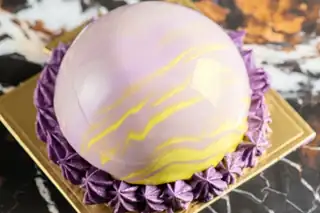
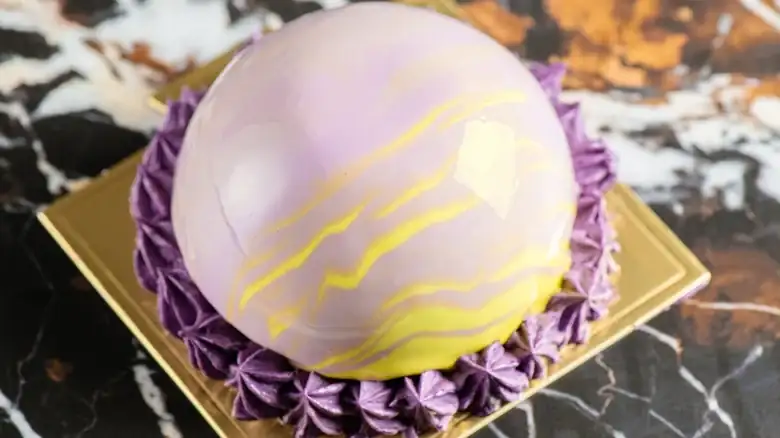
Why the entremet pie is so unique and so difficult to prepare
Its uniform and shiny exterior hides layers of dough, fillings, creams and glazes that make it one of the most difficult and beautiful cakes to prepare.
Thanks to its smooth, glossy exterior, an entremet might look like a simple cake. However, when you cut into it, you discover layers of sponge, fillings, creams, and glazes. That's why it's one of the most difficult cakes to make, and also one of the most delicious and beautiful.
Entremets are primarily composed of inserts: alternating layers of sponge cake and other elements, such as gelatin, jellies, or creamy icing, placed within a layer of light mousse. Pastry chefs pour the mousse into a mold and freeze it to help it hold its shape before adding the inserts. The mousse then acts as a kind of sugary scaffolding that supports the structure of the entire dessert. Once assembled, a uniform layer of icing forms the topping onto which the decorations are placed.
What makes these cakes unique is the combination of their elements. They bring together diverse French pastry techniques in a fusion of flavors that encompasses a wider range than most desserts. Their preparation requires a certain skill, but there are no limits to the combinations of ingredients that can be used.
The key is structural integrity. A light mousse that almost melts in your mouth may not be enough to support the fillings or the weight of the frosting, so flavor must be balanced with consistency.
Sponge cake and mascarpone make one of the best combinations in terms of flavor and texture: the sponge provides a tender filling, and the mascarpone binds the layers together. For a fruitier touch, pectin can be used to make a firm homemade jelly for the fillings.
The egg-free chocolate mousse stays firm thanks to the gelatin, a safer option than whipped egg whites when working with so many pieces. The glaze is largely a matter of preference, although many opt for a mirror glaze, whose intense shine adds an extra layer of consistency and helps prevent the dessert from falling apart when cut.