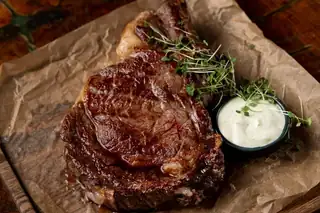
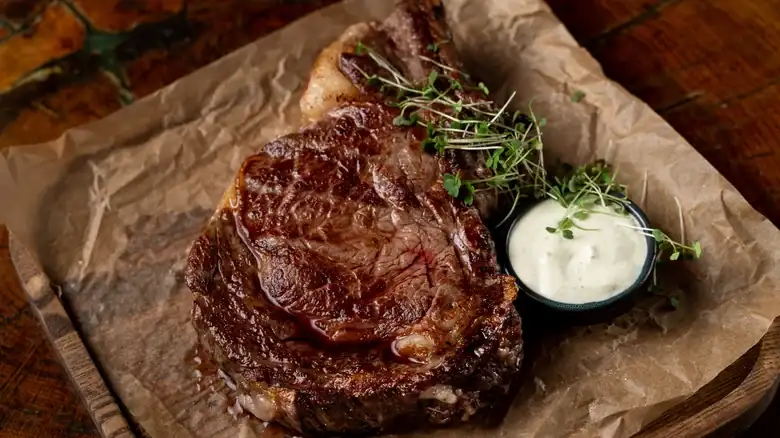
La maicena, básico de la despensa, es clave para la mejor costra de carne
Un poco de maicena en la superficie de un bistec seco basta para lograr una corteza crujiente y dorada.
While there are several mistakes to avoid when cooking a steak, one of the most common is not drying it properly. Moisture interferes with the Maillard reaction, which browns the meat: water can only reach 100 degrees Celsius before evaporating, while that reaction requires at least 138 degrees Celsius. The result is a steamed steak, well-done, probably with a gray band and no crust.
To ensure it's completely dry and ready to seal, simply pat it dry with paper towels and sprinkle it with cornstarch and salt before placing it in the pan. The heat causes the cornstarch granules to swell and absorb the moisture, creating a perfect crust. Be careful not to use too much cornstarch, as it can result in a rubbery texture. You can also mix in pepper, paprika, or chili powder for added flavor.
If a crust still doesn't form, there may be other factors. One of the most important steps is searing over high heat. To brown the meat and activate the cornstarch coating, the pan or grill should be preheated to about 200-260 degrees Celsius before adding the meat, so the outside browns while the inside cooks slowly. A non-stick pan isn't the best option, as it shouldn't get too hot without food in it, and you risk ruining the coating.
It's also a good idea to let the steak come to room temperature before cooking. A cold steak can remain raw inside while the crust burns or chars. Another key factor is not to turn it too often, as this interferes with browning, prevents the inside from cooking evenly, and can wash away some of the cornstarch. It's best to let it brown and then rest for a few minutes.
Once cooked, the steak should rest for about 10 minutes before serving. A well-formed crust provides the ideal texture for a sauce, and there are many sauces to enhance its flavor.







