Las señales que indican que la crepe está lista para voltearse
Los bordes dorados, la superficie mate y unos bordes que se levantan de la sartén son las señales clave para saber cuándo darle la vuelta.
Making the perfect crepe requires precision, and knowing when to flip it is key to achieving a tender interior and a lightly golden, crispy exterior. While the timing varies depending on the pan temperature and batter consistency, there are clear indicators.
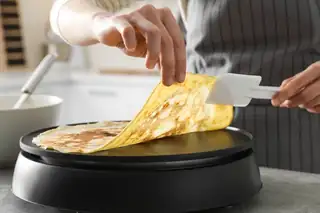
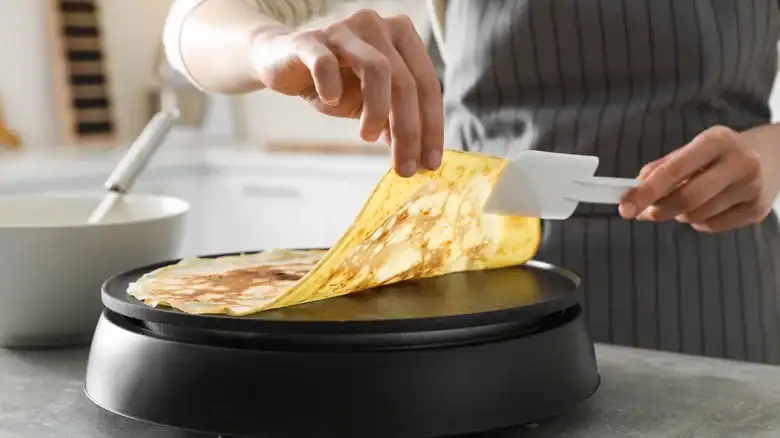
As it cooks, the edges begin to turn a light golden color, indicating that the base is cooking and developing slightly caramelized flavors. The surface loses its wet sheen and becomes drier and more matte. The edges also lift slightly from the pan. These signs usually appear after one or two minutes on the first side, although every stove, temperature, and pan is different, so it's best to keep a close eye on it.
To flip it, the crepe should be loose: simply shake the pan gently. The classic one-handed toss requires a firm upward wrist movement for a clean landing, and it can be mastered with practice.
If flipping it proves too difficult, a thin, flexible spatula will do the trick: simply slide it under the edge to loosen it before lifting it. With practice, you can also carefully use your fingers to help flip it. The second side only takes about 30 seconds.
Once cooked, crepes can be filled in many ways. Sweet crepes can contain lemon, whipped cream cheese, and sugar, while savory ones, like galettes, can be filled with ham, cheese, and egg. Fresh crepes can also be made with stale bread. In Vietnamese cuisine, the crispy bánh xeo is filled with shrimp, pork, and bean sprouts, and for a French twist, salmon and spinach can be added. For dessert, try a multi-layered crepe cake filled with blackberries and mascarpone cream.