Por qué conviene machacar las hierbas y añadirlas al final de la cocción
Las hierbas frescas dan a sopas y guisos un sabor que no se logra simplemente echando un puñado de hojas, porque el modo de incorporarlas cambia el resultado.
Soups and stews need a flavor that goes beyond just meat, onions, and vegetables; otherwise, they become bland and monotonous. Fresh herbs help a lot, but if you simply add a handful of leaves, they barely release any flavor and get lost under the more intense ingredients.
It's best to crush them before using them. Simply tap a sprig against the palm of your hand, press it between your fingers, or roll it on the cutting board, like a bartender mussing the mint in a mojito. This releases the oils: the color darkens and the leaves become slightly damp. Then chop or dice them as usual.
Simmering herbs for a long time releases their oils, but the overall flavor changes, and they lose the intensity that makes them so prized. Therefore, the basic rule is to add them at the end of cooking so their aroma remains intact when served. This is especially true for tender herbs like mint, parsley, cilantro, basil, dill, and tarragon. Hardier herbs, such as rosemary, thyme, sage, and oregano, can also be finely chopped and added at the end.
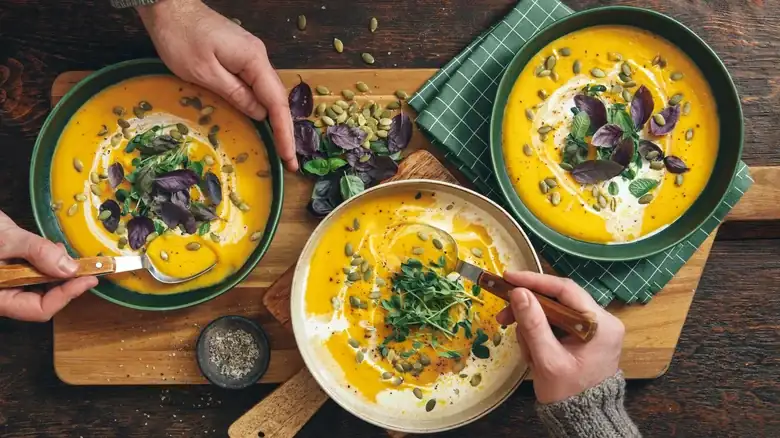
Another way to achieve an intense aromatic flavor is to use the herbs in two parts. The leaves are reserved for the end, while the stems are added at the beginning, when the broth is already simmering; they impart a complex and subtle flavor to the entire dish. And an extra sprinkle of herbs on top of each serving, just before serving, works wonders.