What is the real difference between white chocolate and milk chocolate?
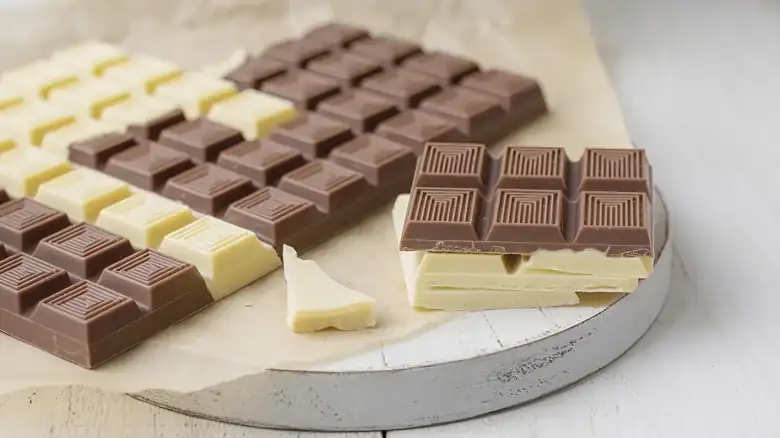
White chocolate does not contain cocoa solids, and that absence changes its ingredients, conching temperature, and uses in cooking.
Milk chocolate combines cocoa (known to chocolatiers as "cocoa solids"), cocoa butter, sugar, and milk, either powdered or condensed. This mixture balances the bitterness of the cocoa, the sweetness of the sugar, and the creaminess of the dairy, resulting in a less intense profile than dark chocolate.
White chocolate contains no cocoa solids: it is made only with cocoa butter, sugar, and milk. Therefore, it lacks the earthy flavor associated with chocolate and offers a particularly sweet and creamy taste, often with nutty notes from the milk or a hint of vanilla.
Their uses also differ. Both can be eaten on their own and are used to flavor custards, drinks, and ice cream, but white chocolate has a slightly lower melting point, making it less stable and more prone to overheating or burning. It's primarily used for decorating pastries, in ganache, bars, filled truffles, and pastry creams, such as the pastry cream used to fill éclairs or donuts, and in crème brûlée. Milk chocolate, with a higher cocoa solids content, tolerates slightly more heat and has a wider range of uses in baking, confectionery, and some Mexican dishes with chipotle and ancho chiles.
The production process involves four stages: blending, refining, conching, and tempering. In blending, milk chocolate combines cocoa butter and cocoa solids with sugar, milk solids, and flavorings, while white chocolate omits cocoa solids and may contain vanilla. White chocolate is conched below 60 degrees Celsius because higher temperatures risk burning, resulting in its smooth, slightly malty flavor. Milk chocolate is conched at temperatures up to 77 degrees Celsius, sometimes higher, which caramelizes it and enhances its chocolate flavor.