Salsa gravy y demi-glace: en qué se diferencian
Aunque ambas suelen tener un color marrón intenso, la salsa gravy y la demi-glace se preparan de forma muy distinta.
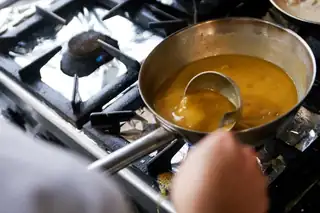
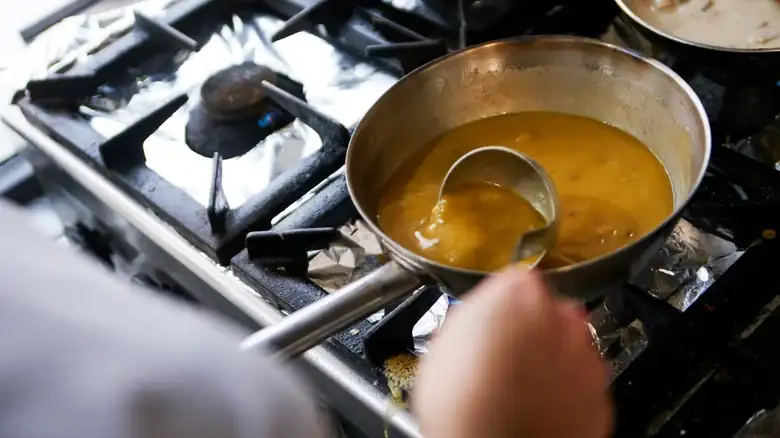
If you're preparing a hearty meal, from a good roast beef to pork chops, there are many sauces that add juiciness and flavor. Among the most notable are gravy and demi-glace. At first glance they look similar, but when you stir them you'll notice a difference in texture: demi-glace is thick, almost syrupy, while gravy is usually thinner.
Gravy is made with meat juices thickened with a starch, usually flour. In practice, it's more of a general category than a specific sauce, as it can include a wide variety of ingredients, such as red wine or mushrooms. Demi-glace, on the other hand, has a more precise definition: it's a combination of Spanish sauce and stock.
Demi-glace begins with an espagnole sauce, one of the five most emblematic French mother sauces, which often serves as the base for others such as chasseur or madeira. It is prepared by cooking a mirepoix (chopped onion, carrot, and celery) in plenty of butter, then adding flour to make a roux, and finally, stock, usually beef, with garlic, peppercorns, bay leaf, and a little tomato purée.
It is then combined with more stock and seasonings such as thyme, parsley, peppercorns, and a little wine or sherry. It is then reduced considerably, and the word "glace" means glazed: the result is almost a concentrated stock syrup, much thicker than most sauces.
Leaving aside white gravy, which is more like a béchamel sauce, gravy has many variations. It's based on meat juices, which are simmered into a roux with flour before adding stock and often wine. Virtually any meat can be used, and vegetarian versions make the roux with butter. Common aromatics include thyme, peppercorns, garlic, and shallots. Be careful with the flour, as an incorrect proportion can result in a disappointing sauce.