Chiles claros y chiles oscuros: cómo cambia el sabor de cada variedad
Los chiles secos se clasifican en claros y oscuros, una distinción que permite intuir su sabor con solo observar su color.
It is estimated that there are thousands of varieties of chili peppers, a plant native to the Americas that has spread throughout the world, and botanists cannot count them accurately. This variety makes it difficult to classify chili peppers in culinary terms, except in specific cases such as the chipotle or the Anaheim.
Guides to hot peppers often omit some varieties, and few focus on dried peppers, despite the wide selection available in Latin American stores in the United States. To simplify their use in cooking, chefs often divide dried peppers into light and dark varieties.
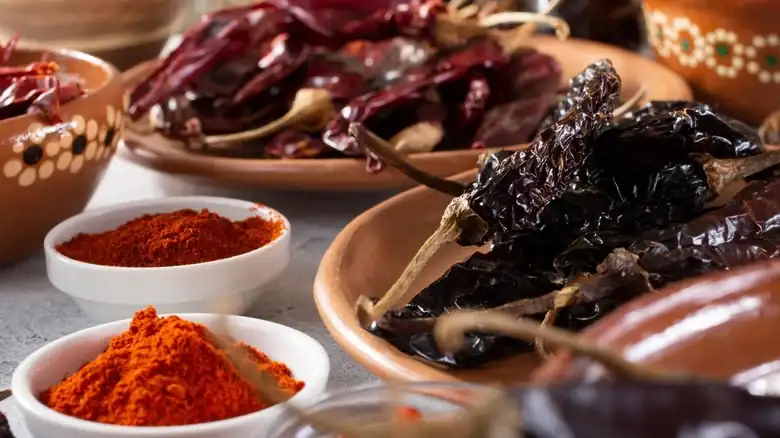
Light-colored chiles are mostly red, with shades ranging from brown to bright red or burgundy. They offer intense flavors with fruity, smoky, earthy, or nutty notes, and often have a slight acidity. The heat level varies considerably: the pequin is very hot, while the guajillo is usually sweet with acidic notes. The chipotle falls somewhere in between, prized for its smoky notes. The chile de árbol adds earthy and nutty nuances without sacrificing heat. As a general rule, the smaller the chile, the hotter it is.
Dark chiles are a deep black, brown, or purple color, and typically have a thicker, firmer skin. Their flavor is reminiscent of dried fruit, with notes of raisins and prunes and smoky undertones. They are generally not very spicy, although some have a mild heat. This color is used to advantage in recipes like mole or adobo negro. Many are dried varieties of larger chiles at different stages of ripeness. Anchos are dried poblanos that have reached red ripeness, with smoky, spicy, and fruity flavors. Mulatos, from the same chile but at an even more advanced stage of ripeness, offer more intense chocolate notes. Pasilla and negro chiles are reminiscent of raisins, and cascabel chiles evoke dried apricots with a subtle nutty touch.
Each group has its own uses. The darker ones, due to their sweetness, are a popular choice for mole, and are also incorporated into marinades and stews, where their body improves the consistency. In salsas, the cascabel and ancho chiles are highly valued for their fruity flavor, and their sweetness even extends to desserts: Joanna Gaines adds a spicy touch to her pecan pie with ancho chile.
The lighter-colored chiles contribute a more intense and spicy flavor, which is why they often serve as a distinctive touch in dishes. Puya chiles are the usual base for menudo, guajillos make up the sauce for tortas ahogadas, and árbol chiles, with their malleable texture, give a special touch to enchilada sauce. Both types can be combined in complex dishes such as moles, stews, and salsas, where a highly complex result is desired.