How To Easily Turn A Stainless Steel Skillet Into Nonstick Pan
Selecting the best stovetop frying pan or skillet can feel tricky. Sometimes, you want the steak searing capabilities of a cast iron, but worry about particular acidic food interactions.
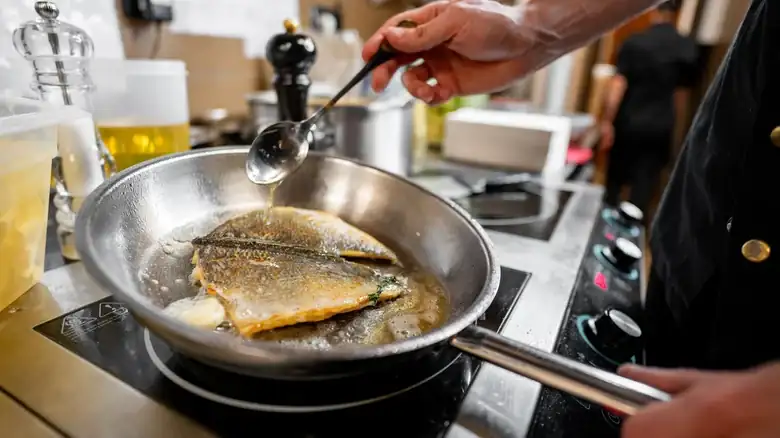
For example, take note that you can turn a stainless steel skillet into a nonstick pan. All that's required is getting the steel pan extra hot before using it — you'll want to check the surface with water. Hit the pan with a few flecks of the liquid, and look for droplets that float around, rather than immediately evaporating. Once you've attained such a behavior, it's a sign that the pan behaves like a non-stick, and you can cook foods stress-free. Perhaps such a technique sounds too easy to be true, but it is backed by several scientific processes.
Intensely heat a stainless steel pan to turn it nonstick
Several physical processes coalesce to turn a stainless steel nonstick. The pan inherently comes with a porous structure due to the composition of steel. However once heated, the material increases in size, and all the microscopic indentations become smaller. As a result, food is less likely to become trapped in the material, and therefore won't be as sticky.
The heat also causes the Leidenfrost effect to take place, which is a physical reaction specifically in the liquid. Whenever the pan surface is hotter than the boiling temperature, a layer of vapor forms at the contact zone. This separates the liquid from the pan, and allows it to move around freely; hence the floating water droplets. As a result, foods with large quantities of liquid will be able to move around the pan more freely, furthering the nonstick effect.
So if you're finishing a sous vide bacon on a hot pan, then you won't have to worry as much with fat adhesion. And remember once you're done with the high-heat cooking, finish the pan with a delicious deglaze to really make the most of your skillet.