Thatchers begins earliest apple harvest in its 122-year history
Hotter, drier summers are changing the way apples grow in the UK
“Our responsibility is to take what we've learned from 122 years of growing apples and use that knowledge and ongoing research to give the next generation of orchards the best possible start.”
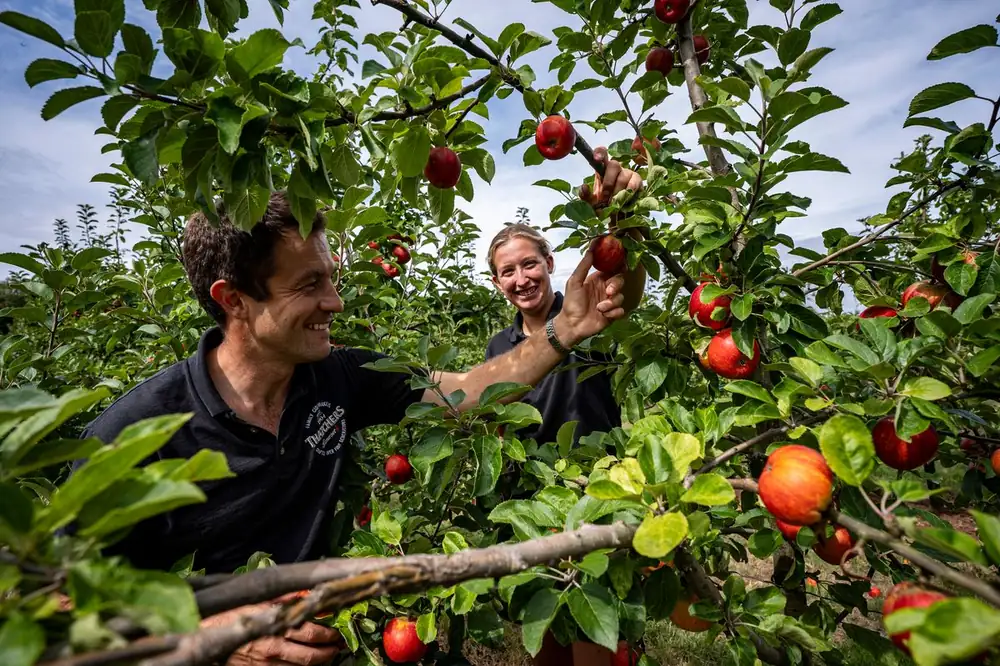
A Somerset cider making family with 122 years of harvests behind it has begun the earliest apple harvest in its history, as records and the experiences of five generations reveal how the county's cider-apple season has shifted. Thatchers Cider started picking apples at Myrtle Farm in Sandford ahead of 2025’s harvest date, which had itself been the earliest harvest in the company's history.
Records from its orchards show a change at the other end of the season too. In the 1990s, the team recalls harvesting and pressing apples into late autumn and towards Christmas, while earlier family recollections suggest the season could stretch later still.
This year, Thatchers currently expects harvesting to be completed by mid-November, around six weeks earlier than thirty years ago. The changing rhythm of the season has been witnessed by third-generation cider maker John Thatcher, his son Martin, Thatchers, Managing Director, and now fifth-generation Eleanor Thatcher.
Martin said: “Harvest has always been one of the most special times of year at Myrtle Farm, when the fruit we've spent the year caring for is finally picked and pressed. “The recent hot weather has certainly played a part in this year's harvest timing, but it is only part of a much bigger picture.
We've spent generations learning how our orchards respond to different seasons and conditions, future-proofing orchard success for the farming generations ahead. “This year's heat has been challenging and the apples are slightly smaller, but they are packed with flavour and sweetness.
Ultimately, it's the fruit, rather than a date on the calendar that tells us when harvest must begin.” Thatchers is researching which varieties could be best suited to orchards in the decades ahead.
Myrtle Farm is home to the UK's largest collection of cider apple varieties, with 458 varieties in its Exhibition Orchard. Alongside these, Thatchers is trialling around 100 varieties across 40 acres, assessing how different apples perform and which characteristics could prove important to future cider making.
Research assesses factors including climatic influences, disease resistance, growth, yield and suitability for cider-making, ensuring the all-important delicious flavours are right - enabling Thatchers to keep reviewing the best trees for the future. Martin said: “When my great-grandfather planted apple trees here, he couldn't know exactly what conditions future generations would be growing them in – with recent heat devastating for many cider farmers of more traditional orchards and older varieties of apples trees.
He planted for the future, just as every generation of our family has done since. Among the varieties we're trialling now could be apples that future generations of cider makers come to rely on.
“Our responsibility is to take what we've learned from 122 years of growing apples and use that knowledge and ongoing research to give the next generation of orchards the best possible start.” Richard Johnson, Head Cider Maker at Thatchers, said: “You can't decide when to harvest an apple simply by looking at the date.
We're in the orchards throughout the growing season, watching, tasting and testing the fruit so we know when it has reached the right point to pick. “Katy, traditionally our first apple of the harvest has a particularly short picking window.
This year's fruit is smaller following the extended heat, but the sunshine has increased its sweetness and the flavour is exactly what we're looking for. “The changing harvest timeframe has reduced yield slightly, but it hasn't meant compromising on quality. It's about responding to the fruit in front of us and picking it at its best.”
Chris Muntz-Torres, Orchard Manager at Thatchers, said: “People naturally think of harvest as the end of the growing year, but for us it's part of a continuous cycle. As soon as harvest finishes, we're thinking about tree health, replacing nutrients and preparing the orchards for the next growing season.
“Looking after an orchard is a year-round job. As the seasons change, experience and understanding how each orchard responds, becomes increasingly important.”
- Who: Myrtle Farm · Thatchers Cider