Okra. The vegetable that many look at but few dare to cook
Okra has a peculiarity that almost completely determines how it should be cooked: when cut, it releases mucilage, a thick and slippery substance that many people directly identify with "slime".
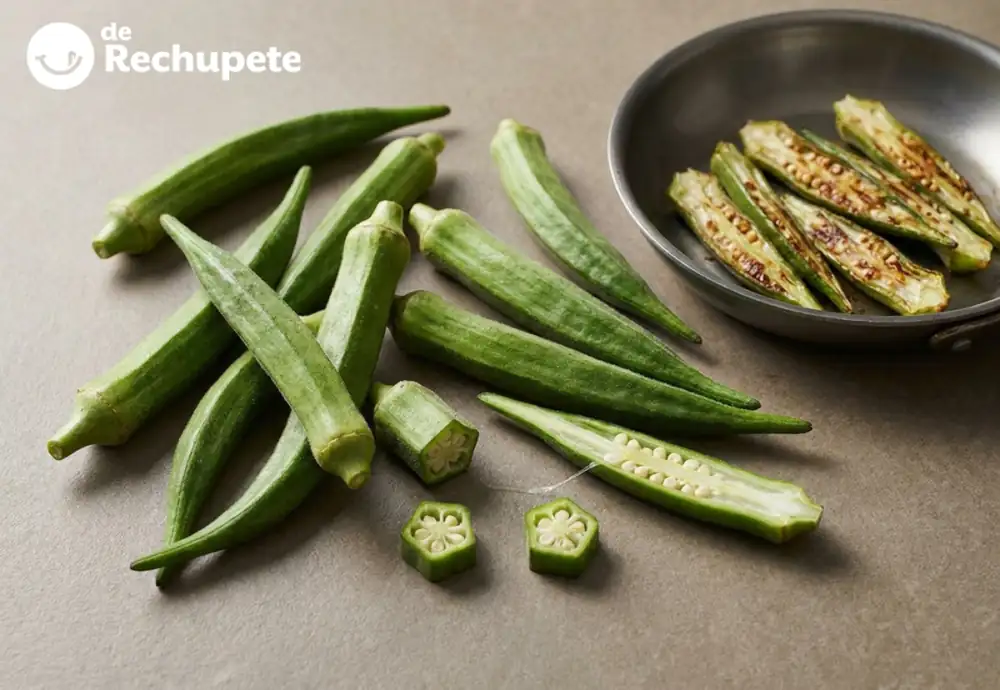
That detail explains much of its bad reputation, but also one of its greatest culinary virtues. If we want dry, golden okra, we need to control that mucilage; if we're making a stew, it can naturally thicken the broth.
Therefore, the problem lies not so much with the okra itself, but with treating it like any other vegetable. High heat, low humidity, and large pieces result in a firmer, less viscous texture.
Water, prolonged cooking, and a larger cutting surface do the exact opposite. Neither is necessarily bad; it depends on what you want to cook.
It's also known as okra, gumbo, bamia, or bhindi—names that hint at how far-reaching this pod is. It's a staple in African, Middle Eastern, Indian, Caribbean, and southern American cuisines. Its exact botanical origin remains debated, so it's not worth claiming a single, definitive origin.
What is clear is that there are many more ways to cook than it seems.
What is okra and what does it taste like?
Okra is the immature fruit of Abelmoschus esculentus, a plant in the mallow family. It has an elongated shape, several longitudinal ridges, and when cut crosswise, a star-shaped section appears with small, light-colored seeds inside.
It is eaten young because, as it ripens, the pod becomes more fibrous, hard, and woody. Its flavor is quite mild, vegetal, and slightly herbaceous.
It doesn't have the intensity of other vegetables, which is why it pairs well with many accompaniments. It's sometimes compared to eggplant because of its subtle flavor, although the texture isn't very similar. It works wonderfully with tomato, onion, garlic, spices, or a touch of heat.
When buying it, look for young, firm pods with a vibrant color. A large pod isn't a prize: if it's overripe, it may still be tough after cooking.
If the stem and sheath offer a lot of resistance to cutting, we've probably arrived too late.
Why does okra turn slimy?
The famous "slime" does not mean that the okra is spoiled.
It's a natural mucilage rich in polysaccharides that hydrates upon contact with water, increasing its viscosity. To put it simply: when you cut the pod and add moisture, this substance comes out more easily and is much more noticeable. The size of the cut matters.
The more of the inner surface we leave exposed, the more mucilage can be released. That's why small slices are usually more viscous than a whole pod or one cut in half.
If we want to take advantage of that thickening capacity, great. If not, we now know where to start controlling it.
In New Orleans gumbo, this property is part of the dish's logic: the okra isn't just there as a vegetable, it also helps thicken the sauce. It's the best example of why obsessing over eliminating any trace of mucilage can be a mistake.
There are recipes where it is specifically desirable for it to appear.
How to prepare okra before cooking it
The first rule is simple: moisture and cut okra are not a good match when we're looking for a golden color.
We can wash the pods, of course, but it's best to do so just before cooking them and dry them thoroughly with a clean cloth or paper towel. Then we remove only the hard part of the stem, without taking half the pod with it.
If we want to retain the mucilage, we can leave them whole, slice them lengthwise, or cut them into relatively large pieces. If they're going in a stew and we want them to help thicken it, slicing them makes perfect sense.
Acidity can also work in our favor. Tomato, lemon, or vinegar pair very well with okra and can help to moderate the slimy texture. It's best not to present them as a magic eraser: drying, cutting, and cooking have just as much, if not more, impact than the acid.
Sautéed, roasted or grilled
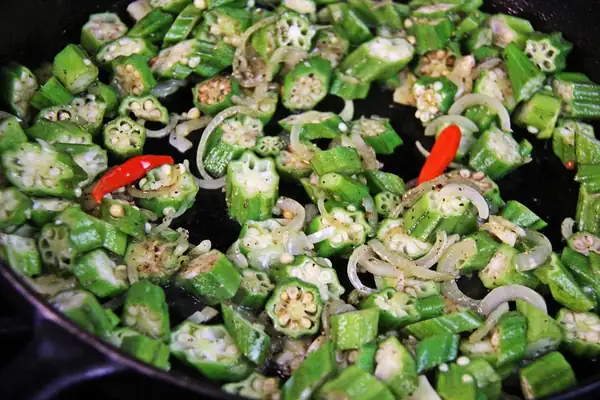
For a first test, the easiest method is dry heat. The pan should be very hot, with a thin layer of oil and enough space between the pieces.
If you pile up the okra, instead of browning it will start to steam. Cut in half lengthwise, the cut side can be placed directly in the pan or on the griddle until it browns. A similar principle applies in the oven: a single layer, high temperature, and definitely don't overcrowd the tray like a packed subway at rush hour.
We're looking for crispy edges, slightly blistered areas, and a still-tender interior. You can grill it whole or in large halves. A little oil, salt, and well-controlled heat are all you need.
The less we move it around and the more real contact it has with a hot surface, the easier it is for that tanning to appear, which greatly changes the experience.
Frita o rebozada
Frying is another quite effective way to enjoy it for those who are wary of its texture. In the southern United States, it's common to slice it and coat it with flour or cornmeal before frying.
The goal is a crispy exterior and a tender interior, not a pod soaked in oil. The same rules apply as with any good frying process: sufficient oil, a stable temperature, small batches, and proper draining.
If we add too much at once, the temperature drops and the batter loses its appeal.
When mucilage is of interest to us: stews, tomato and curry
In a wet preparation, the criteria change completely.
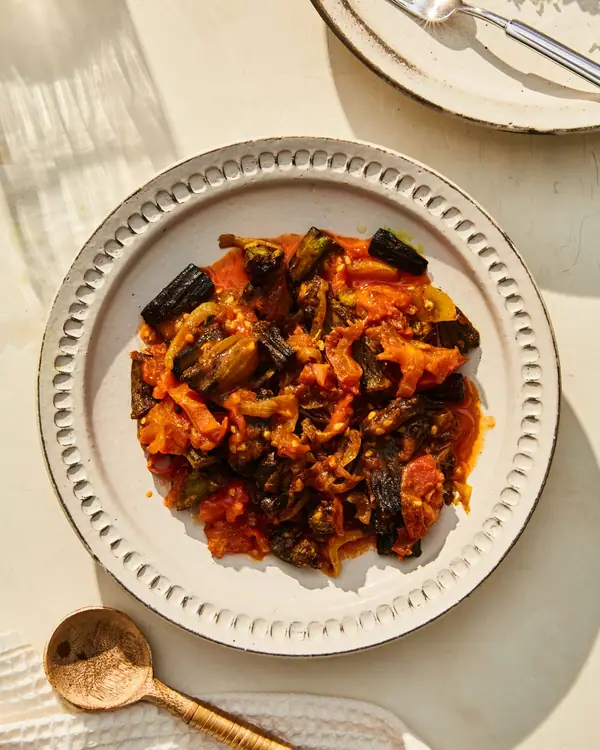
Okra can be added to soups, curries, stews, and sauces precisely because its mucilage helps thicken the dish. In these cases, slicing it ceases to be a problem and becomes a technical decision.
Tomato is one of its most common companions. It provides acidity and juiciness, while okra adds body. With onion and garlic, we already have a very satisfying base; from there, we can add cumin, coriander, paprika, mustard seeds, chili, and many spice blends.
In Indian cuisine, it appears as bhindi and is frequently found in dry or semi-dry preparations, stir-fried before being mixed with onion, tomato, and spices. In other dishes, it is cooked directly in a more moist environment. There is no single correct texture for okra: different techniques yield different results.
Pickled also makes a lot of sense
Small pods are very well suited to pickling because they can be preserved whole and maintain a fairly firm texture.
Vinegar, salt, and spices transform the flavor of the ingredient without masking its essence. If you've never tried it, pickled okra, tangy and crunchy, can be even more appealing than a stewed version. It works well as an appetizer, a side dish for meats and sandwiches, or a contrasting element to rich dishes.
What flavors go particularly well with it?
Since okra doesn't have a dominant flavor, it allows for quite a bit of experimentation.
Tomato, onion, and garlic are a safe base. To add spice, try cumin, coriander, paprika, mustard, curry, and cayenne.
Lemon and vinegar provide the acidic counterpoint that complements it particularly well. It also pairs well with corn, rice, and legumes, and can accompany fish, seafood, or stewed meats.
You don't need to stock an international pantry to get started: oil, salt, pepper, garlic and a few drops of acid are enough to make a very decent stir-fried version.
The mistakes that make many people not want to repeat them
The first step is to wash it and put it in the pan while it's still wet.
If we want it golden brown, we're already losing. The second mistake is chopping it too finely without knowing what the consequences are. More cuts mean more exposed inner surface area and, therefore, a greater likelihood of mucilage forming.
Another common mistake is overfilling the pan. The temperature drops, steam builds up, and the okra ends up more cooked than toasted. Constant stirring doesn't help either.
If we want color, we have to let it touch the hot surface for a while. And then there's the opposite mistake: insisting on eliminating viscosity even when we're preparing a soup or a stew.
We might be wasting a useful property of the ingredient. Finally, no technique can fix an overly old pod. Fibrous okra will remain fibrous.
Buying well is part of the recipe, even if it doesn't appear in the photo.
If it's your first time cooking it, start like this.
We choose small or medium-sized pods, wash them and dry them very well.
We cut them in half lengthwise and heat a large frying pan with a small amount of oil. We place the pieces without piling them up, preferably with most of the cut sides against the metal, and let them brown before moving them.
Finally, add salt, pepper, and a few drops of lemon juice or vinegar. If desired, you can also add garlic, paprika, or cumin. It's a very simple preparation, but it immediately reveals what this vegetable has to offer: a toasted exterior, a tender interior, soft seeds, and a much lower mucilage content.
Later there will be time to get into gumbo, curries and other stews.
How to store and freeze okra
Fresh okra is delicate. It's best to store it dry, unwashed, and refrigerated, and consume it soon.
External humidity accelerates deterioration; when the ridges and tips begin to darken, it's best not to leave it unattended for several more days. If you want to freeze it, it's best to start with young, tender pods.
For proper home freezing, it's recommended to blanch them first: small pods need about 3 minutes of blanching and large ones about 4 minutes, followed by rapid cooling in ice water. Then drain them well, leave them whole, or cut them up and freeze. Ultimately, okra isn't a particularly difficult vegetable to freeze.
The difficult part is cooking it without first deciding what texture we want. Once we understand that we can contain the mucilage or use it to our advantage, it stops seeming like that strange thing we don't know what to do with and starts to make much more sense in the kitchen.
Categories: Current gastronomic news, Food school: cooking, techniques and ingredients, Ingredients and food
- Who: Estados Unido